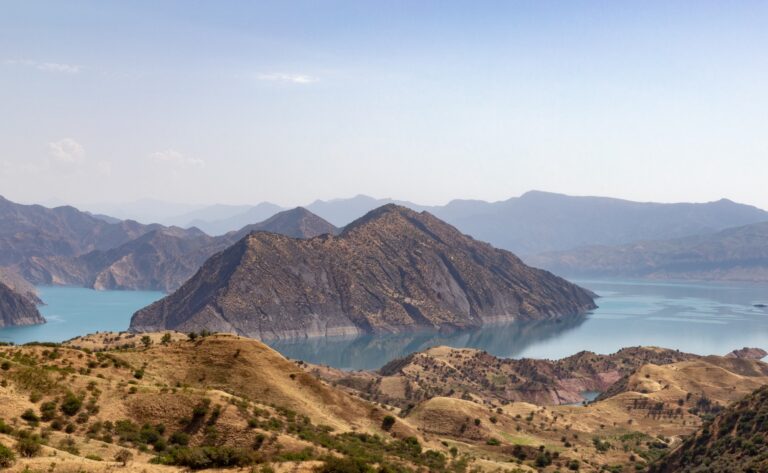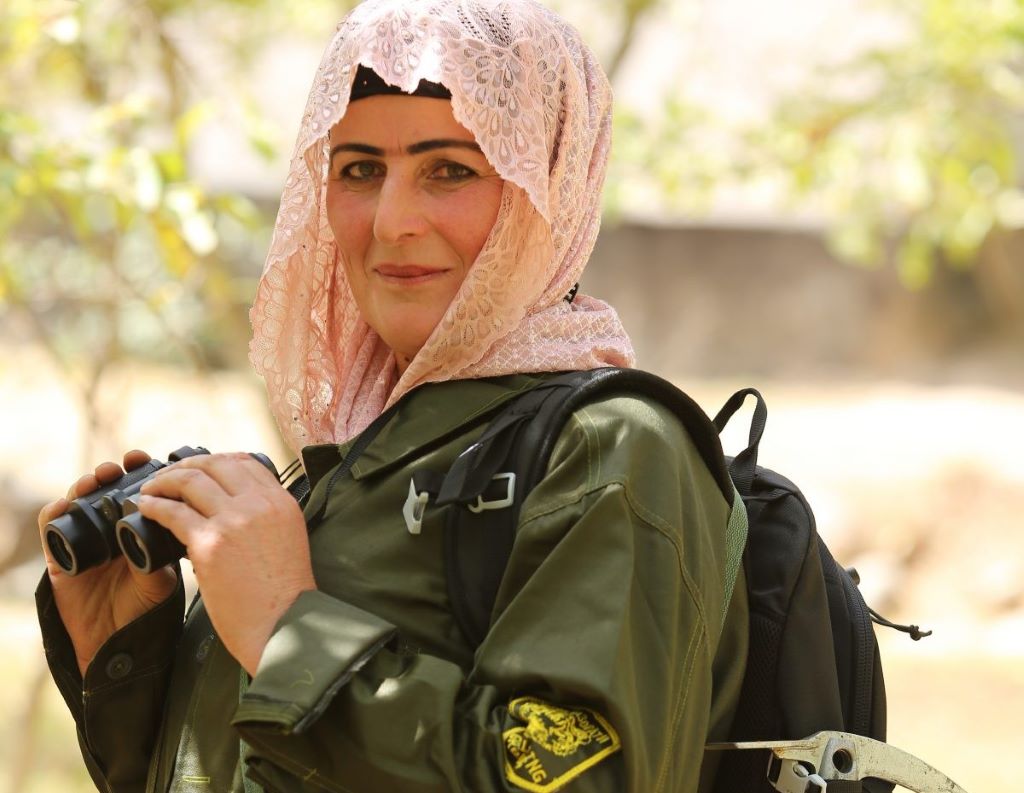
Forestry work is a demanding and sometimes dangerous job — even more so for women. Safarbi Davlatova is the only female forester in Tajikistan, and for the past 15 years, she has been protecting the natural reserve of Dashtijum in Khatlon province.
At 52, Safarbi serves as a conservation inspector, safeguarding the unique wildlife of the reserve, which is home to hundreds of species of animals and birds, including more than 1,500 mountain goats. In 2024, she was honored with the International Ranger Award at the World Conservation Congress in Abu Dhabi. In an interview with Asia-Plus, she spoke about her life and the challenges of her profession.
A career chosen by fate
“I was just 23 when my husband passed away. I was left alone in a small village with three young children and elderly in-laws. To support my family, I collected pistachios, cumin, persimmons, plums, apples, and pears, delivering the harvest to the farm,” she recalls.
From the beginning, she treated nature with great care, always avoiding damage to the trees — believing they too could feel pain. Her respect for nature soon became a model for others.
One day, returning from the fields, her father-in-law told her she was invited to become a forester. “I laughed when I heard it. Me, a forest ranger? I couldn't imagine it. But as a village woman, I told him the decision was his,” Safarbi says.
On her first day, her supervisor asked if she feared the wilderness. “I said no, as long as my colleagues wouldn’t see me as weak. I had never worked among men before. In a team of 42, I was the only woman. That first night in the forest, I was nervous — the rocks and trees seemed to whisper. But my colleagues were respectful and called me ‘apa’ (sister),” she says.
"If I don’t go to the forest, I get a headache"
Over the years, Safarbi has fully embraced her role. Even on weekends, she prefers to spend time in the reserve. She’s encountered bears, wild boar herds, watched mountain goats clash, and seen venomous snakes. But fear no longer holds her — she has learned to understand the “language of nature.”
“If I don’t go to the forest, I start getting headaches. I don’t use medicine — the fresh forest air is my cure,” she says.
She patrols the reserve in military uniform, riding her trusted horse. “As a child, I was the only girl who knew how to ride. It was just for fun back then, but now it’s a lifesaving skill,” she says proudly.
Her duties include identifying damaged trees, protecting animals from poachers, cultivating rare plants, collecting harvests for state storage, and feeding wildlife in winter. “Bears sometimes attack livestock, and herders may get angry, but the people of Dashtijum now understand the laws — we’ve done a lot of awareness work,” she explains.
Safarbi recalls how difficult things were in the past: there were no vehicles or bikes — only horses. “In winter, we walked through deep snow. I often fell. Now, we’re equipped with everything we need, and the job has become easier,” she says.
A dream to pass the torch
To Safarbi, forestry brings people out of greed and into harmony with nature. Her dedication was recently recognized on the international stage.
“One day, representatives from Fauna & Flora told me they wanted to send me abroad to receive an award. That’s how I ended up in Abu Dhabi, where I received a diploma for promoting gender equality and protecting endangered plants. Seventeen rangers from 13 countries were honored — from Central Asia, it was just a ranger from Uzbekistan and I,” she shares.
Her children felt proud after learning about the award through social media. “I dream of training female students in this field, but in my region, I haven’t met a single woman who wants to become a wildlife ranger. If even one of my three children continues my work, I’ll be happy — though I’ve never told them that,” she says with a laugh.
Safarbi believes that true dedication is what makes someone valuable to society: “You have to believe in yourself and stay true to your work.”