Where do we come from – an eternal question that in Tajikistan is traditionally answered through history and archaeology. But today, genetics helps to speak more precisely about the past.
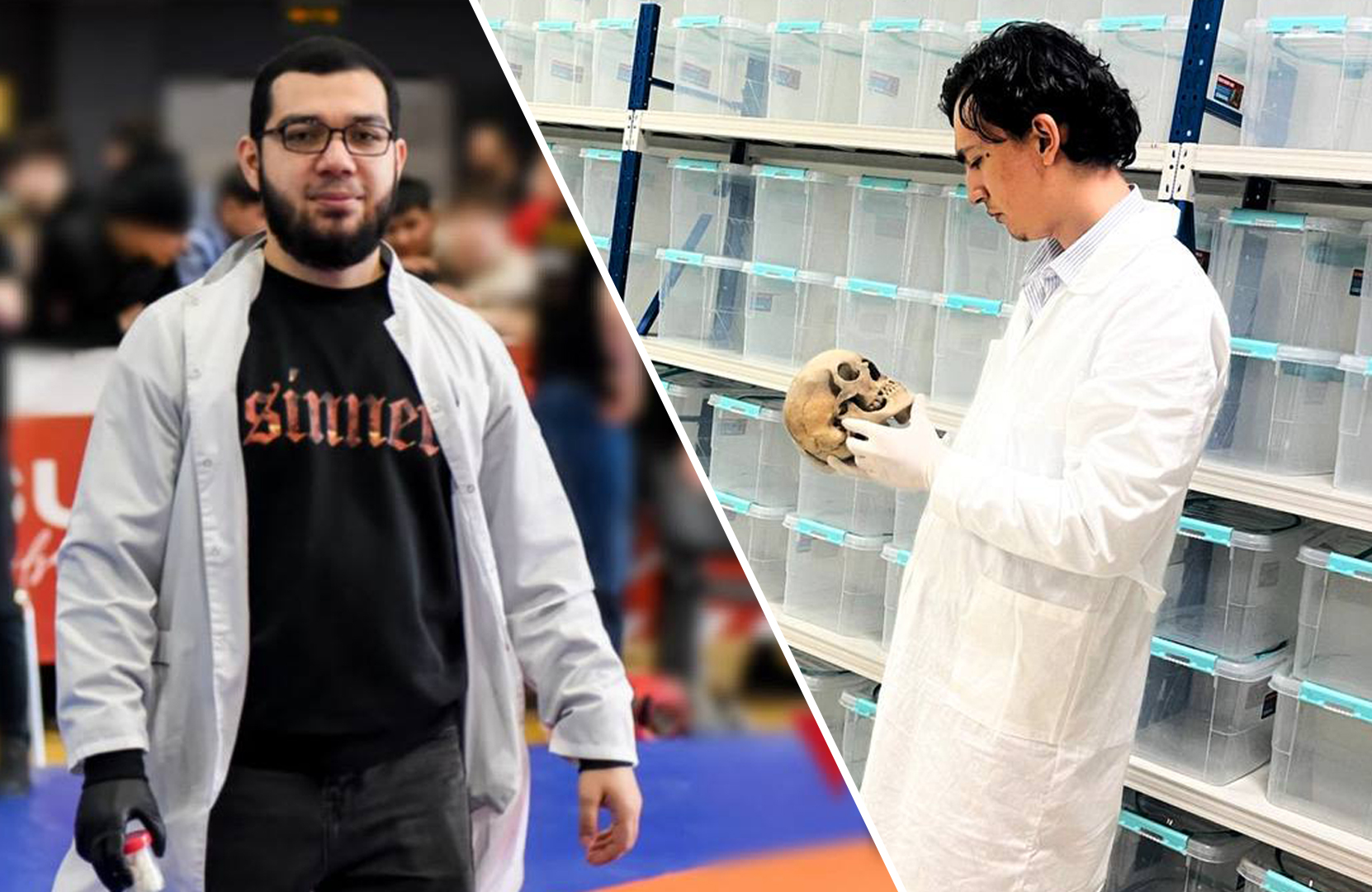
This is precisely what two young Tajik researchers are engaged in. For a year and a half, Sherzod Asrori and Mehrodj Rustamov have been studying the genetics of Tajiks. Their goal is to compile the first systematic database and try to build a genetic tree of the people.
How it all began
Mehrodj Rustamov is a young doctor working in Moscow. Sherzod Asrori also lived there for a long time. After receiving higher education, he returned to Dushanbe and now works as the chief specialist of the department of archaeology and numismatics at the National Museum of Tajikistan.
The interest in studying history appeared in the guys long ago. They were both fascinated by anthropology, linguistics, and ethnology, and gradually came to understand that genetics could provide a more precise and verifiable tool for studying the past.
Population genetics is a relatively young field. It has been actively developing only in recent decades, but it already allows for the clarification and revision of historical hypotheses based on DNA.
For Mehrodj, it all started with a personal interest and an attempt to understand his own roots.
“My paternal line comes from the village of Rarz, Ayni district, and I knew that our roots go back to ancient Sogdiana. But I always wanted to confirm this through a DNA test,” he says. “In August 2024, I accidentally came across the Lak DNA project. Since my mother is Lak by nationality, I contacted the project administration and through them decided to take a genetic test for the first time.”
The results obtained sparked interest among other researchers. It was then that he was offered to create a similar project, but for Tajiks.
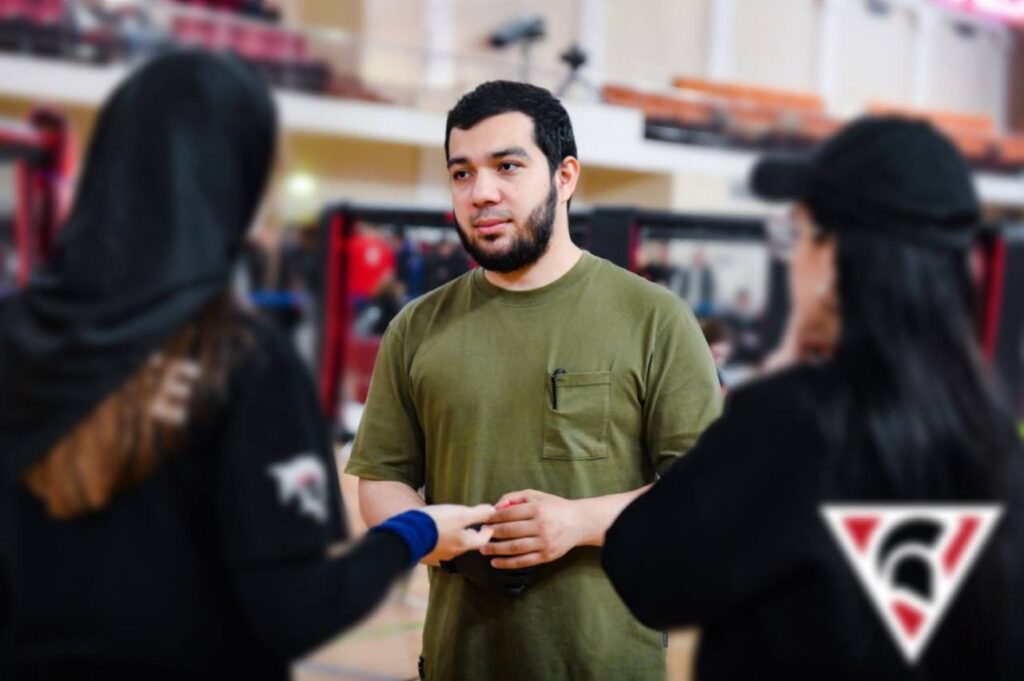
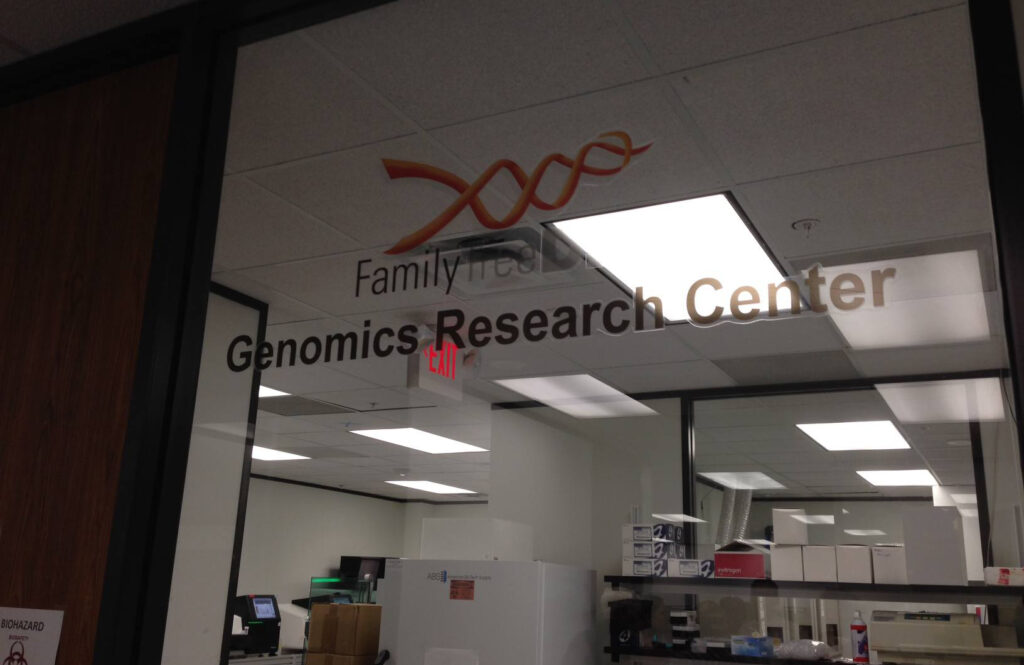
Thus, at the end of 2024, the first Tajik DNA project was launched on the FamilyTreeDNA platform – one of the leading international laboratories.
Almost simultaneously, Sherzod Asrori came to this topic as well. He had previously undergone testing and tried to understand the existing data but faced the fact that it was insufficient for serious conclusions.
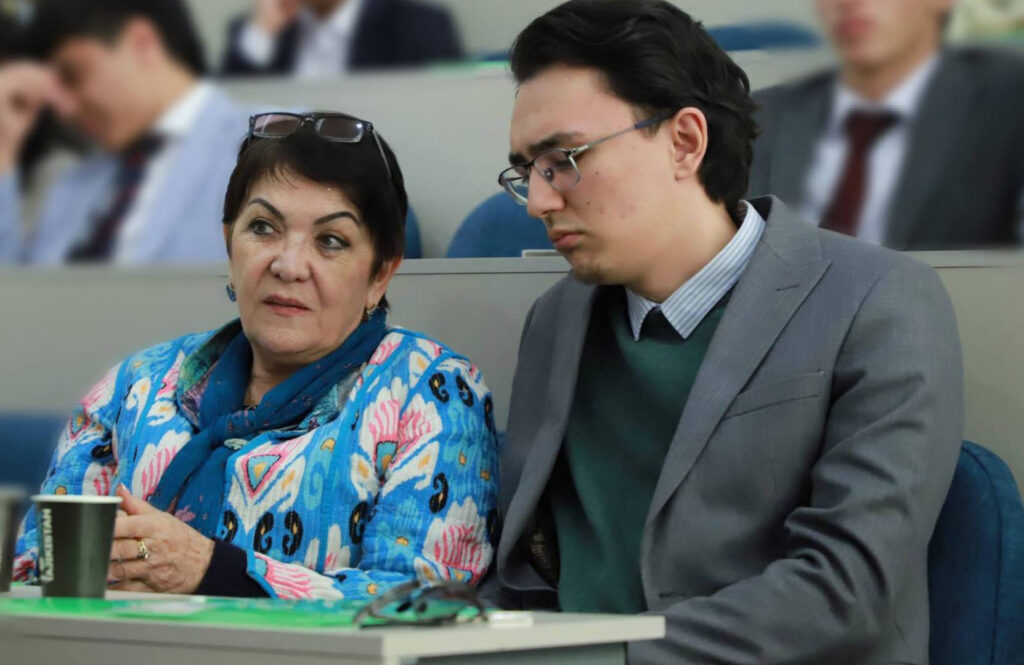
The guys met, quickly found a common language, began discussing results, exchanging ideas, and eventually decided to approach the topic as a full-fledged scientific study. Sherzod became one of the first to undergo testing within the framework of the project.
“The Tajik gene pool is very poorly studied to date. In Kazakhstan, Russia, European countries, the USA, and China, this field has been systematically developed for a long time. But in our case, despite a very rich history, there is a very limited empirical base. Tajiks are a people with an ancient history of origin, and our mountains, due to isolation, have contributed to the preservation of the genomes of ancient civilizations and peoples,” says Sherzod.
First results and reevaluation
When the first data appeared, it turned out that they did not always coincide with the results of earlier research, primarily from the 2000s.
According to Sherzod, the discrepancies were noticeable and immediately raised questions – both about the methodology of those studies and the principles of sample selection.
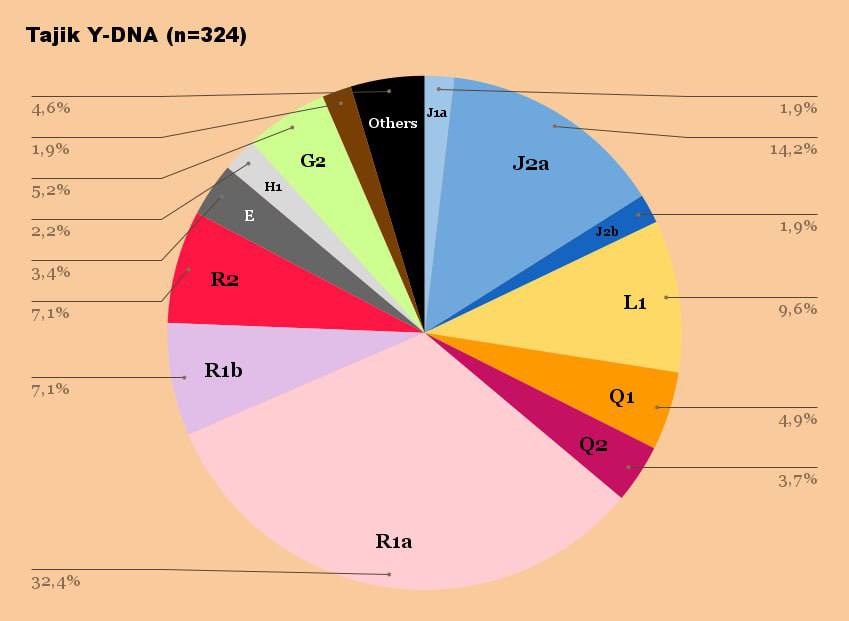
“In some works, it was claimed that the share of haplogroup R1a-Z93, which is associated with Andronovo and, in general, Indo-Iranian populations, could reach about 60% among Tajiks. However, according to our data, this figure is significantly lower – on average at the level of 30-35%,” explains the researcher.
But even more important was something else. In the samples, ancient, relict genetic lines began to appear – components associated with ancient northern Eurasians, early Iranian Neolithic farmers, and deeper layers of Eurasian populations.
According to Sherzod, this shows that the genetic history of Tajiks is much more complex and multilayered than previously thought.
“There are legends in different regions that some Tajiks supposedly descend from Alexander the Great or his ‘army’. There are also versions of the ‘Arab origin’ of certain groups. However, our genetic data do not confirm this. On a massive scale, such versions do not have a foundation,” notes the researcher.
According to him, some coincidences do occur, but they are isolated and do not reflect the overall picture.
So who are the Tajiks?
The data obtained not only clarified details but also, in general, changed the scholars’ understanding of the origin of the Tajiks.
“One of the most indicative moments is the significant share of male lines that trace back to the local, pre-Aryan population of Central Asia, particularly to populations associated with the Oxus culture. This is important because historical reconstructions have long emphasized primarily the Indo-Iranian component. But genetics shows that the contribution of the more ancient, autochthonous population of the region was no less significant,” notes Mehrodj Rustamov.
Moreover, the researchers were surprised by the genetic similarity of modern Tajiks with populations that inhabited the region as early as the early Iron Age.
According to Mehrodj, it is not about random coincidences, but about genetic continuity – the population has been preserved in this area for millennia.
“This, in general, changes the perspective: it becomes clear that Tajiks are not the result of some late or momentary processes, but the outcome of a long, complex formation in place with a deep historical root base,” he notes.
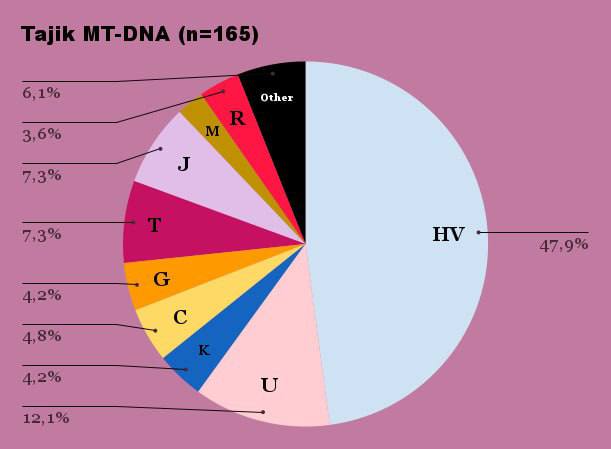
Simply put, the researchers explain it this way: Tajiks were formed from the mixing of two groups – the ancient local population associated with the Oxus culture and the steppe Indo-Iranian peoples who came to the region in the Bronze Age.
According to Sherzod, it is from this combination that the ancient Iranian peoples – the Sogdians, Bactrians, Khwarazmians, Sakas, and later the modern Tajiks – were formed.
At the same time, a significant part of the ancient gene pool has been preserved to this day, largely thanks to the relative isolation of certain regions.
Science and personal
A separate part of the project is working with people, where science often encounters personal expectations and perceptions.
According to Mehrodj, most people approach DNA testing with caution.
“There are often concerns that the results may not match their expectations or family perceptions of origin. It is important to immediately emphasize: a DNA test does not ‘change’ nationality. Nationality is primarily self-awareness, cultural, and linguistic affiliation. Genetics only shows origin,” he says.
As the researchers recount, sometimes the results are indeed unexpected. For example, analysis for two participants from the Kanibadam district showed paternal lineage associated with East Turkestan. It was also discovered during the study that they are distant relatives, although they were not aware of this.
In a year and a half, the project has managed to test about 150 people. Most of these were individuals attracted through social networks.
Among those who supported the initiative were director Dilovar Safarov and several Tajik bloggers. Additionally, the researchers managed to test the descendants of notable figures – Sadriddin Aini, Mirzo Tursunzoda, Nusratullo Maksum, Ahmad Shah Massoud, Rahmon Nabiev, and Zebuniso Rustamova.
“Recently, I participated in a competition for young researchers at the Slavic University, where my work was approved. Now we are expecting a grant that will allow us to expand testing for approximately 50 more people,” shared Sherzod.
What’s next?
The project is currently only at the beginning of its journey and relies on the enthusiasm of the researchers, but its potential is much broader than it might seem at first glance.
According to Sherzod Asrori, one of the key tasks is to structure the Tajik gene pool and reach the level of archaeogenetics, which are studies related to the study of ancient DNA.
“We are in great need of such research. We have a huge stock of archaeological materials stored, for example, at the Institute of History under the Academy of Sciences or the National Museum. I was recently invited to participate in a number of projects with foreign geneticists, and we expect to work with colleagues on the Iskodar mummies stored in the National Museum,” he says.
According to him, such studies will not only allow for a deeper understanding of the origin of the Tajiks but also trace their connections with ancient civilizations and confirm continuity with Iranian peoples.
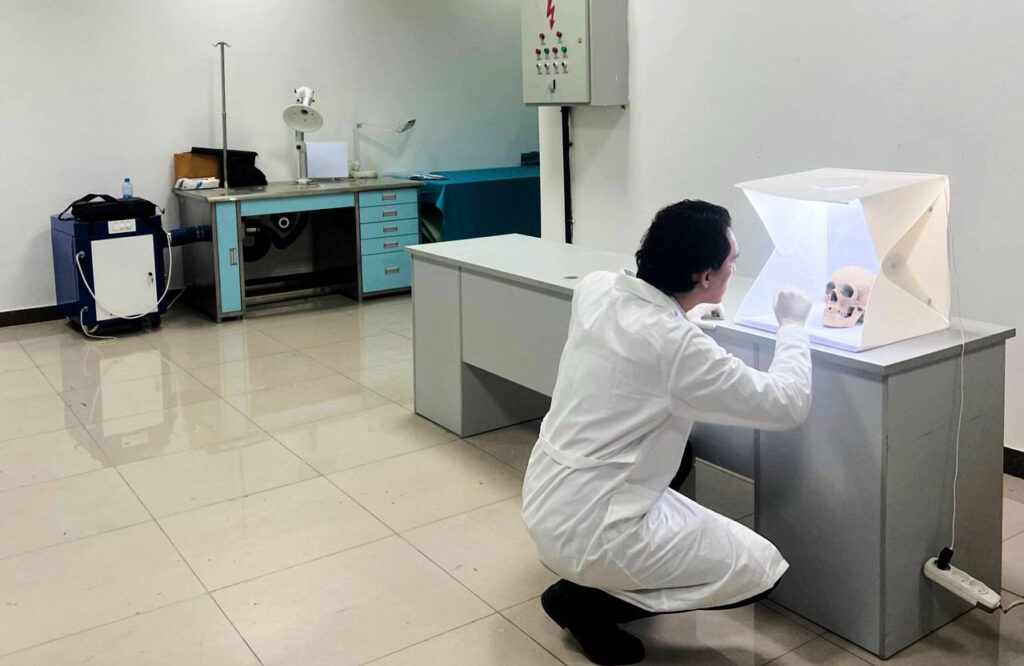
However, as the researcher notes, the development of the project is hindered by quite specific difficulties. The first is the lack of funding. Another problem is the lack of our own laboratory and specialists.
At the same time, the development of this direction largely depends not only on scientists but also on the people themselves.
“We really want to popularize population genetics in Tajikistan. However, progress in this direction directly depends on the people themselves who need to be tested. If people do not see the point in this, it is unlikely that we will be able to achieve the same results as in developed countries,” says Sherzod.
According to him, if the project can be implemented, it will be possible to better understand how Tajiks from different regions and countries are connected and trace their connection with ancient peoples of Central Asia.
Researchers also hope to create a full-fledged phylogenetic tree of Tajiks – essentially a scientific “genealogy” that shows the origin thousands of years back.
Moreover, the project has practical benefits. Over time, people will be able to find relatives, learn more about their family and origin.
“But perhaps the main thing is the question of unity. We want to show that Tajiks, despite regional differences, represent a connected historical and biological community. And at the same time confirm, clarify, or revise existing historical perceptions, separating facts from myths,” the researchers note.
The link for those who want to take the test – https://t.me/TajikDNA_helper
All photos provided by the article’s heroes.