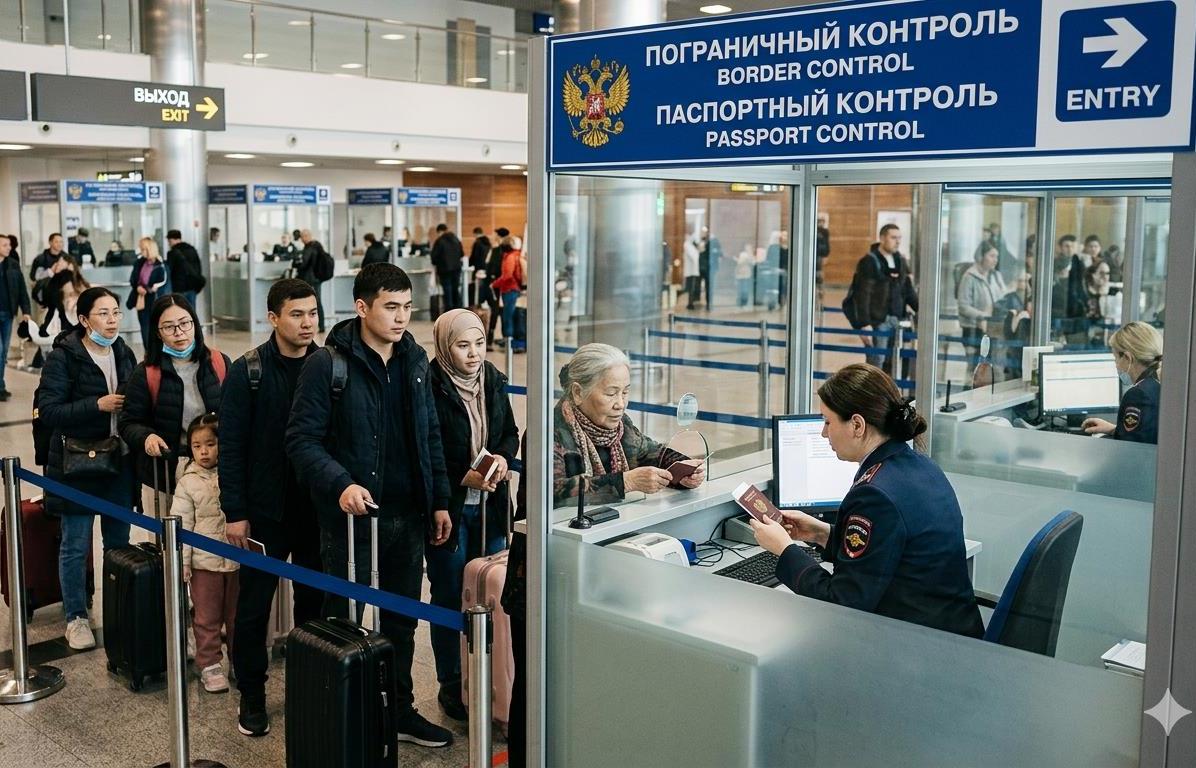
The Russian government has extended the experiment on collecting biometric data from foreign citizens entering the country. According to the decree approved by the Cabinet, the experiment, initially planned to last until June 30, 2026, has been extended to December 31, 2027, TASS reports .
The accompanying documents to the bill indicate that the extension of all stages of the experiment is due to positive experience and the need for the phased modernization of all border checkpoints, as well as the improvement of software for biometric identification.
The first stage of the experiment began on December 1, 2024. From this time, foreigners entering Russia through the international airports of Moscow (Domodedovo, Sheremetyevo, Vnukovo) and the Moscow region (Zhukovsky), as well as through the Mashatovo automobile checkpoint in the Orenburg region, are required to submit biometric data at these checkpoints.
The new stage, which came into effect on June 30, 2025, included the requirement to report in advance the purpose of the visit to Russia and to submit biometrics. For visa-free entry into the country, foreigners, including legal representatives of incapacitated or underage individuals, must complete an electronic application no later than 72 hours before the intended trip.
From December 1, 2025, the experiment on collecting biometrics was extended to all Russian border checkpoints with technical capability.