Home Blog Page 35

Rights groups warn of possible mass deportation of Russians from Kazakhstan over fake residence permit case

0

Kazakh law enforcement agencies are investigating a major criminal case involving forged temporary residence permits (TRPs). According to human rights advocates, the investigation could lead to the mass deportation of Russian citizens who moved to the country after the start of the war. The “Slovo Zashchite” project reported the information, citing lawyers and activists assisting Russian emigrants, and it was also published by Meduza.

According to their information, dozens of Russian citizens of conscription age are being questioned as witnesses in the case. Sources say the investigation began in late February 2026. Investigators are reportedly summoning people for questioning in small groups of three to four individuals at a time.

A temporary residence permit in Kazakhstan allows foreigners to stay in the country for up to one year. To obtain one, applicants must have official employment and registration at their place of residence.

The “Slovo Zashchite” project notes that for some time the Kazakh authorities had largely not interfered with the widespread practice of obtaining TRPs through intermediaries.

Human rights advocates also point out that the investigation is being conducted not by migration police but by a unit of the National Security Committee. In their view, this could indicate preparations for a large-scale deportation of Russian citizens, possibly based on lists coordinated with the Russian authorities.

In this context, activists advise Russians who may be connected to the case involving fake TRPs to leave Kazakhstan voluntarily as soon as possible in order to avoid forced deportation to Russia.

After the start of the full-scale war against Ukraine and the announcement of mobilization in Russia, Kazakhstan became one of the main destinations for Russians relocating abroad. Tens of thousands of people who left Russia because of the war are currently in the country. According to human rights groups, the number of deportations of Russian citizens sharply increased in 2026, including cases involving individuals who face political persecution or accusations of desertion in Russia. 

200 women in Tajikistan eligible for presidential grants of up to 110,000 somoni

0

Tajikistan’s Committee on Women and Family Affairs has announced a competition for presidential grants aimed at supporting and developing women’s entrepreneurship in 2026.

According to the Committee, 200 women entrepreneurs will receive non-repayable grants this year to develop their businesses.

The funding will support projects focused on reviving traditional crafts, opening small workshops, developing carpet weaving, livestock breeding, poultry farming and fish farming, as well as processing dried fruits and expanding agricultural production.


The grants will range from 40,000 to 110,000 somoni.

Applicants must submit project proposals in the Tajik language, with a maximum length of five pages, prepared in MS Word format (Times New Roman, size 14) and in accordance with the competition requirements.

The committee said that the application process has already begun, with submissions accepted until April 15.

Projects with incomplete documentation will not be considered, and submitted documents will not be returned if an applicant is not selected.

Applications can be submitted at:

3 Akademikov Rajabov Street, Dushanbe

Phone: 227-91-17, 221-34-71, 227-24-38

Email: [email protected]

The Committee also noted that in 2025, the government allocated 15 million somoni in grants for women entrepreneurs to implement 200 projects.

Committee head Bunafsha Fayziddinzoda said at the time that the amount of funding had been tripled compared to previous years.

The funds were aimed at promoting women’s entrepreneurship, supporting traditional crafts, and creating new jobs.

Trump says war with Iran could end soon as oil prices surge

0

U.S. President Donald Trump said the war with Iran could end soon after Brent crude prices surged to nearly $120 per barrel, the BBC’s Russian Service reported.

On Monday, amid fears that the conflict could disrupt oil shipments through the Strait of Hormuz, Brent crude approached $120 per barrel — the highest level since Russia’s full-scale invasion of Ukraine four years ago.

Trump said the main targets of the military operation in Iran had already been hit and that the campaign was progressing faster than expected.

Following his remarks, oil prices temporarily dropped below $90 per barrel, but by Tuesday morning they rose again to around $93, roughly $20 higher than before the conflict began on February 28, according to the BBC’s Russian Service.

The outlet noted that after a tense Monday morning, when oil prices reached a four-year high, Trump began contacting journalists in an effort to reshape the news narrative.

Just days earlier he had demanded Iran’s “unconditional surrender,” but in an interview with CBS News he said the war was now “almost over.”

According to the U.S. president, the operation is proceeding “well ahead of schedule.” However, his comments remained relatively vague.

Responding to a New York Post reporter about the sharp rise in oil prices, Trump said: “I have a plan for everything. Believe me, I have a plan for everything — and you will be very happy.”

Following the remarks, stock markets rose and oil prices — which had earlier reached $120 per barrel — fell below $90.

Later, speaking to Republicans in Florida, Trump described the invasion as “a small short-term excursion” aimed at “removing evil.”

He claimed that about 90% of Iran’s missile capabilities had been destroyed, drones had been shot down and the country’s leadership eliminated.

According to Trump, only a few targets remain, which the United States could strike “within a day.”

In response, Iran’s Islamic Revolutionary Guard Corps (IRGC) said Iran would decide when the war ends and warned it would prevent “a single liter of oil” from leaving the Middle East.

Trump warned that if Iran attempts to block shipments through the Strait of Hormuz, the United States would strike “20 times harder than before.”

On Tuesday, oil prices rose again to $93 per barrel after Trump said: “We have won in many ways, but that is not enough.”

Brent crude remains about $20 higher than before the conflict began on February 28, when it traded at around $73 per barrel.


Rising gasoline prices pose political risk for Trump

Even if oil market volatility subsides, higher gasoline prices are likely to persist.

The average price of gasoline in the United States has reached $3.48 per gallon, about 48 cents higher than a week earlier.

Meanwhile, the U.S. economy is already showing signs of slowing. According to the U.S. Bureau of Labor Statistics, the country lost 92,000 jobs in February, unemployment rose to 4.4%, and the labor force participation rate fell to 62%, its lowest level since December 2021.

The rising cost of living remains one of the biggest concerns for Americans.

Public opinion polls also show growing dissatisfaction with the ongoing military operation against Iran. With U.S. midterm elections just months away — elections that will determine control of Congress — the situation presents significant political risks for the Trump administration.

According to the Wall Street Journal, citing informed sources, Trump’s statements about ending the war “very soon” may be linked to advice from some of his advisers.

They are urging the administration to find a way out of the conflict amid soaring oil prices and concerns that a prolonged war could trigger negative political reactions both in the United States and internationally.


Bloomberg: Gulf Countries Cut Oil Production

Saudi Arabia, the United Arab Emirates, Iraq and Kuwait have reduced oil production by 0.5 to 2.9 million barrels per day, depending on the country, Bloomberg reported citing informed sources.

Saudi Arabia cut production by 2–2.5 million barrels per day, the UAE by 0.5–0.8 million, Kuwait by 0.5 million, and Iraq by about 2.9 million barrels per day.

The cuts are linked to the near-total halt of shipping through the Strait of Hormuz and overflowing oil storage facilities.

On Tuesday, Iran’s Islamic Revolutionary Guard Corps said it would continue blocking oil exports from Gulf countries until the United States and Israel stop their attacks on Iran.

The IRGC said it would “not allow a single liter of oil to leave the region,” Reuters report

Entrepreneurs importing goods from Iran report rising prices in Tajikistan

0

Attacks by the United States and Israel on Iran, as well as restrictions on the export of food products from the country, could lead to higher prices for Iranian goods in Tajikistan, local traders who import products from the Islamic Republic say.

Some of them are already considering temporarily replacing Iranian products with goods from other countries.

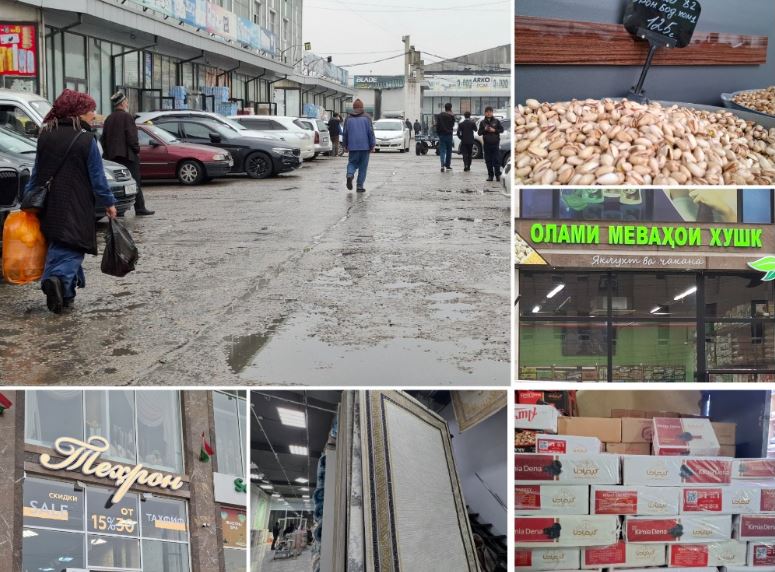
An Asia-Plus correspondent spoke with several entrepreneurs importing goods from Iran to Tajikistan, as well as wholesale sellers at markets in Dushanbe, to learn how the situation surrounding Iran is affecting their businesses.


Goods delayed in Turkmenistan

One trader, who asked not to be named, said that after the outbreak of the conflict involving the United States, Israel, and Iran, a shipment he ordered has still not arrived in Tajikistan. He sells dried fruits, pistachios, sugar, sweets, and dates.

According to him, the cargo had been ordered in advance, but transport partners reported that 380 railway wagons of goods were returned from Iran’s border and are currently being held in Turkmenistan.

“The reason has not been explained, but it is most likely related to tensions between the United States and Iran. Until the shipment arrives, we will continue selling our remaining stock,” the trader said.
 

Prices already rising

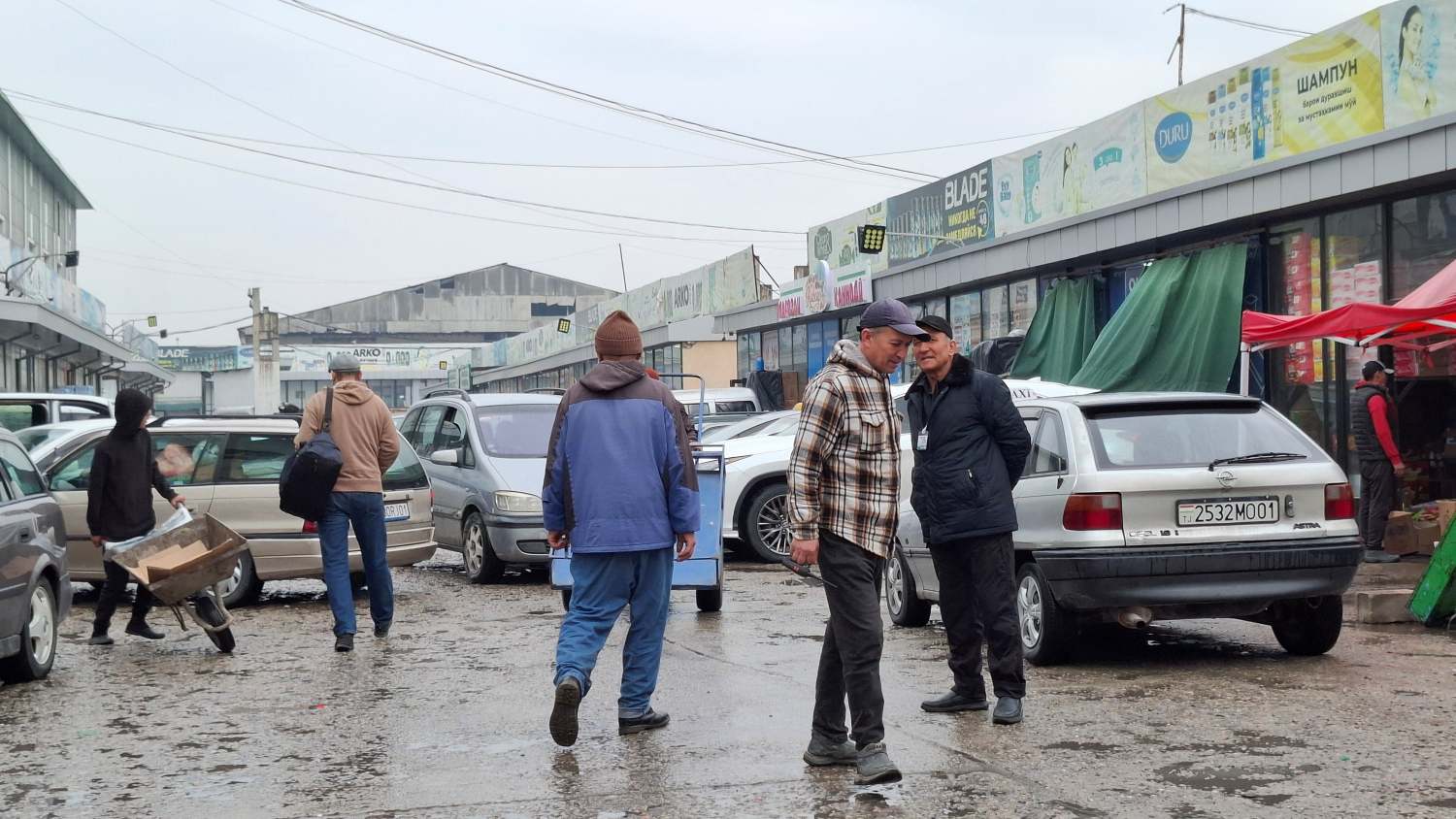
A merchant running shop at Dushanbe’s Farovon bazaar, who also asked not to be named, said that prices for Iranian products have already begun to rise following restrictions on the export of food products from Iran.

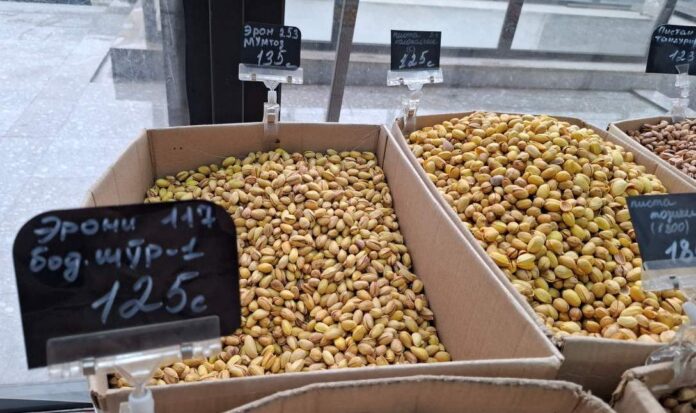
“Today the price of one kilogram of Iranian pistachios has reached 150 somoni, whereas a week ago it ranged from 90 to 120 somoni,” he said.

According to traders, suppliers of Iranian products still have some stock available, but it may not be enough to meet demand for long.

“We only have a small amount of pistachios left and about 50 packages of Iranian dates weighing five kilograms each. Since we sell wholesale, the goods run out quickly. At the moment we do not know how we will supply our customers,” another seller at the Farovon bazaar said.
Another entrepreneur noted that he previously worked under a contract with Iranian partners.

“We used to place orders and they would send the goods. Now it is unclear what will happen next. We still have some stock, but it will run out quickly because demand for Iranian products is high,” he said.

At the same time, some traders believe that restrictions on Iran’s food exports will not have a serious impact on Tajikistan’s food supply.

“There is Russia, Uzbekistan and other countries we cooperate with. In the future we will import products from these countries,” one trader noted.


Carpet sellers also facing difficulties

The conflict has also affected carpet sellers. Some entrepreneurs importing textiles from Iran say that under current conditions deliveries from the country have effectively stopped.

“My brother used to travel to Iran and bring back goods, but now, while the war continues, we do not know what will happen next. Demand for Iranian carpets among residents is high because of their good quality. In addition to Iran, we also import carpets from Turkiye,” said a representative of the carpet store Fors.

The situation has also raised concerns among other sellers. They say that once their stocks of Iranian carpets run out, they will have to meet customer demand using Turkish and domestically produced products.

“We sell carpets made in Iran, Tajikistan, Uzbekistan, and Turkiye. We do not travel to Iran ourselves — we receive the goods from a supplier who delivers them directly to the store, and we handle the sales. Whether supplies will continue is still unknown,” said Qobil, a representative of the Tehran carpet store.


Iranian products remain in high demand

Entrepreneur Madina Rahimova (name changed) imports various hygiene products from Iran.

Some time ago, she ordered four railway wagons of goods, but the shipment has still not crossed Iran’s border.

“We have very little stock left, and the products we bring from Iran are in high demand. Since we sell wholesale, the goods run out quickly. We have been working with Iranian suppliers for several years, and the current situation is seriously affecting our business,” she said.

According to her, Iranian products are relatively inexpensive while maintaining good quality.

“Right now we are confused, because we have not previously imported similar goods from other countries,” she added.

Iran is one of the largest suppliers of food products to Tajikistan, including dairy products, fruits and vegetables, nuts, sugar, and spices. Any disruption in supplies could therefore affect prices for these products on the domestic market.

Experts say that in the current situation the Tajik government should look for alternative supply routes, for example through Uzbekistan or Kyrgyzstan. In their view, the situation could lead to rising prices for certain goods and create instability in the food market.

 

Man detained in Dushanbe on suspicion of stabbing acquaintance to death following conflict

0

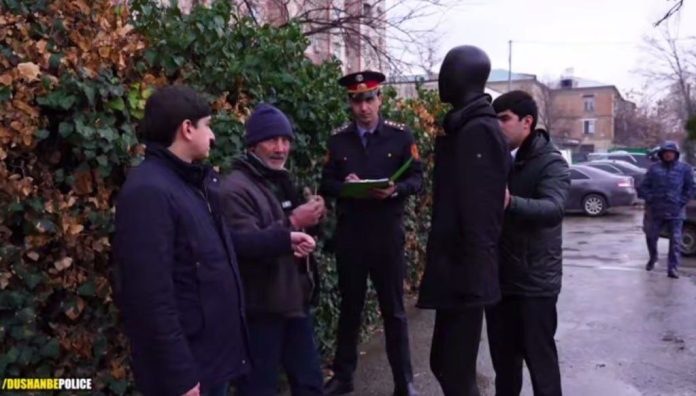
Police in Dushanbe have detained a 51-year-old resident of the capital, Tohir Rasoulov, on suspicion of intentionally inflicting grievous bodily harm resulting in death. The Dushanbe Police Department reported the incident.

According to investigators, the incident occurred on Rahmon Nabiyev Street. A conflict reportedly broke out between Rasoulov and 46-year-old Dushanbe resident Vyacheslav Prokhozhev due to a long-standing dispute.

Police said that during the altercation the suspect first beat the man and then stabbed him several times in the chest. The victim died at the scene from his injuries and severe blood loss.

Criminal proceedings have been instituted against Rasoulov under Article 110 of Tajikistan’s Criminal Code — intentional infliction of grievous bodily harm.

The suspect has been detained and placed in custody while the investigation continues.

Earlier, another suspect was detained in Dushanbe in a similar case.

According to police, a 26-year-old Javlon Turdiboyev, a resident of the Shahriston district of Sughd province, is suspected of intentionally inflicting grievous bodily harm on his wife.

The incident reportedly took place on February 5 on R. Karimov Street. During a conflict, the man allegedly stabbed the woman several times in different parts of her body, causing serious injuries. She was hospitalized.

Criminal proceedings have been instituted against the suspect under Article 110 of Tajikistan’s Criminal Code — intentional infliction of grievous bodily harm. He has been placed in custody and the investigation is ongoing.


New institutes to be established at Tajikistan’s International University of Tourism and Entrepreneurship

0

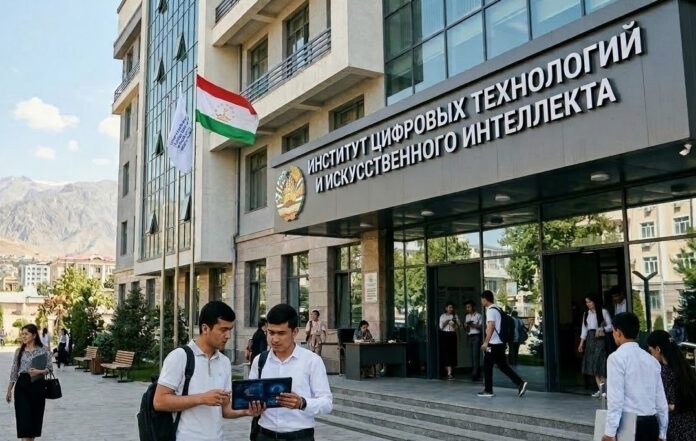
On March 10, Tajik President Emomali Rahmon, who is also Head of the Government of Tajikistan, signed government resolutions establishing new state institutions at the International University of Tourism and Entrepreneurship of Tajikistan, the Tajik president’s press service reported.

According to the documents, the university will host the Academy of Tourism, the Institute of World Economy and Diplomacy, and the Institute of Digital Technologies and Artificial Intelligence.

Their charters and organizational structures have also been approved.

According to the president’s press service, the establishment of these new educational institutions is aimed at training qualified specialists in tourism, digital technologies, artificial intelligence, world economy, and diplomacy, given the growing importance of these sectors for the country’s socio-economic development.

“This is a continuation of President Emomali Rahmon’s education policy, which opens new opportunities for young people to obtain modern professions,” the press service noted.

Earlier, the government of Tajikistan approved the Artificial Intelligence Development Strategy of the Republic of Tajikistan for period until 2040. Its key objectives include developing digital infrastructure, training AI specialists, introducing artificial intelligence technologies into the economy, applying intelligent systems in public administration, and promoting scientific research in the field of AI.


Fishing production in Tajikistan falls by nearly 20%

0

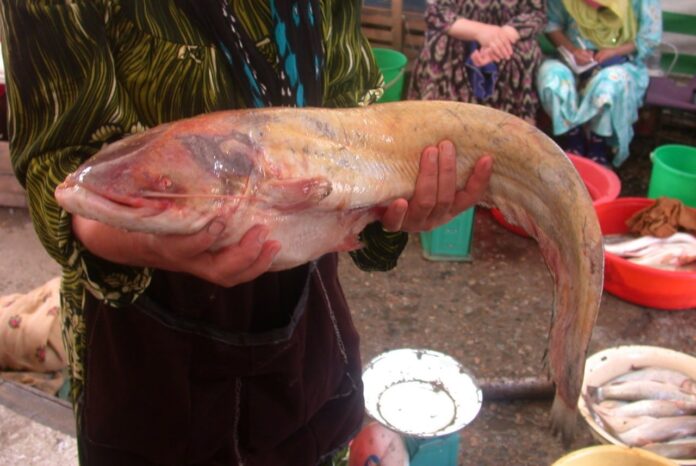
At the beginning of 2026, Tajikistan recorded a noticeable decline in fishing production.

According to the Agency for Statistics under the President of the Republic of Tajikistan, the volume of aquaculture output in January amounted to 14.3 million somoni, which is 19.3% less than in the same period last year.

In total, 388.5 tons of fish were produced in the country during the first month of the year. The largest share of the fishing production came from the Khatlon province, accounting for 231.4 tons.

The production structure was dominated by species such as silver carp (59.4 tons), common carp (44.9 tons), trout (94.8 tons), and grass carp (35.2 tons). In addition, 0.5 tons of pike-perch and 153.7 tons of other fish species were harvested.

Despite the decline at the beginning of the year, the authorities consider fishing production one of the promising areas for development of the agrarian sector. In the Program for the Development of the Agri-Food System and Sustainable Agriculture for the period until 2030, the fishing production is identified as an important element in ensuring the country’s food security.

The document notes that Tajikistan has significant potential for the development of fisheries due to its abundant water resources. However, the sector still faces a number of challenges, including a weak production base, a shortage of feed, modern technologies, and qualified specialists.

According to government plans, by 2030 fishing production should cover 50–60% of domestic demand, while the share of locally produced fish on the market is expected to gradually increase. The development of the sector is also expected to create new jobs in rural areas.

In recent years, the number of fish farms in the country has been steadily growing. In 2025, Tajikistan had 366 fish farming enterprises, while the total area of fishery reservoirs reached 2,800 hectares. Total fish production that year amounted to 5,600 tons.

However, experts note that the productivity of fish farming ponds remains relatively low. While in the 1990s it reached 3.0–3.5 tons per hectare, today the figure stands at about 1.5–1.6 tons. The main reasons cited include a shortage of compound feed, worn-out infrastructure, and technological limitations.

At the same time, fish consumption in the country remains far below recommended levels. Tajikistan produces only about 190 grams of fish per capita annually and ranks last among the countries of the former Soviet Union by this indicator. Meanwhile, the recommended consumption level is at least 9 kilograms per person per year.

According to specialists, the population’s access to fish remains limited. Therefore, further development of the fisheries sector is seen as one of the key ways to strengthen food security and improve the population’s diet.

International cycling marathon Grand Tour: Silk Road Reload to take place in Central Asia in 2026

0

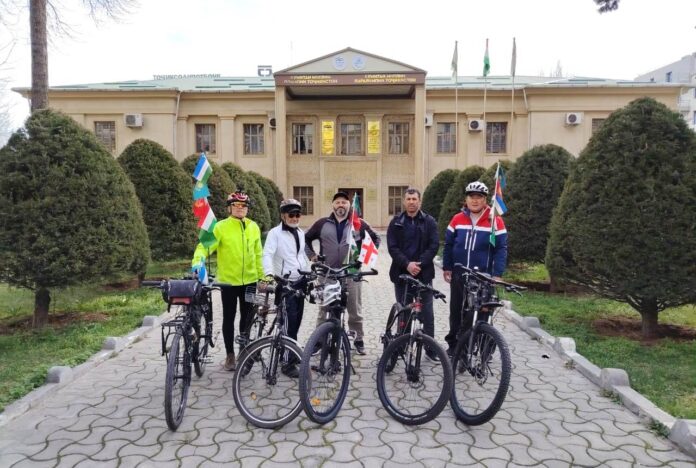
An international cycling marathon Grand Tour: Silk Road Reload is scheduled to take place across Central Asian countries in September–October 2026.

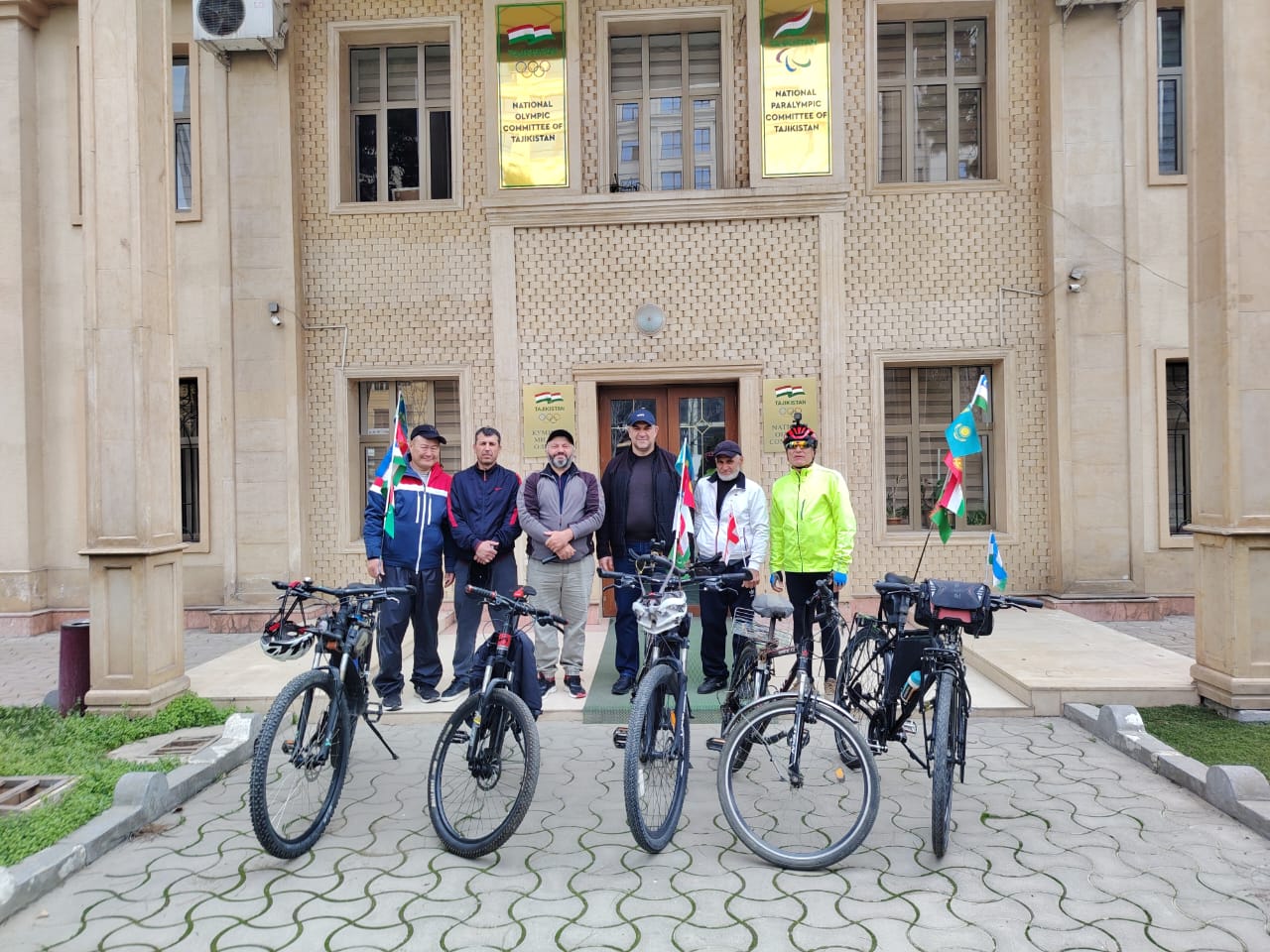
Preparations for the large-scale sporting event are already underway. An expedition team involved in the project has completed one of the key preparation stages, covering more than 1,500 kilometers along the route from Almaty to Dushanbe, according to the Tajikistan Federation of Sports Tourism (TFST).

Organizers say the trip to Dushanbe was part of a technical audit of the future cycling route, which aims to unite Central Asian countries through a humanitarian and sporting initiative.

The expedition was led by renowned cyclist and peace ambassador Nodar Beridze (Georgia), the initiator and ideologist of the project. The team also included Khursand Sherov (Uzbekistan), Ikhe Tumarov (Kazakhstan), and Akhtam Manonov (Tajikistan).

During the expedition, participants assessed the logistics and safety of a key section of the route passing through Uzynagash, Bishkek, Taraz, Shymkent, Tashkent and Dushanbe. The next stage of the expedition is planned through Samarkand and Bukhara, after which the route will continue toward Ashgabat.

While in Dushanbe, the team met with Olympic champion in athletics Dilshod Nazarov, who expressed support for the initiative.

According to the organizers, the expedition has already attracted significant public attention. Video diaries posted by Nodar Beridze on social media have gathered more than one million views.

The current journey serves as a preparatory stage ahead of the project’s main event — the Grand Tour: Silk Road Reload international cycling marathon, scheduled for autumn 2026.

Organizers say the project aims to promote the cultural heritage of the Great Silk Road, strengthen people-to-people diplomacy, encourage healthy lifestyles, and enhance tourism cooperation among countries in the region.

Tajikistan’s external trade deficit widens despite strong export growth

0

Tajikistan’s external trade deficit in goods widened to $579 million in January this year, compared with $478 million in the same month of 2025, according to the weekly macroeconomic review of the Eurasian Development Bank (EDB).

Analysts say the increase in the deficit was mainly driven by a sharp rise in imports.

“The widening of the deficit was caused by a 27.2% year-on-year increase in imports amid growing domestic demand in the economy,” the report states.

Tajikistan significantly increased its imports of vehicles (up 52.7%), machinery and equipment (up 32.7%), and food products (up 55.7%).

At the same time, exports also recorded strong growth.

“Exports rose by 53.1% year-on-year, supported by higher shipments of precious and non-ferrous metals, textiles, and mineral products, including cement and ore concentrates,” EDB analysts noted.

According to Tajikistan’s Agency for Statistics, the country’s total foreign trade turnover reached $929 million in January, which is 31.4% (or $221.9 million) higher than in the same period last year.

The balance remained negative at $578.6 million.

In January, Tajikistan maintained trade relations with 94 countries worldwide.

Exports totaled $175.2 million, increasing by 53.1% (or $60.8 million) compared with January 2025.


Exports by main commodity groups — January 2026

Categories:

·         Mineral products — 44.9%

·         Base metals and articles thereof — 29.6%

·         Textiles and textile products — 10.8%

·         Machinery and equipment — 6.5%

·         Products of plant origin — 4.1%

·         Chemical industry products — 0.6%

·         Other goods — 3.5%


Imports amounted to $753.8 million, up 27.2% (or $161.1 million) year-on-year.


Imports by main commodity groups — January 2026

Categories:

·         Mineral products — 20.0%

·         Base metals and articles thereof — 13.4%

·         Machinery and equipment — 13.1%

·         Chemical industry products — 7.5%

·         Products of plant origin — 7.2%

·         Prepared food products — 5.7%

·         Wood and articles of wood — 4.2%

·         Plastics, rubber and articles thereof — 3.6%

·         Animal and vegetable fats and oils — 1.6%

·         Other goods — 23.7%


Tajikistan’s major trading partners remain China ($281 million), Russia ($237 million), and Kazakhstan ($120 million). 

Central Asian meteorologists dismiss threat of “acid clouds” from Iran

0

Reports circulating on social media about so-called “acid clouds” allegedly moving from Iran toward Central Asia are not supported by scientific data. National hydrometeorology services in Uzbekistan, Kazakhstan and Kyrgyzstan say there is no threat to the region.

In recent days, social media posts claimed that strikes on Iran’s oil infrastructure released large amounts of harmful substances into the atmosphere that could form “acid clouds.” However, specialists say these claims have no scientific basis.


Uzbekistan: no threat to the region

Uzbekistan’s Hydrometeorology Service (Uzhydromet) stated that information about possible transport of “acid clouds” to Central Asia is scientifically unfounded.

According to the agency, acid precipitation forms when sulfur dioxide (SO₂) and nitrogen dioxide (NO₂) accumulate in the atmosphere and react with water vapor in clouds. Such processes usually occur near pollution sources such as major industrial facilities or power plants.

When air masses travel long distances, the concentration of pollutants decreases significantly due to atmospheric mixing and particle deposition.

“Based on meteorological observations and air quality monitoring, there is no threat of ‘acid clouds’ reaching Uzbekistan or neighboring countries,” Uzhydromet said.


Kazakhstan: monitoring data shows no risk

Kazakhstan’s national hydrometeorology service Kazhydromet expressed a similar position.

The agency stressed that reports about “acid clouds” supposedly moving toward Central Asia are not supported by scientific data or air quality monitoring results.

Specialists explained that acid precipitation forms from sulfur and nitrogen oxides released mainly by industry, energy production and transport, and usually develops near emission sources.

“When air masses travel long distances, the concentration of these substances decreases significantly due to natural atmospheric processes,” Kazhydromet noted.

Monitoring data show no signs that such pollutants are moving toward Kazakhstan or other Central Asian countries.


Kyrgyzstan: situation under monitoring

Authorities in Kyrgyzstan also say they are monitoring the situation.

Deputy Minister of Natural Resources, Ecology and Technical Supervision Asel Raimkulova said the country’s hydrometeorology service is tracking atmospheric conditions using automated monitoring stations.

However, Kyrgyzhydromet clarified that its main task is weather forecasting and it does not conduct extensive chemical analysis of precipitation.

Experts interviewed by journalists say it is highly unlikely that possible pollution from Iran could reach Central Asia.


Why “acid clouds” cannot travel thousands of kilometers

Specialists explain that acid precipitation is linked to local atmospheric processes. Rain or snow forms from water vapor and aerosols present directly in the air above a specific area.

As air masses travel long distances, pollutant concentrations decrease due to atmospheric turbulence, vertical mixing, and dry and wet deposition processes.

As a result, the formation of dangerous acid precipitation thousands of kilometers away from the pollution source is considered virtually impossible.

So far, Tajikistan’s authorities have not issued official statements on the issue. However, hydrometeorology services in neighboring countries agree that there is no threat of “acid clouds” moving from Iran to Central Asia.