The Aga Khan Development Network (AKDN)’s website notes that in 2021, only 39 percent of Tajiks had a bank account. Numbers are lower in rural areas, with less physical access to a bank, and amongst women, who often have lower financial literacy and more responsibilities preventing them from engaging with formal banking.
Banks charge relatively high interest rates, concentrate their branches in urban areas and require paperwork to set up accounts. They tend not to accept very small sums as savings, and are reluctant to lend money for agricultural needs. Other loans can be exploitative. If crops fail or a family member needs medical help, most individuals in remote areas of Tajikistan therefore rely on informal networks as a safety net.
The Aga Khan Foundation (AKF) and the United States Agency for International Development (USAID) have established community-based savings groups (CBSGs) for thousands of users through two programs: Economic and Social Connections: A Multi-Input Area Development Financing Facility for Tajikistan and the ongoing Thrive Tajikistan: Partnership for Socio-Economic Development.
A Community Savings Group is a community-based lending program. A group of people in a community agree to save a certain amount periodically and deposit these savings in a group account. This money is then lent over the course of one year based on demand, after which the loans need to be repaid.
The CBSGs support the Government’s aim of involving those in rural areas, particularly youth and women, in social and economic transformation, while reducing inequalities.
The groups follow the model used successfully by AKF in Africa and Asia since 2009. AKF provides the initial mobilization, training and technical support to help members set up and run the groups effectively.
Supplied with tools for bookkeeping and education on financial management best practices, taking out loans and management of a social fund, each CBSG is then organized and managed by the members themselves. The group saves together and members can take out small loans to start or expand a business, or pay for expenses such as unexpected healthcare needs or planned education. The savings and loan profits are shared out each year at a time when members typically need the funds. Profits stay within the community, with some being used for those in greatest need.
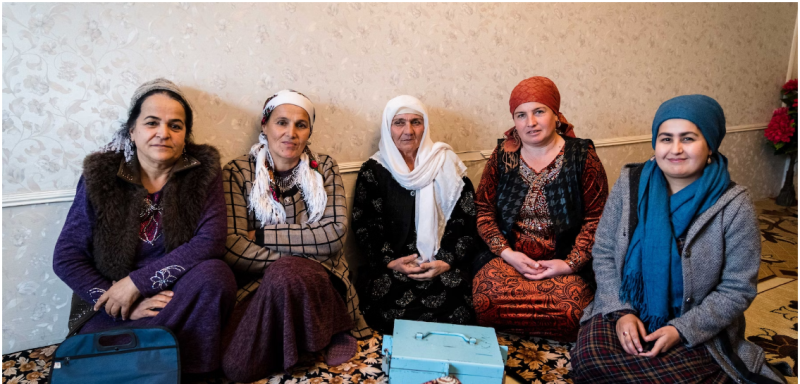
Accountability is built into the structure of how the group collects and stores funds. Members have passbooks, recording transactions which are carried out publicly at meetings for transparency. Shares and dues collected from all members are kept in a lockbox. The leader, treasurer and secretary each have a key, all three of which are needed to open it.
While CBSGs aim to increase financial inclusion, nurture small businesses and empower individuals in marginalized communities, their benefits are clearly reaching far beyond the participating households.
AKF established the Community-Based Savings Program (CBSG) in 2009 to promote community-managed financial services in the disadvantaged communities where it works. This built on decades of experience with community-managed microfinance approaches, but offered a less cost-intensive approach. CBSGs respond directly to the financial service needs of the remote and rural poor by providing a secure, convenient place to save and take small loans on flexible terms. The CBSG savings opportunity is particularly well suited to the remote rural poor.