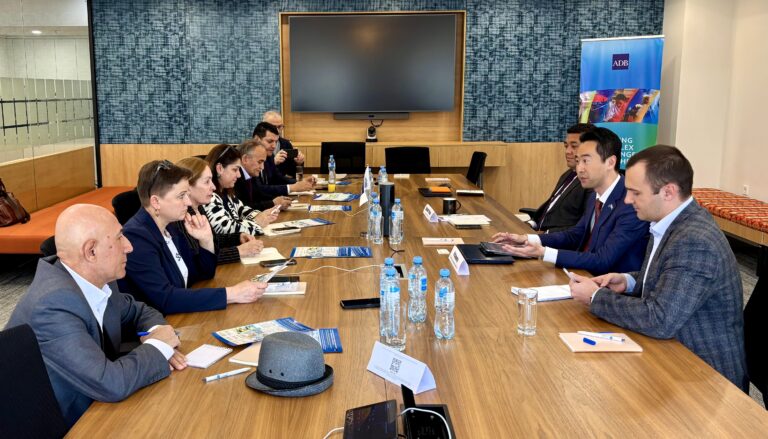
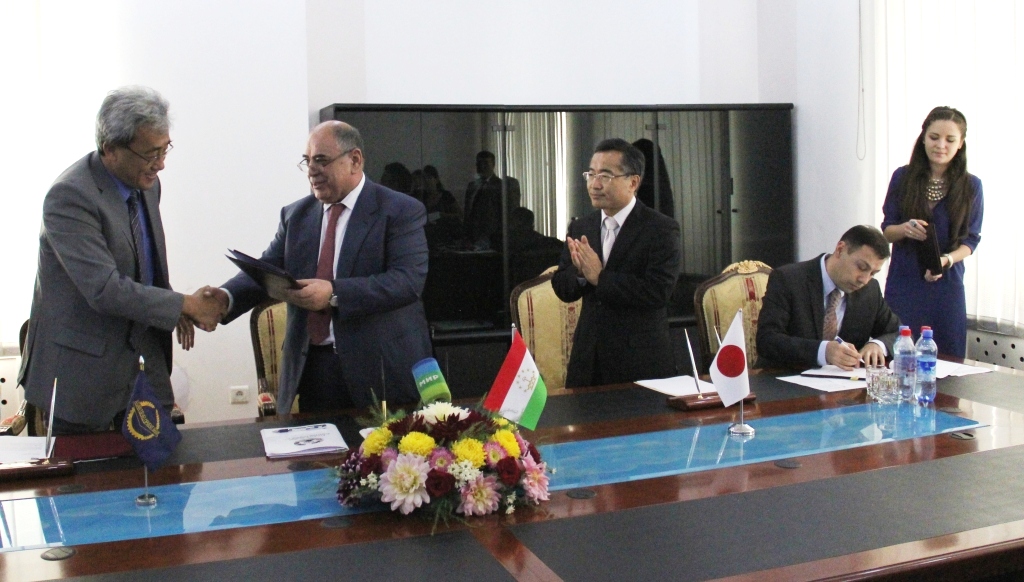
DUSHANBE, August 20, 2013, Asia-Plus — Agreement to finance the “Access to green financing of renewable sources of energy” project has been held today in Dushanbe between the Asian Development Bank, Government of Tajikistan, and the Japan Fund for Poverty Reduction.
During the agreement signing it was noted that the goal of the project is development and strengthening of Tajikistan”s microfinance system potential and the organization of energetically viable, economical, and ecologically clean houses by giving out microloans to households.
Safarali Najmiddinov, the Tajik Minister of Finance, who signed the agreement on behalf of the Government, informed during his speech that the total sum of the project is $11.87 million. Most of the financing comes from the ADB financing, which is $10 million; the Japan Fund for Poverty Reduction provides technical aid in the amount of $750 thousand, sub-borrower’s deposit will be $980 thousand, and the Tajik government’s investment is $140 thousand.
Mr. Najmiddinov said: “It is worth mentioning that last year the Law on Government Private Partnership was ratified in Tajikistan, and this project is implemented on the basis of this law. The project is directed towards strengthening Tajikistan’s microfinance sector. This sector in the last years is swiftly developing, and what is most important in the microfinance sector is that 99 percent of the loans come back, and this is a very good figure.”
Mr. Najmiddinov noted that the private sector has a special place in the GDP share, and the share is increasing annually, which speaks about business development.
The Minister also underlined the fact that despite the importance of “green” financing, there were many doubts about its implementation, and there were many arguments, but the sides decided that it will be a pilot project, which will show the effectiveness of such financing.
ADB Permanent Representative in Tajikistan, C.C. Yu, said about this that the successful implementation of the project will give the opportunity to introduce the practice in other countries.
He added: “As we know, Tajikistan has a big problem in the energy sector and 75 percent of the population suffers from the energy deficit in the wintertime. Assistance will be provided within the framework of the project in increasing population awareness and providing accessible financing to the population of Tajikistan to buy energetically viable products.”
The Head of ADB in Tajikistan defined that microfinance loans will be provided to the population of Tajikistan and to small business in order to buy energetically viable roofs, doors, dual-pane windows, ceilings and floors for thermal protection, water heaters, and other energetically viable products. Financing for “Access to green financing of renewable sources of energy” project will not be given out to all microfinance institutions, but only to those that match all the ADB criteria. Main criteria, according to the Minister, are financial stability, transparency, reliable charter capital, and potential. JamaliddinNuraliev, First Deputy to the Finance Minister, clarified it further. He said that two microfinance institutions passed through 10 criteria – Arvand and IMON International. They were acknowledged as optimal partners in the project; however participation of other microfinance institutions should not be excluded in the future.
He added: “ADB determined that loans from government in the frame of the green financing project will be given out through these institutions and the credit rate will not be above the refinancing rate – 6.1 percent up to five years. The interest rate is dependent on the institutions, and we cannot put restrictions on them. However, 3-4 percent above the refinancing rate is considered optimal, which will help the development of agricultural areas, and will provide access to green energy.”