

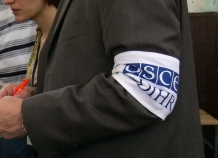
DUSHANBE, March 2, 2015, Asia-Plus — The Statement of Preliminary Findings and Conclusions, which is the result of a common endeavor involving the OSCE Office for Democratic Institutions and Human Rights (OSCE/ODIHR), the OSCE Parliamentary Assembly (OSCE PA) and the European Parliament (EP), in particular, notes that the March 1 parliamentary elections took place in a restricted political space and failed to provide a level playing field for candidates.
The assessment was made to determine whether the elections complied with OSCE commitments, other international obligations and standards for democratic elections and with national legislation.
Although the government stated its ambition to hold democratic elections, and some improvements were made to the electoral law, restrictions on the right to stand, freedoms of expression and assembly, and access to media limited the opportunity to make a free and informed choice, the Statement says, noting that the elections were not administered in an impartial manner.
“While election day was peaceful, significant shortcomings were noted, including multiple voting and ballot box stuffing. The disregard of counting procedures meant that an honest count could not be guaranteed, as required by OSCE commitments.
“Despite the existence of some political choice, the campaign took place in a controlled environment with regulations limiting possibilities for candidates to campaign. During the campaign, the distinction between the ruling People’s Democratic Party of Tajikistan and the state was often blurred, contrary to OSCE commitments. The OSCE/ODIHR EOM received credible reports of harassment and obstruction of some opposition parties, as well as pressure on voters. These allegations raised concerns about voters’ ability to cast their vote “free of fear of retribution”, as required by the 1990 OSCE Copenhagen Document.
“The imbalanced coverage by the state media, negative reporting on the opposition Islamic Revival Party of Tajikistan (IRPT) as well as the absence of genuine political debate, considerably limited the possibility for voters to make an informed choice.
“The voting process was assessed negatively in a substantial number of polling stations observed. Serious procedural violations were reported frequently, including proxy voting and ballot box stuffing.
“More than half of vote counts observed were assessed negatively. Important procedures were often disregarded, including not cancelling unused ballots, selectively determining the validity of ballots, and signing blank results protocols. This meant that an honest count, as required by paragraph 7.4 of the 1990 OSCE Copenhagen Document, could not be guaranteed. The tabulation of results at the DECs lacked transparency.”
We will recall that the OSCE/ODIHR Election Observation Mission (EOM) opened in Dushanbe on January 20. It includes 14 experts in the capital and 16 long-term observers deployed throughout Tajikistan.
On election day, 230 observers from 40 countries were deployed, including 163 long-term and short-term observers deployed by the OSCE/ODIHR, as well as a 58-member delegation from the OSCE PA and a 9-member delegation from the EP. Opening was observed in 73 polling stations and voting was observed in 812 polling stations across the country. Counting was observed in 70 polling stations. The tabulation process was observed in 26 DECs.