
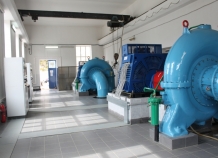
DUSHANBE, July 28, 2015, Asia-Plus — Since Tajikistan has hydroelectric energy abundant during the summer period, operations at a number of small hydroelectric power plants in the country are suspended in the summer, Davron Ishoqi, the deputy head of Barqi Tojik power holding (a national integrated power company of Tajikistan), announced at a news conference in Dushanbe on July 28.
According to him, more than 300 mini hydroelectric power plants have been built in Tajikistan and only 16 of them are operated by Barqi Tojik.
“Over the first six months of this year, the small hydropower plants have generated more than 3.7 million kWh of electricity,” Ishoqi noted.
“We need small hydropower plants to operate in the autumn-winter period when the country experiences acute electricity shortages,” said Tajik official.
Meanwhile, 170 of more than 300 small hydropower plants do not operate in the winter period.
In all, 310 small hydropower plants have been introduced into operation in Tajikistan so far and some half of them do not operate in spring and summer months, when the main Tajik hydropower plants generate enough electricity.
With its dense network of rivers, Tajikistan is the eighth richest country in the world in terms of hydropower resources. But lack of investment has meant that this resource is vastly underutilized with electricity supplies still failing to meet the country”s needs. Energy shortages mostly affect rural areas of the country, where 70% of the overall population resides.
The project, Construction of Mini Hydropower Plants (MHPP) in Rural Areas of Tajikistan, aims to reduce the country”s overall energy shortage by constructing over 170 mini hydropower plants in rural areas. These plants will be the main source of energy not just for households but also for critical social infrastructure such as schools, hospitals, agriculture and other social support and commercial activities. The initial phase of the project, which commenced in 2004, entailed constructing eight mini hydropower plants in various remote and rural areas of the country.
