DUSHANBE, February 24, 2016, Asia-Plus – Amnesty International has warned that human rights and the laws and institutions meant to protect them are under threat around the world from an “insidious and creeping trend” among governments that are deliberately attacking or neglecting them.
In its latest annual report,
The State Of The World”s Human Rights
, the human rights watchdog calls on governments to give full political backing and funding to systems whose task is to uphold international law and protect individuals” rights.
Amnesty International says 2015 was a turbulent, difficult year for human rights across Europe and the former Soviet Union.
Among Central Asia”s ex-Soviet republics, the report warns that human rights remain under attack and the region”s negative trend “is going further,” with some of the countries attempting to replicate methods used by Russia.
For instance, in Kyrgyzstan, the parliament tried to adopt a law similar to Russia”s so-called ”foreign agents” law to oblige NGOs that receive foreign funding to use this toxic label.
The human rights situation also regressed in Kazakhstan, where authorities established a state agency to supervise the distribution of grants to NGOs, including possible foreign funding, according to Amnesty International.
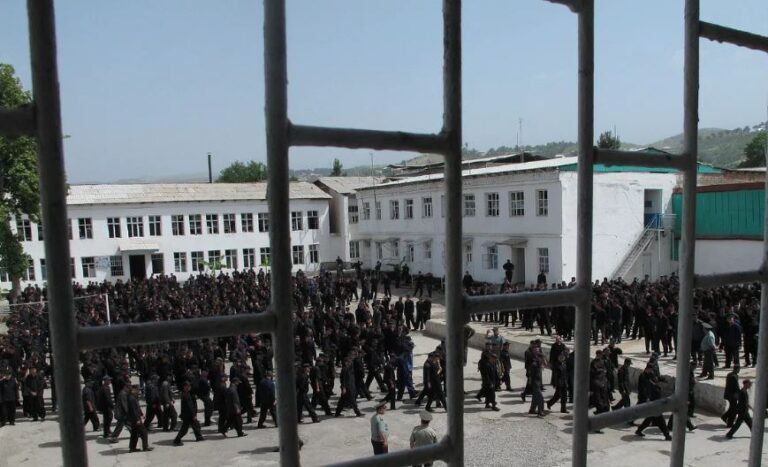
Tajikistan, Uzbekistan, and Turkmenistan have remained as repressive as before, says the report, with torture and other human rights violations continuing.
According to the report, Tajik authorities continued to impose sweeping restrictions on freedom of expression. Several prominent human rights NGOs were targeted for “inspections” by various authorities, and some were “advised” to close down. Members of opposition groups faced increasing harassment, violence and even death, both in Tajikistan and in exile. Some political opposition activists and those accused of religious extremism were abducted and forcibly returned from several former Soviet countries. Lawyers representing opposition activists or those charged with anti-state offences were themselves at risk of harassment, intimidation and punitive arrest. Torture and other ill-treatment remained widespread, and lawyers were repeatedly denied access to their clients.
Freedom of expression remained severely restricted and access to information was increasingly controlled by the authorities. Independent media outlets and journalists who were critical of the authorities faced intimidation and harassment, including personal attacks in pro-government media, particularly ahead of the parliamentary elections.
Amendments to the Law on Public Associations, enacted in August, oblige NGOs registered as public associations with the Ministry of Justice to notify it about any foreign funding they receive.
Members of opposition groups, including Group 24 (banned by the Supreme Court as “extremist” in October 2014) and the Islamic Revival Party of Tajikistan (IRPT), faced increasing harassment and violence, the report says. On September 29, the IRPT was designated a “terrorist organization” by the Prosecutor General, on the grounds that several of its members had been involved in groups promoting “extremism”, and that the party had used its newspaper,
Najot
(Salvation), and other media to spread “extremist ideas” and promote religious hatred. The designation was later confirmed by the Supreme Court.
Torture and other ill-treatment remained widespread despite the adoption in 2013 of an Action Plan to implement recommendations by the UN Committee against Torture. By mid-August, the NGO Coalition against Torture registered 25 new cases of torture. In most cases, relatives and victims declined to file complaints for fear of reprisals, and many more cases of torture were likely to have gone unreported.