
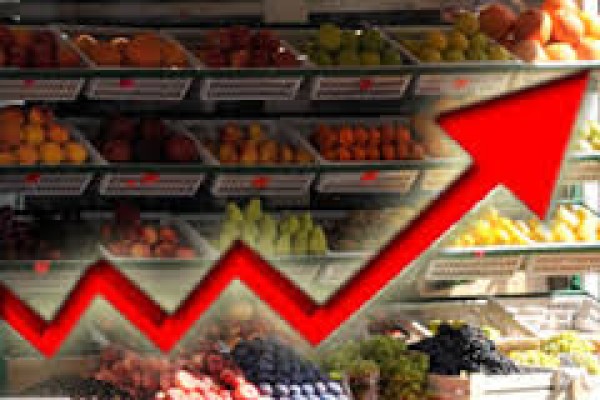
DUSHANBE, July 8, 2016, Asia-Plus – FAO notes that international food commodity prices shot up 4.2 percent in June, their steepest monthly increase of the past four years.
The
FAO Food Price Index
, which was released yesterday, averaged 163.4 points in June and is now one percent below the level reached a year earlier. The June rise, which affected all commodity categories except vegetable oils, was the fifth consecutive monthly increase.
The price movement reportedly reflects FAO”s updating of its cereal supply and demand forecasts for the 2016/17 marketing season.
FAO”s Food Price Index
is a trade-weighted index tracking international market prices for key traded food groups.
The
FAO Sugar Price Index
rose 14.8 percent from May, as Brazil, the world”s largest sugar producer and exporter, endured heavy rains that hindered harvesting and dented yields.
The
FAO Cereal Price Index
rose 2.9 percent in the month and is now 3.9 percent below its level of June 2015. Maize prices drove that increase, primarily due to tightening spot export supplies from Brazil. Ample wheat supplies and reports of record yields in the United States held down wheat prices.
The
FAO Dairy Price Index
rose 7.8 percent from May, spurred by an uncertain outlook in Oceania and slower production growth in the European Union. Nonetheless, the index remained 14 percent below its level of a year ago.
The
FAO Meat Price Index
rose 2.4 percent from its revised May value, as average quotations for pork, beef and poultry all rose for the third consecutive month.
Meanwhile,
FAO”s Cereal Supply and Demand Brief
, also released on July 7, pointed to improved production prospects primarily for wheat.
Global wheat production is now pegged at 732 million tons, more than one percent higher than anticipated in June, mainly due to improved prospects in the EU, the Russian Federation and the U.S., as a result of better weather conditions.
World total cereal utilization in the 2016/17 marketing year is now projected at 2 555.6 million tons, 1.3 percent higher than the estimate for 2015/16.
As a result, global cereal stocks by the end of farming season in 2017 are expected to stand at 635 million tons, 1.5 percent below their opening level. The resulting world stocks-to-use ratio for cereals would stand at 24.2 percent in 2016/17, compared to the 2007/08 historical low of 20.5 percent. International food commodity prices rise 4.2 percent in June
DUSHANBE, July 8, 2016, Asia-Plus – FAO notes that international food commodity prices shot up 4.2 percent in June, their steepest monthly increase of the past four years.
The
FAO Food Price Index
, which was released yesterday, averaged 163.4 points in June and is now one percent below the level reached a year earlier. The June rise, which affected all commodity categories except vegetable oils, was the fifth consecutive monthly increase.
The price movement reportedly reflects FAO”s updating of its cereal supply and demand forecasts for the 2016/17 marketing season.
FAO”s Food Price Index
is a trade-weighted index tracking international market prices for key traded food groups.
The
FAO Sugar Price Index
rose 14.8 percent from May, as Brazil, the world”s largest sugar producer and exporter, endured heavy rains that hindered harvesting and dented yields.
The
FAO Cereal Price Index
rose 2.9 percent in the month and is now 3.9 percent below its level of June 2015. Maize prices drove that increase, primarily due to tightening spot export supplies from Brazil. Ample wheat supplies and reports of record yields in the United States held down wheat prices.
The
FAO Dairy Price Index
rose 7.8 percent from May, spurred by an uncertain outlook in Oceania and slower production growth in the European Union. Nonetheless, the index remained 14 percent below its level of a year ago.
The
FAO Meat Price Index
rose 2.4 percent from its revised May value, as average quotations for pork, beef and poultry all rose for the third consecutive month.
Meanwhile,
FAO”s Cereal Supply and Demand Brief
, also released on July 7, pointed to improved production prospects primarily for wheat.
Global wheat production is now pegged at 732 million tons, more than one percent higher than anticipated in June, mainly due to improved prospects in the EU, the Russian Federation and the U.S., as a result of better weather conditions.
World total cereal utilization in the 2016/17 marketing year is now projected at 2 555.6 million tons, 1.3 percent higher than the estimate for 2015/16.
As a result, global cereal stocks by the end of farming season in 2017 are expected to stand at 635 million tons, 1.5 percent below their opening level. The resulting world stocks-to-use ratio for cereals would stand at 24.2 percent in 2016/17, compared to the 2007/08 historical low of 20.5 percent.
