
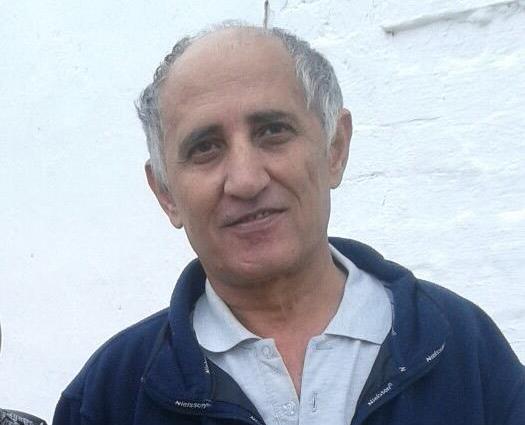
DUSHANBE, August 4, 2016, Asia-Plus — Tajik authorities should immediately release Abubakr Azizkhojayev, a well-known businessman and government critic who was sentenced on July 7, 2016 to two-and-a-half years in prison. The sentence followed a trial on politically motivated charges and ill-treatment in custody, Human Rights Watch (HRW) said on August 4.
Relatives told Human Rights Watch they learned about the July 7, 2016 verdict against Abubakr Azizkhojayev only on August 2 because the trial was closed to the public, even to his immediate relatives, and occurred without the participation of counsel. Azizkhojayev was detained in February after publicly and privately criticizing the son-in-law of President Emomali Rahmon for alleged corrupt business practices.
“Abubakr Azizkhojayev is the latest casualty of Tajikistan’s war on dissent, but he won’t be the last unless Tajikistan’s international allies loudly protest this travesty of justice,” said Steve Swerdlow, Central Asia researcher at Human Rights Watch. “No one should be thrown behind bars for simply criticizing a public figure.”
Tajikistan is in the midst of the worst political and religious crackdown since the end of the country’s 1992-1997 civil war, Human Rights Watch said. Over the past two years, authorities have arrested, imprisoned, and tortured members of the country’s peaceful political opposition, and have jailed numerous perceived critics, including opposition activists, lawyers, and journalists.
Hundreds of perceived critics and their family members have fled the country, according to observers’ estimates. But Tajik authorities have also targeted perceived critics abroad, seeking their detention and extradition back to Tajikistan, and have forcibly disappeared critics abroad, only to have them reappear in Tajik custody.
Police detained Azizkhojayev on February 26, at his home in the capital, Dushanbe, and he has been in custody ever since. Initially, authorities told him he was being detained as a witness, but they soon charged him with “inciting national, racial, regional, or religious hatred” under article 189 of Tajikistan’s Criminal Code for his remarks about Rahmon’s son-in-law.
A relative close to the case told Human Rights Watch that authorities withheld complete information about the timing for the trial from Azizkhojayev’s lawyer.
Relatives said they have had extremely limited access to Azizkhojayev. They said that jail officials accepted food and clothing meant for Azizkhojayev but did not pass on the items. Friends and family who were able to visit him in the first week of May said they had seen burns on his body. Others who saw Azizkhojayev during the second week of May said that he walked with a limp. Azizkhojayev told relatives that jail officials had beaten him.
On June 9, in a resolution on the “situation of prisoners of conscience” in Tajikistan, the European Parliament called specifically for his release along with the release of all those “imprisoned on politically motivated charges.”
Azizkhojayev, a successful entrepreneur, made public allegations of government corruption, including in an “Open Letter to [Tajikistan’s] President.” He published the allegations after his business, which produced license plates, suffered devastating losses when the government cancelled a contract with his firm and moved the business to a firm owned by Shamsullo Sohibov, the president’s son-in-law. Azizkhojayev also corresponded with journalists, opposition activists, and others over social media and in private emails, describing what he saw as nepotism and corruption at the heart of the government’s policies.
A lawyer for Azizkhojayev told his relatives that his corruption allegations against the government formed the basis of the charges of “inciting national, racial, regional or religious hatred” leveled against him. Beyond his public statements on corruption, the authorities have not pointed to any other activities or actions to support charges of incitement to hatred.
The United States, the European Union, and other key international entities should make unequivocal calls for the release of Azizkhojayev and others imprisoned on politically motivated charges, Human Rights Watch said. They should press the Tajik government to uphold its international obligations to respect freedom of association, assembly, expression, and religion and impose targeted punitive measures, such as asset freezes and visa bans, on Tajik government officials responsible for imprisoning peaceful activists, torture, and other grave human rights violations.
