A prepaid electricity billing system is expected to be launched in the Tajik capital soon. The government has issued a decree on introducing a prepaid electricity billing system in the country.
The decree that was issued on July 28 this year, in particular, points to the necessity of taking measures to introduce the billing system in order to reduce power losses and improve the collection of funds from the public and enterprises.
A source in Barqi Tojik (Tajikistan’s national integrated power company) says the introduction of the prepaid electricity billing system will begin in the country with Dushanbe. “Although the pilot prepaid electricity billing projects have already been launched in the cities of Khujand and Sarband as well as in Roudaki district,” the source told Asia-Plus in an interview.
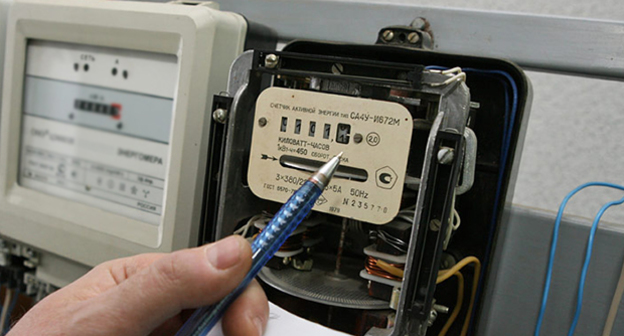
According to him, they do not yet plan to replace the existing electricity meters in Dushanbe with prepaid electricity billing meters. “We will just install chips calculating the prepaid sum and the volume of the consumed power in the existing electricity meters,” the source added.
Most of the energy meters are designed to bill as per the units of energy consumed. These meters need to be manually read by people in order to provide monthly/quarterly bills. Meanwhile, the prepaid electricity billing system is designed to allow amount of energy to be used as long as the account has balance pending. It also allows the operator to recharge the user account using GSM. The system first accepts account recharge and allows using only limited units of energy as per recharge and then cuts off the supply. The prepaid electricity billing meter could be widely used to provide a new more customized electricity billing system, where users may recharge when they intend to use that facility.
Recall, Barqi Tojik top manager Mirzo Ismoilzoda told reporters in Dushanbe on August 1, 2017 that Barqi Tojik tax debts have reached 185.7 million somoni and the company now owes 732 million somoni to the OJSC Sangtudinskaya GES-1, 550.3 million somoni to the Sangtuda-2 hydroelectric power plant (HPP), 1.6 billion somoni to Orienbonk and 67.2 million somoni to coal producers.
Meanwhile, the company’s receivables now amount to more than one billion somoni. According to Ismoilzoda, residential customers’ electricity debts have already reached 786 million somoni.
Tajikistan’s national power holding has proposed to raise electricity rates but the government has not yet made decision on this subject.
Over the past seven years, Tajikistan has raised electricity rates five times – from 6 dirams in 2009 to the current 14.65 dirams.
For the last time, Tajikistan raised electricity rates in February this year. Electricity rates were raised for four of eight categories of electricity consumers.
By government’s decree issued on February 24 electricity rates have been raised for federally funded institutions, including public utilities and sports complexes, electric transport, pumping stations for mechanized irrigation and repair-and-production bases of the Agency for Land Reclamation and Irrigation under the Government of Tajikistan, and vertical drainage wells and land reclamation pumping stations.
Current prices are 14.65 dirams for federally funded institutions, including public utilities and sports complexes (before that they had paid 14.20 dirams per one kWh of electricity since November 1, 2016), 14.65 dirams for electric transport (instead of 9.55 dirams paid since November 1, 2016), 5.10 dirams in April-September and 14.65 dirams in October-March for pumping stations for mechanized irrigation and repair-and-production bases of the Agency for Land Reclamation and Irrigation under the Government of Tajikistan (before that, these categories had paid for one kWh of electricity 2.20 dirams in April-September and 8.20 dirams in October-March), and 5.1 dirams for vertical drainage wells and land reclamation pumping stations (before that they had paid 2.55 dirams per one kWh of electricity).
Meanwhile, prices for residential customers, the Tajik Aluminum Plant (TALCO), electric boilers as well as electric heating and hot water equipment have remained unchanged.
Since November 1, 2016, residential customers have paid for electricity at the rate of 14.65 dirams per one kWh.