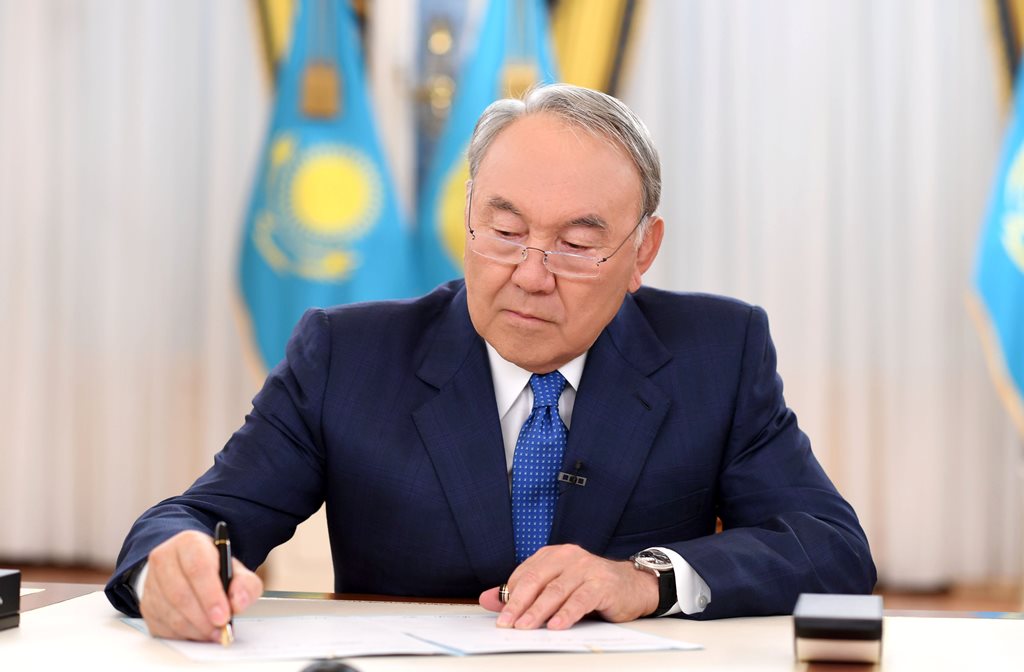
Kazakh President Nursultan Nazarbayev has resigned after nearly 30 years in office, but will continue to head the ruling party and keep his lifetime post as chairman of the influential Security Council. His resignation comes after he dismissed the government on February 21, citing its failure to raise living standards and diversify the economy away from the energy sector.
Nursultan Nazarbayev announced his resignation in a televised address to the national on March 19. Nazarbayev indicated that the speaker of the upper parliament chamber, Qasym-Zhomart Toqayev, will be acting president for the remainder of what would have been his term, in accordance with the Constitution.
Nazarbayev said he would remain chairman of the Security Council, which has been granted serious authority and would also stay on as chairman of the Nur Otan party and as a member of the Constitutional Council.
Even as he resigned, Nazarbayev pointed out that he has been granted the status of "elbasy," or leader of the nation, a title bestowed upon him by the parliament in 2010.
Qasym-Zhomart Toqayev was sworn in as Kazakhstan’s acting president on March 20, and the next presidential election is due to be held in 2020.
Meanwhile experts say that the roles Nursultan Nazarbayev is keeping could allow him to retain a great deal of power.
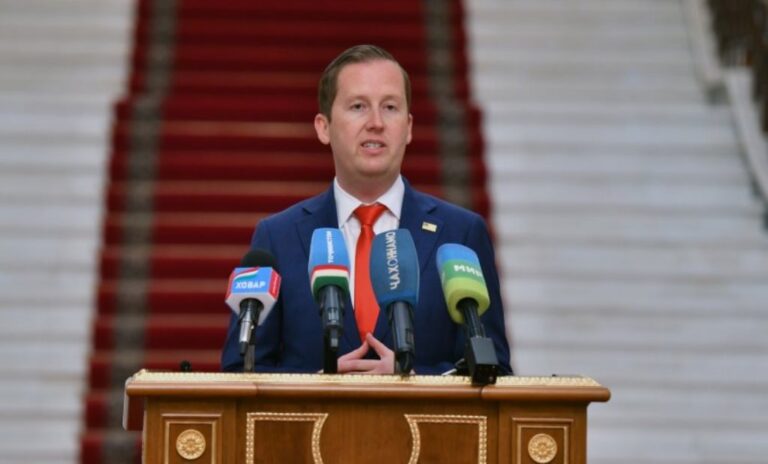
Tajik political scientist Parviz Mullojonov considers that Nursultan Nazarbayev “skillfully executed a well-organized transfer of power.”
According to him, Nazarbayev’s resignation will serve as model of “possible transfer of power from old generation to the new one.”
Chairman of the Social-Democratic Party of Tajikistan (SDPT), Rahmatillo Zoyirov, says Kazakh leader has paved the way for his resignation over the past ten years and most actively over the past four years.
“Over the past several years, he has distributed president’s powers among executive and legislative branches of power and the Security Council. He has distributed functions of the president between the bodies that will act under his leadership,” SDPT leader said.
Recall, the Security Council's status was changed in July 2018 from consultative to constitutional, increasing its authority, and Nazarbayev became its chairman for life.
Tajik experts also consider that Nazarbayev’s resignation could set the stage for legitimate transfer of power in the region.
Meanwhile, Dosym Satpayev, a political analyst based in Almaty, Kazakhstan's financial capital, noted in his interview with Al Jazeera that "It is an interesting Oriental move." "A political spectacle took place – formally Nazarbayev is not president, but in reality he is at the helm," Satpayev said.
Another Central Asia analyst said there was no one who could rule Kazakhstan better than Qasym-Zhomart Toqayev. "He is an experienced diplomat and administrator," Daniil Kislov, a Moscow-based political analyst, told Al Jazeera.
He comes from the Elder Zhuz, a large tribal confederation in southern Kazakhstan, where nomadic traditions and affiliations immensely influence politics and daily life, Kislov said.