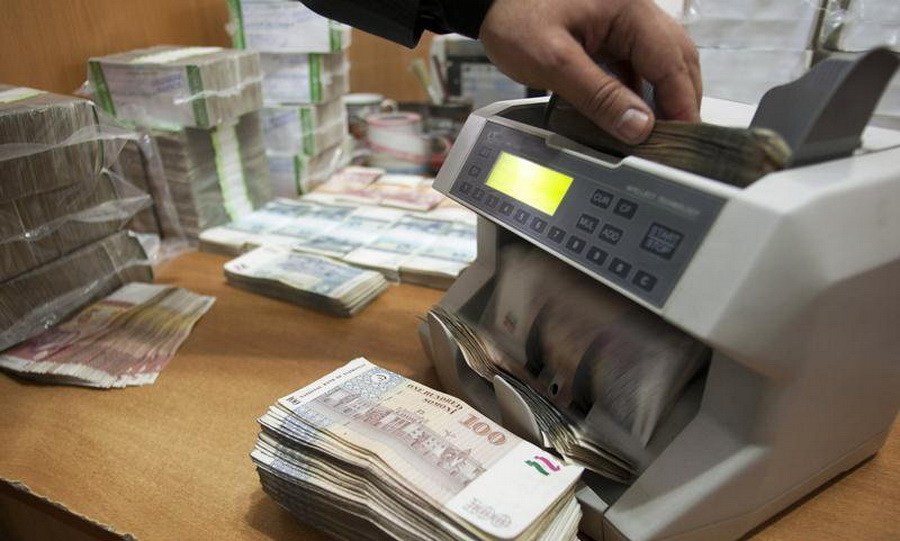
A shortage of the national currency, the somoni, is being felt in Tajikistan’s banking system for almost a month. Because of this, people cannot receive remittances in time. The Tajik central bank is not in a hurry to clarify the situation, while some experts say that it is a targeted policy of the government aimed at defending the national currency.
Since the end of the last month, branches of commercial banks in the regions have been experiencing shortage of the national currency, the somoni. Because of this, people cannot receive remittances in Russian rubles in time.
Tajik labor migrants working in Russia send remittances to their families in Tajikistan mainly in the Russian rubles. The fact is that since 2016 remittances sent to Tajik banks in the Russian rubles are given in the national currency, the somoni. According to some sources, some 90 percent of remittances are now sent to Tajikistan from Russia in the Russian rubles.
Residents of the city of Kulob and surrounding districts have complained in recent days that they cannot receive remittances sent to them from Russia in time because local bank are experiencing shortage of the national currency.
Practically the same situation can be seen in Tursunzoda, Vahdat, Faizobod and a number of other districts subordinate to the center.
The National bank of Tajikistan (NBT) is not in a hurry to clarify the situation.
Meanwhile, some experts consider that it is an attempt to drive some banks out of the market, while some others say that in this way the Tajik central bank attempts to go to cashless payment for more efficient control over financial flows and so forth.
Meanwhile, a specialist from the National Bank of Tajikistan, who wanted to remain unnamed, says it is a targeted policy of the government aimed at squeezing money supply in order to curb further devaluation of the somoni under conditions of an acute shortage of foreign currency.
Experts say that by squeezing money supply the National Bank of Tajikistan can prevent development of the country’s economy.