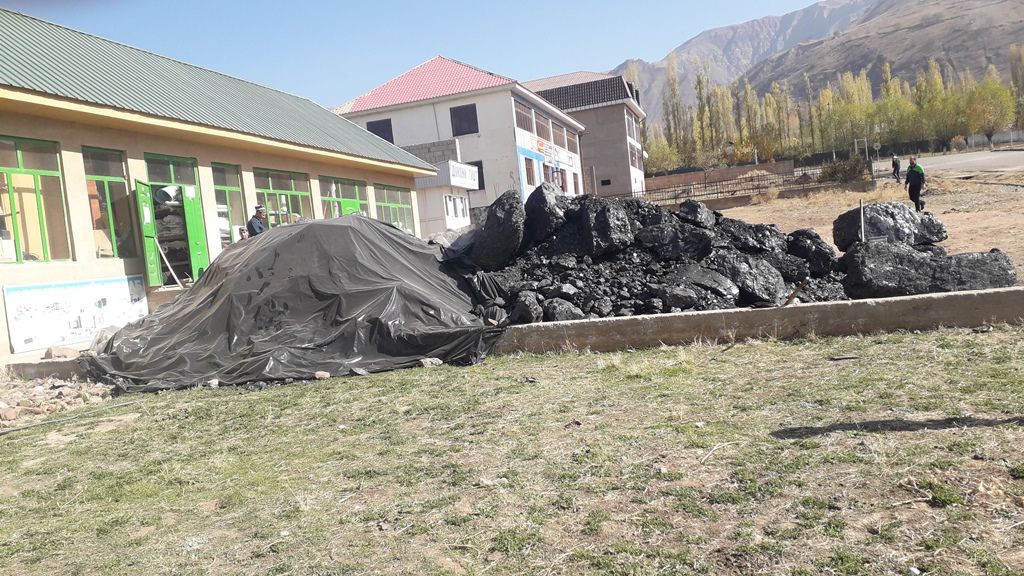
The demand for coal is growing in Tajikistan, and accordingly, the coal prices are rising. Experts attribute increase in the demand for coal to reintroduction of electricity rationing in the country.
Depending on the location of coal deposits, prices for one kilogram of coal in the regions have risen from 20 to 50 diram.
Thus, in the northern Sughd province, the price for one kilogram of coal has risen from 15 to 20 diram. The current price for one kilogram of domestic coal in northern Tajikistan is 1.40 somonis, while the current price for coal imported from Kyrgyzstan is 1.80 somonis.
In the Kulob region of Khatlon province, prices for one kilogram of coal have risen from 20 to 25 diram. The current price for one kilogram of domestic coal in this area is 1.00 somonis, while the current price for coal imported from Kyrgyzstan is 2.50 somonis.
In the Vakhsh region of Khatlon province, the current price for one kilogram of domestic coal is 1.50 somonis and the current price for coal imported from Kyrgyzstan is 2.10 somonis.
In districts subordinated to the center, the current price for one kilogram of domestic coal is 1.80 somonis and the current price for coal imported from Kyrgyzstan is 2.00 somonis.
In the Gorno-Badakhshan Autonomous Region (GBAO), the prices for one kilogram of coal are 2.00 somonis and 2.10 somonis, respectively.
According to data from the Ministry of Industry and New Technologies (MoINT), Tajikistan last year produced 1.855 million tons of coal, which was 1.0 percent fewer than in 2019.
There are reportedly over 36 deposits and occurrences of coal in Tajikistan, which represent all sorts of this solid fossil fuel: from lignite to hard coal, including coking coal and anthracite. Ultimate reserves of these deposits and occurrences exceed 4.3 billion tons. The coal deposits of Tajikistan have been studied unevenly and to quite low extent.
Tajik authorities plan to bring annual production of coal to 15 million tons by 2040. This is stated in a concept for development of the coal industry in Tajikistan, designed for the period to 2040. The government has approved this document.
The concept provides for increasing coal production to 10.4 million tons by 2030 and to 15 million tons by 2040.
The concept authors stress that the coal industry is one of the most important structures of the country’s fuel-and-energy complex.
Since 2007, more than 160 industrial enterprises in Tajikistan have been shifted to coal and 230 coal-fired enterprises now operate in the country.
Exploration and development of coal fields has been intensified in Tajikistan since 2012 when Uzbekistan stopped gas shipments to Tajikistan.
Coal deposits of Tajikistan are reportedly concentrated in two coal basins: Tajik (Gissar-Darvaz) and Fergana. The first of them covers the absolute majority of deposits and occurrences concentrated in central and southern Tajikistan. Deposits and occurrences of northern Tajikistan belong to the South Fergana coal basin.
The coal deposits of the Tajik coal basin in the vast majority of cases are exposed in the mountain ranges of the Tien Shan and Pamir-Alay, framing the Afghan-Tajik basin.
On the territory of Tajikistan there are four regions of development of carbonaceous deposits, each one has a number of characteristic features according to geological zoning: 1) Zarafshan-Gissar; 2) South-Gissar; 3) the Pamir Darvaz; and 4) south-Fergana
The biggest region, largest in acreage coal-bearing area that has the maximum number of coal veins, is Zarafshan-Gissar. The coal-bearing strata extend in almost uninterrupted strip from Panjakent to the river head of the Zarafshan River.
Meanwhile, Tajik ecologists express concern about increase in production of cola in the country.