On Thursday February 18, President Emomali Rahmon received the Collective Security Treaty Organization (CSTO) Secretary-General Satanislav Zas, who is in Dushanbe on a working visit, according to the Tajik president’s official website.
In the course of the talks, Emomali Rahmon reportedly outlines priorities of Tajikistan’s rotating chairmanship in the Organization and endorsed the concerted plan of actions for the coming period.
During the meeting, the parties discussed tasks facing the Organization and a number of regional and international issues being of mutual interest.
Tajikistan, in particular, highlighted the significance of expansion of collaboration in the framework of the CSTO on the issues of effectively addressing the spread of destructive ideologies of a radical nature in the Organization’s area of responsibility and combating cybercrime and other illegal actions using information and communications technologies.
He also underlined the importance of intensification of work on implementing the CSTO Collective Security Council’s resolution on the list of additional measures to reduce tensions in the Tajik-Afghan border areas, and working out the issue of adopting the Single List of organizations designated as terrorist organizations in the CSTO format, the Tajik president’s official website said.
In the context of regional security, Rahmon and Zas also discussed the latest developments in Afghanistan and trends of increasing global threats of terrorism, extremism, various forms of radicalism and transnational organized crime, including drug trafficking.
In his context, Rahmon highlighted the importance of increasing the STO potential of effectively addressing the mentioned risks and threats.
Recall, the Chairman of the State Committee for National Security of Tajikistan (SCNS), Saimumin Yatimov, has recently met in Kabul with high-ranking Afghan state officials to discuss bilateral security cooperation, and the situation along the Afghan-Tajik border.
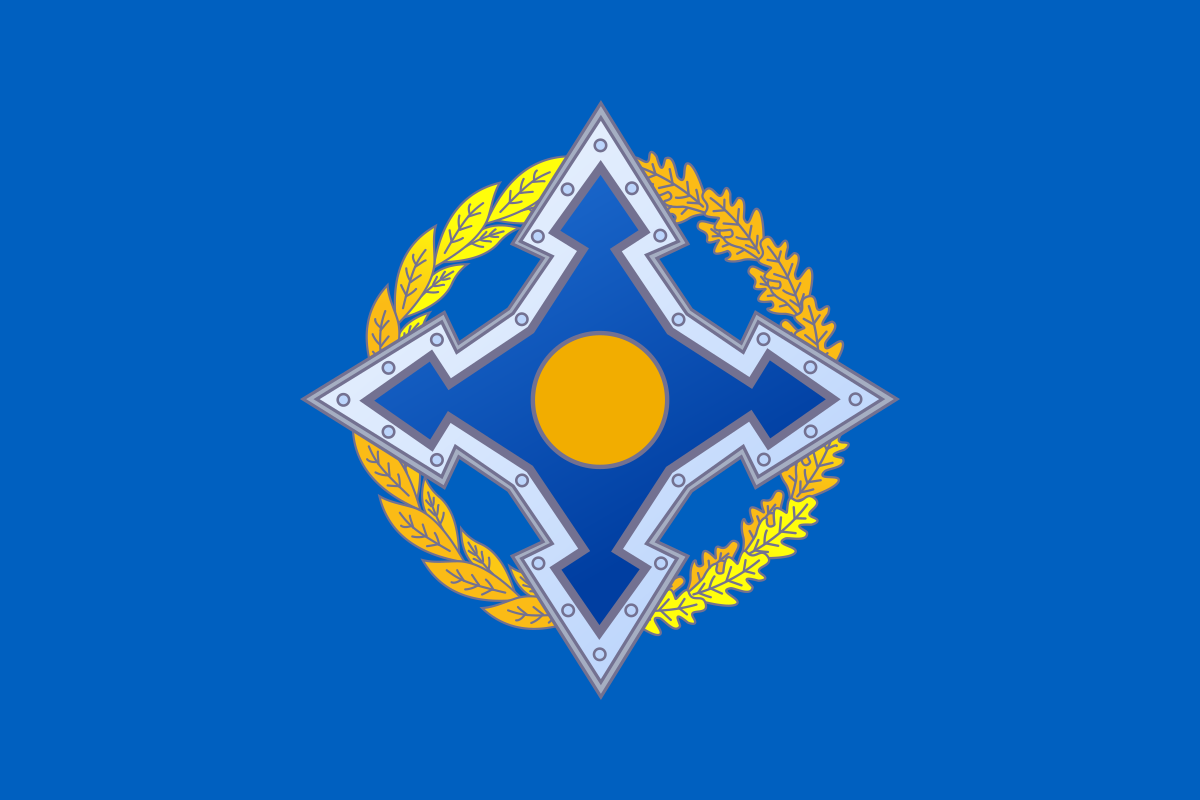
The regional security organization was initially formed in 1992 for a five-year period by the members of the CIS Collective Security Treaty (CST) — Armenia, Kazakhstan, Kyrgyzstan, Russia, Tajikistan, and Uzbekistan, which were joined by Azerbaijan, Georgia, and Belarus the following year. A 1994 treaty reaffirmed the desire of all participating states to abstain from the use or threat of force, and prevented signatories from joining any “other military alliances or other groups of states” directed against members states. The CST was then extended for another five-year term in April 1999, and was signed by the presidents of Armenia, Belarus, Kazakhstan, Kyrgyzstan, Russia, and Tajikistan. In October 2002, the group was renamed as the CSTO. Uzbekistan that suspended its membership in 1999 returned to the CSTO again in 2006 after it came under international criticism for its brutal crackdown of antigovernment demonstrations in the eastern city of Andijon in May 2005. On June 28, 2012, Uzbekistan announced that it has suspended its membership of the CSTO, saying the organization ignores Uzbekistan and does not consider its views. The CSTO is currently an observer organization at the United Nations General Assembly.