For the first time since deadly border clashes last spring, Kyrgyzstan is allowing a limited number of Tajiks to enter the country. Some 1,932 Tajik university students, who were unable to start the academic year due to the disruption, may now cross into the country, Deputy Chairman of the Cabinet of Ministers Edil Baisalov announced on October 21.
President Sadyr Japarov quickly emphasized that this is the only concession he is ready to make. Other Tajik citizens will not be permitted to enter until the two sides agree on the precise whereabouts of their border.
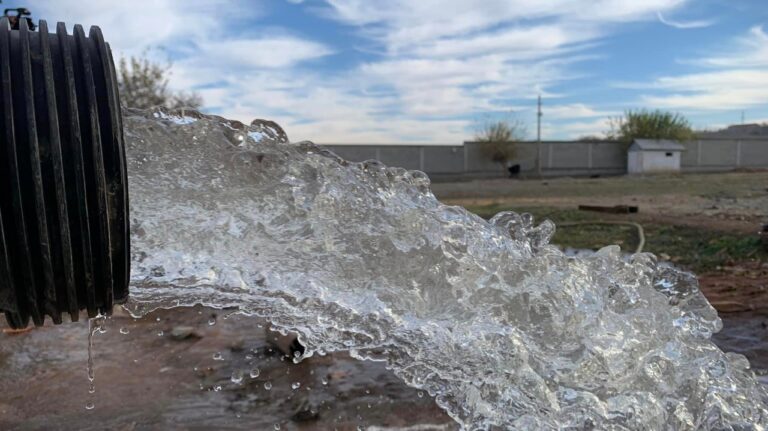
The uncertainty over the border has often caused tension among communities in these contested sections of the Fergana Valley – perhaps the most serious incident having occurred at the end of April, when fighting broke out over control of a critical piece of irrigation infrastructure. At least 36 Kyrgyz nationals and 20 Tajik citizens are known to have been killed in fighting, which involved troops from both sides exchanging gun and mortar fire. Tens of thousands of Kyrgyz people were forced to flee and dozens of their homes and businesses were set alight.
In May, Kyrgyzstan imposed restrictions on Tajik citizens entering, leaving and transiting its territory. Authorities also halted the transport of goods across multiple land crossings, which left remote parts of Tajikistan even more isolated than normal.
Bishkek-based political analyst Denis Berdakov says the unilateral action is necessary to force Dushanbe to negotiate.
“This is the right decision, otherwise Tajikistan will say ‘let's consider the issue for another 20 years’,” Berdakov told Eurasianet on October 26. “Paradoxically, this is the only way: peaceful but tough. Because […] Tajikistan depends on us for the Internet, for trade and for air crossings. We are taking advantage of our position."
Berdakov added that the Tajik population along the contested frontier is growing faster than the Kyrgyz, putting Dushanbe at an advantage in future negotiations.
Against this backdrop, Bishkek is reportedly upping its military spending. On October 21, officials received US$3.5 million worth of kit intended for border troops, including armored vehicles and sniper rifles, it purchased from Dubai.
Kamchybek Tashiyev, the head of the State Committee for National Security, announced that Bishkek would also soon receive Russian and Turkish armed drones, including the Bayraktar TB2 unmanned combat aerial vehicle. The equipment was reportedly purchased exclusively for defense.
Berdakov believes that the two countries should be able to delimit about 95 percent of the undefined border without too much trouble. But the remaining 5 percent will be difficult due to conflicts between local residents. In some populated sections of the Fergana Valley, Kyrgyz and Tajiks have lived together in disputed areas for generations. Today, their homes are arranged in a “checkerboard” pattern – there is no defined border and citizenship coincides with ethnicity. As the population grows, and arable land in the surrounding valleys grows scarce, the increasing militarization of the border raises the potential for violence.
“Any decision will be difficult for the [local] population to accept. This is not a question of how we will agree. The issue is that we Kyrgyz believe this is our land, and the Tajiks that it is their land. As long as both parties believe so, no one wins,” Berdakov said.