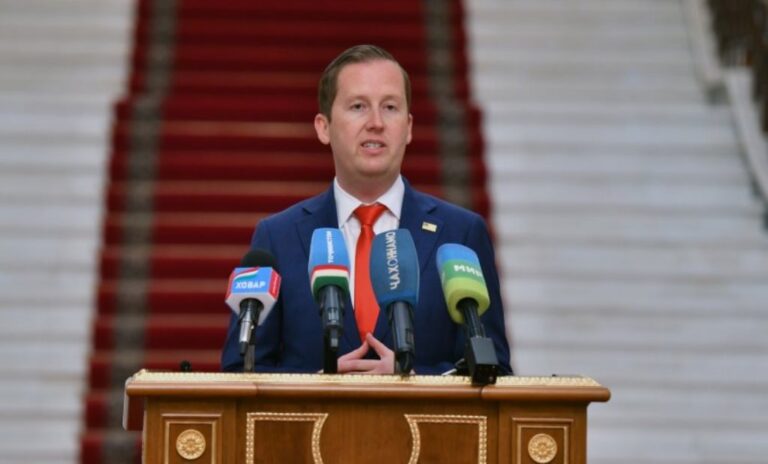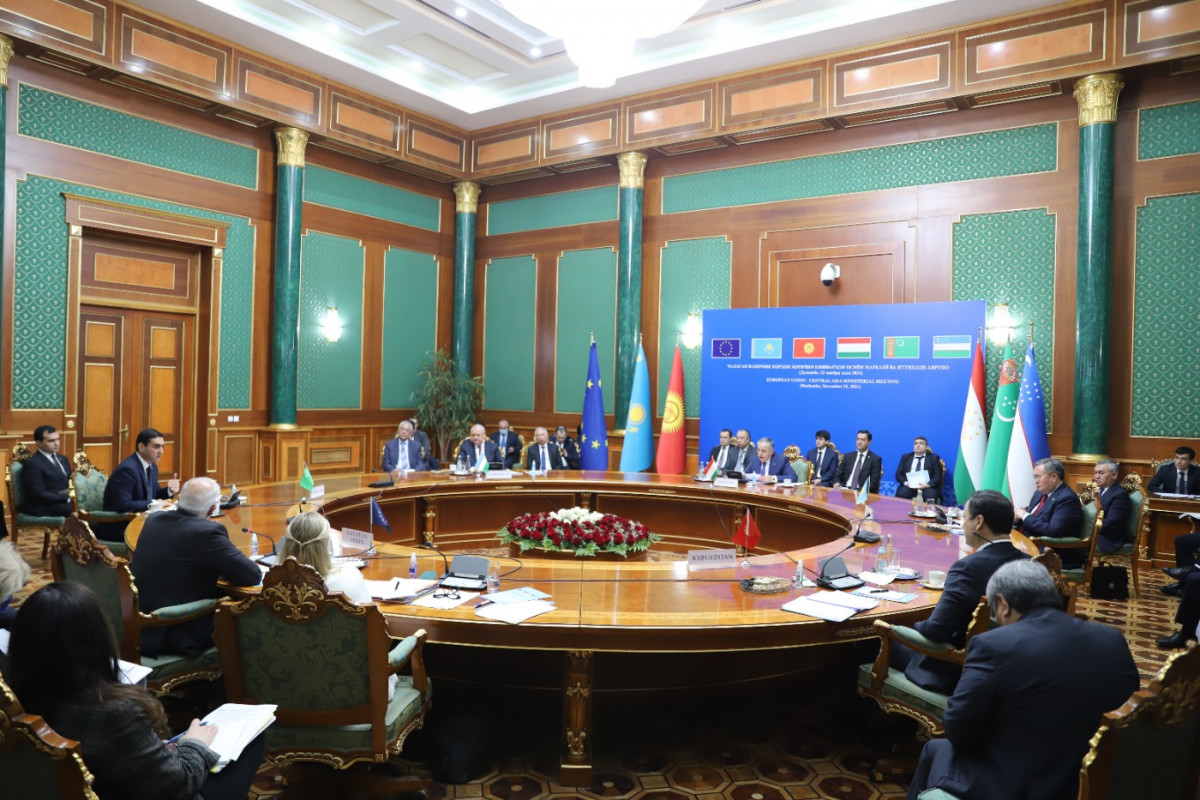
Chaired by EU foreign policy chief Josep Borrell and hosted by Tajik Foreign Minister Sirojiddin Muhriddin, the 17th EU-Central Asia Ministerial meeting took place in Dushanbe on November 22. The meeting participants also included EU Commissioner for International Partnerships Jutta Urpilainen, Foreign Ministers of Kazakhstan, Kyrgyzstan, Uzbekistan and the Deputy Foreign Minister of Turkmenistan.
During the meeting, the parties discussed continuation of extensive and fruitful cooperation between Central Asia’s countries and the European Union with focus on the consequences of COVID-19, regional and global processes, says the Tajik MFA information department.
They reportedly discussed the current state and prospects of further expansion of political, economic and security cooperation between the Central Asian nations and the European Union.
The parties, in particular, discussed cooperation in the fields of trade, ware and energy, security, fight against terrorism and extremism, environmental protection and climate change, according to the Tajik MFA information department.
The meeting participants also exchanged views on a number of regional and international issues being of mutual interest, including the current situation in Afghanistan.
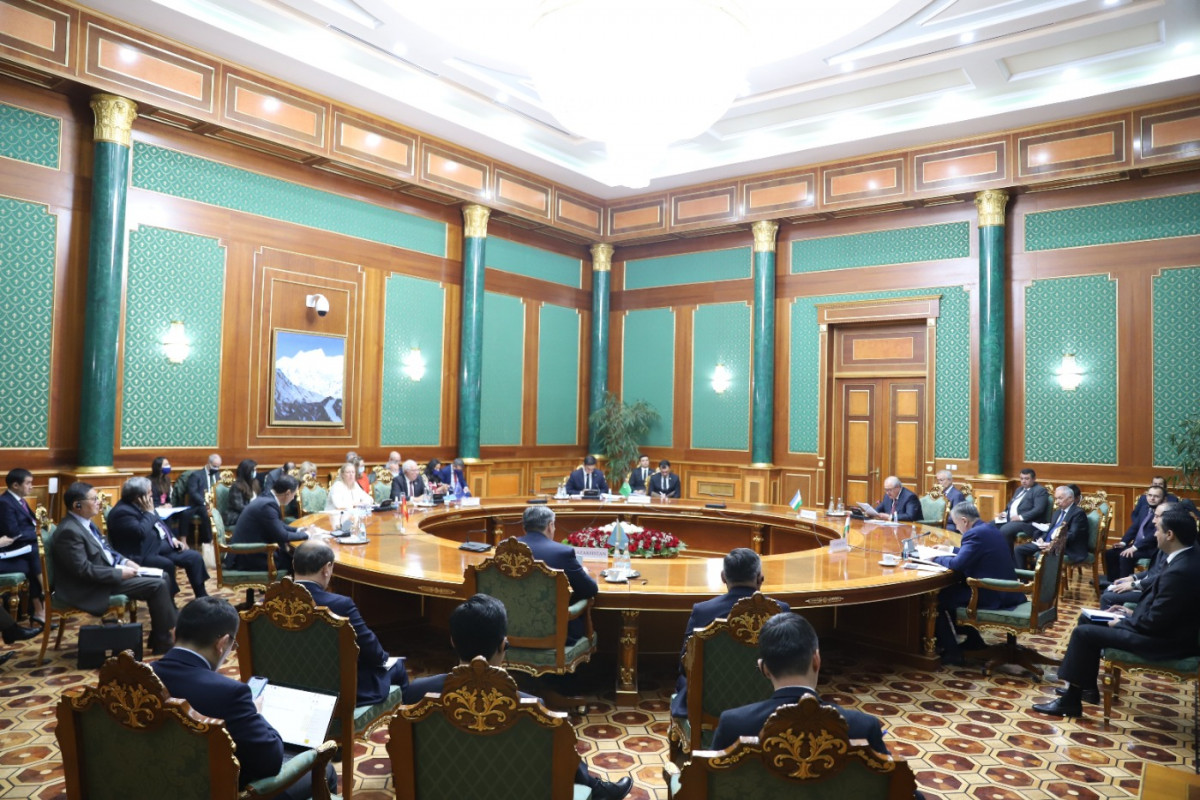
Meanwhile, the EU Delegation to Tajikistan says that during the Ministerial meeting, the EU informed of its priorities for regional cooperation, in line with the 2019 EU Strategy on Central Asia: promoting resilience, prosperity and regional cooperation.
The meeting also provided the opportunity to exchange on the implementation of a number of EU-funded programs, including the Border Management Program in Central Asia (BOMCA) and the counter-terrorism project Law Enforcement in Central Asia (LEICA), as well as to propose new initiatives, including a new inter-regional dialogue on international labor standards. The EU and Central Asia look forward to organizing in the course of 2022 a High-level Conference on Connectivity.
In a joint press statement participants reportedly confirmed their commitment to strengthen EU-Central Asia cooperation to support a green and sustainable post-COVID-19 recovery and to work together to tackle some of the challenges emerging from developments in Afghanistan.
High Representative Borrell said: “The countries of Central Asia have made remarkable achievements since their independence 30 years ago. The EU has high stakes in seeing Central Asia develop as a more resilient, prosperous and more closely interconnected economic and political space. The EU and Central Asia share a strong commitment to intensify cooperation to build back better following COVID-19. We also want to step up joint efforts to manage some of the common challenges stemming from the situation in Afghanistan. The EU can make a strong contribution to the future of the region if Central Asian states show determination in their commitment to reform and democracy.”
Commissioner Urpilainen added: “The partnership between the EU and Central Asia builds a joint path to a green, resilient, inclusive and sustainable post-COVID-19 recovery. We want to strengthen cooperation on climate, connectivity, trade and investment, energy, and security. And we will engage with civil society and the youth, to develop a closer partnership.”
In 2019, the EU adopted a new Strategy on Central Asia (Kazakhstan, Kyrgyzstan, Tajikistan, Turkmenistan, Uzbekistan), which highlights the growing strategic relevance of the region for the EU. The EU has significant stakes in Central Asia, given the strategic geographical location and pivotal role of the region in Europe-Asia connectivity, its vast energy resources (Kazakhstan is the EU’s fourth supplier of crude oil), significant market potential (70 million inhabitants, 35% of whom are under the age of 15), and our interest in regional security and migration, in particular in the light of developments in Afghanistan.