The Tajik authorities decide to get rid of bulbs containing mercury

The Government of Tajikistan has issued a regulation imposing ban on the import, production and sale of bulbs containing mercury.   `In the commodity nomenclature of the country’s foreign economic activity the bulbs containing mercury appear under the code of 8539322001. The Ministry of Industry and New Technologies, the Committee for Environmental Protection and Customs Service […]

Asia-Plus

The Government of Tajikistan has issued a regulation imposing ban on the import, production and sale of bulbs containing mercury.  

`In the commodity nomenclature of the country’s foreign economic activity the bulbs containing mercury appear under the code of 8539322001.

The Ministry of Industry and New Technologies, the Committee for Environmental Protection and Customs Service are obligated to ensure control over the execution of the regulation issued by the government on May 28, 2022.  

The relevant government bodies are instructed to take measures to increase the production of environment-friendly energy saving light emitting diode bulbs in the country.

The ban on the import, production and sale of bulbs containing mercury seems to be related to problems with recycling and disposal of these bulbs. 

Recall, President Emomali Rahmon on April 24, 2009signed a decree requiring nationwide shift to the energy-saving light bulbs beginning on May 1, 2009.  The government, local authorities, organizations and enterprises irrespective of forms of property were to provide switch to the energy-saving light bulbs by the end of the year. 

Relevant ministries and organizations were to provide construction and launch of two enterprises for production of the energy-saving light bulbs in the country with attraction of domestic and foreign investments as well as improve energy-saving standards during 2009-2011.

More than 1.2 million energy-saving light bulbs, also known as compact fluorescent lamps (CFLs), were delivered to country by October 1, 2009 alone.  

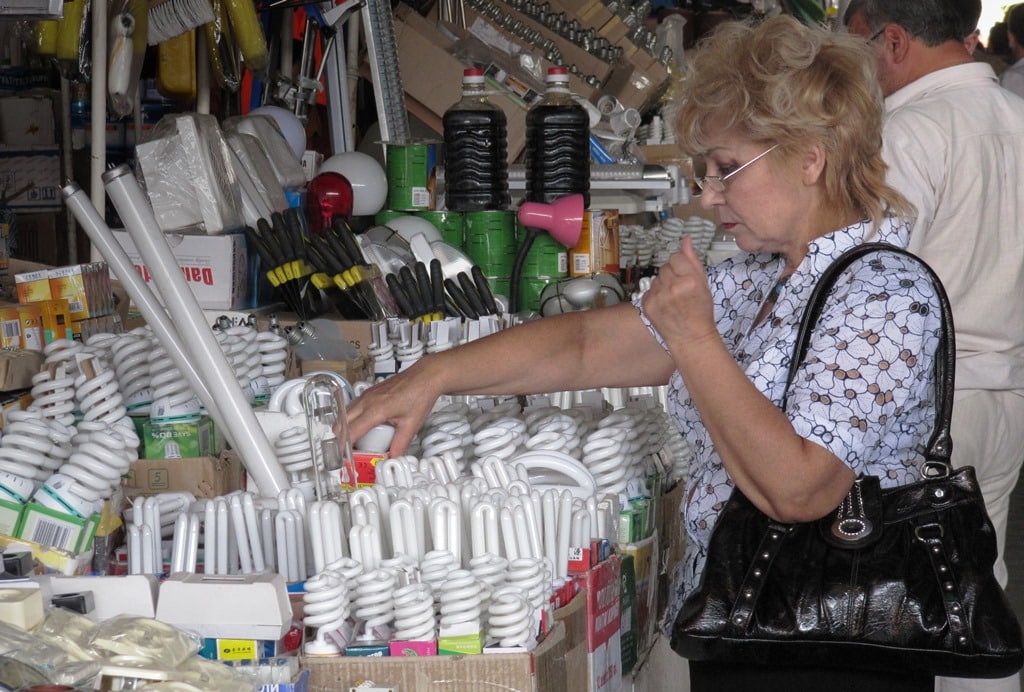
A compact fluorescent lamp (CFL), also called compact fluorescent light, energy-saving light and compact fluorescent tube, is a fluorescent lamp designed to replace an incandescent light bulb; some types fit into light fixtures designed for incandescent bulbs.  The lamps use a tube that is curved or folded to fit into the space of an incandescent bulb, and a compact electronic ballast in the base of the lamp.

It is to be noted that mercury is an essential part of CFLs, allowing a bulb to be an efficient light source.  On average, CFLs contain about four milligrams of mercury sealed within the glass tubing.  

Meanwhile, many of facilities set up in the country for collection and storage of used CFLs have reportedly not met safety requirements and they have not had specialists on recycling and disposing CFLs.

Join us on social media!

Article translations:

Related Article

Оби зулол
Оби зулол

Most Read

Акика Алиф

Recent Articles

In Tajikistan, a unique surgery was performed for the first time on a child with an extremely rare pathology

Tajik and Russian surgeons successfully performed the most complex reconstruction of the bladder and abdominal wall for a child with recurrent exstrophy.

The ministry of health states that hantavirus does not threaten Tajikistan

Cases of infection with this virus were detected on board the cruise liner Hondius near the Canary Islands.

Tajikistan lags behind other Central Asian countries in number of chain hotels – study

The Republic remains a niche market with a limited number of quality hotels.

Climate risks threaten food security in Central Asia – FAO

Land degradation reduces agricultural productivity. The loss of biodiversity weakens the ecosystems that farmers, livestock breeders, and rural communities depend on.

Potential or illusion? Why the world overlooks Tajikistan’s mineral wealth

The republic may indeed possess significant reserves of rare metals, but there is a catch...

The case of ousted Kyrgyz security boss classified and moves to court

The former head of the GKNB is charged with violent seizure of power and abuse of official position.

Trump states that Iran’s nuclear program is a higher priority than U.S. citizens’ economic issues

Fluctuations in energy prices led to record inflation in the United States in April, the highest in the past three years.

Foot-and-mouth disease, plague, and flu: Central Asia threatened by transboundary animal diseases

FAO urges Central Asian countries to strengthen coordination and epidemiological surveillance.

Tajikistan approves the second phase of the Electric Transport Development Program; $95 million will be allocated for its implementation.

At this stage, the authorities are focusing on charging infrastructure, services for electric vehicles, and the expansion of the electric bus fleet.

Tajikistan and Kazakhstan to sign roadmap for cooperation in the agrarian sector

The parties are interested in expanding investment cooperation and establishing joint ventures.