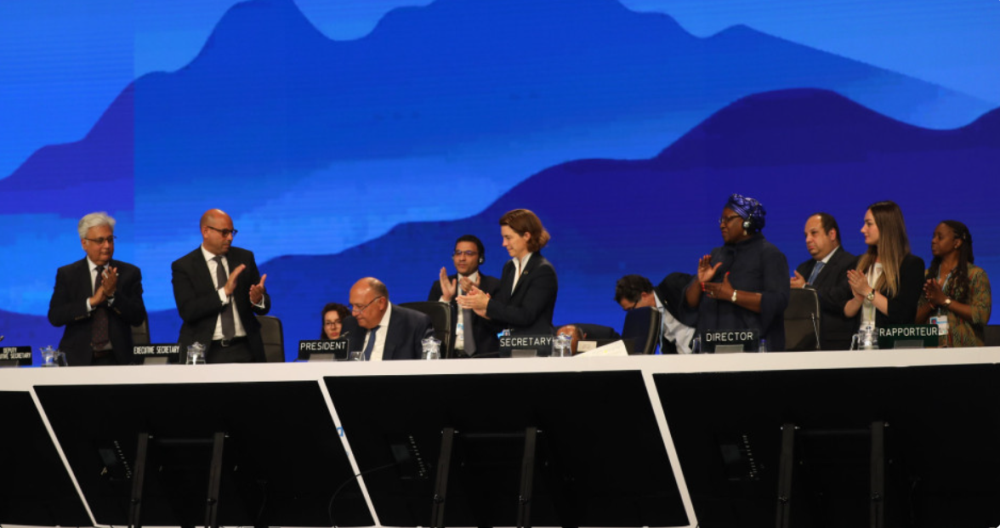
Participants of the United Nations Climate Change Conference COP27 that concluded on November 20 have reached an agreement to provide “loss and damage” funding for vulnerable countries hit hard by climate disasters.
The United Climate Change (UNCC) notes that Simon Stiell, UN Climate Change Executive Secretary, said: “This outcome moves us forward. We have determined a way forward on a decades-long conversation on funding for loss and damage – deliberating over how we address the impacts on communities whose lives and livelihoods have been ruined by the very worst impacts of climate change.”
COP27 reportedly resulted in countries delivering a package of decisions that reaffirmed their commitment to limit global temperature rise to 1.5 degrees Celsius above pre-industrial levels. The package also strengthened action by countries to cut greenhouse gas emissions and adapt to the inevitable impacts of climate change, as well as boosting the support of finance, technology and capacity building needed by developing countries.
Governments reportedly took the ground-breaking decision to establish new funding arrangements, as well as a dedicated fund, to assist developing countries in responding to loss and damage. Governments also agreed to establish a ‘transitional committee’ to make recommendations on how to operationalize both the new funding arrangements and the fund at COP28 next year. The first meeting of the transitional committee is expected to take place before the end of March 2023.
Parties also agreed on the institutional arrangements to operationalize the Santiago Network for Loss and Damage, to catalyze technical assistance to developing countries that are particularly vulnerable to the adverse effects of climate change.
Serious concern was expressed that the goal of developed country Parties to mobilize jointly US$100 billion per year by 2020 has not yet been met, with developed countries urged to meet the goal, and multilateral development banks and international financial institutions called on to mobilize climate finance.
The World Leaders Summit, held over two days during the first week of the conference, convened six high-level roundtable discussions that highlighted solutions – on themes including food security, vulnerable communities and just transition – to chart a path to overcome climate challenges and how to provide the finance, resources and tools to effectively deliver climate action at scale.
COP27 significantly advanced the work on mitigation. A mitigation work program is aimed at urgently scaling up mitigation ambition and implementation.
COP27 participants reportedly wrapped up the second technical dialogue of the first global stocktake, a mechanism to raise ambition under the Paris Agreement. The UN Secretary-General will convene a ‘climate ambition summit’ in 2023, ahead of the conclusion of the stocktake at COP28 next year.
Countries launched a package of 25 new collaborative actions in five key areas: power, road transport, steel, hydrogen and agriculture.
UN Secretary-General Antonio Guterres announced a US$ 3.1 billion plan to ensure everyone on the planet is protected by early warning systems within the next five years.
A G7-led plan called the Global Shield Financing Facility was launched at COP27 to provide funding to countries suffering climate disasters.
Announcing a total of US$105.6 million in new funding, Denmark, Finland, Germany, Ireland, Slovenia, Sweden, Switzerland, and the Walloon Region of Belgium, stressed the need for even more support for the Global Environment Facility funds targeting the immediate climate adaptation needs of low-lying and low-income states.