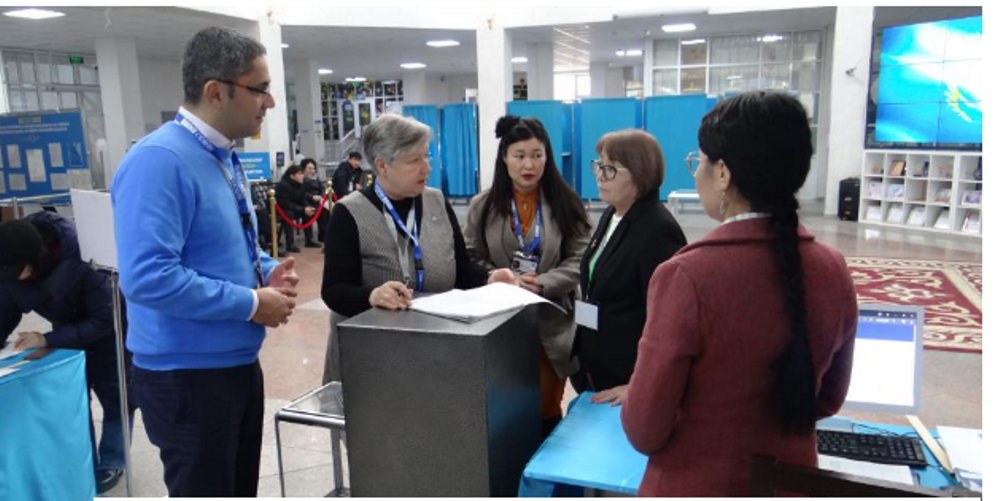
The 20 November early presidential election in Kazakhstan took place in a political environment lacking competitiveness and, while efficiently prepared, the election underlined the need for further reforms to bring related legislation and its implementation in line with OSCE commitments to ensure genuine pluralism, observers from the OSCE Office for Democratic Institutions and Human Rights (ODIHR) said in a statement released on November 21.
The incumbent stood as the joint candidate of all parliamentary parties and, in effect, was not meaningfully challenged in a low-key campaign, according to the statement. The ability of citizens to participate fully in political life reportedly remains significantly constrained, including by limitations on fundamental freedoms, the observers said.
The statement notes that the election administration provided extensive voter information in the media, but scarce campaign coverage by the media and the virtual absence of analytical reporting, including online, limited voters’ ability to make an informed choice.
Independent candidates are reportedly not allowed to run for president, the statement says.
Guaranteed by the Constitution, freedom of speech and access to information are reportedly limited by the restrictive legal framework and its uneven implementation.
The Constitution, the Election Law and other election-related legislation have been revised several times. Of the latest reforms, only the change to a single, seven-year term in office for the president applied to this election, and previous ODIHR recommendations remain unaddressed, and the legal framework is not fully consistent with international standards and OSCE commitments for democratic elections, the statement notes.