The Eurasian Development Bank (EDB) has released the latest issue of the Macroeconomic Review for its six member states. This regular publication provides a roundup of the macroeconomic situation and projects near-term developments in the member countries. The review also contains detailed statistics on key macroeconomic indicators.
The report, in particular, notes that EDB economies are experiencing robust growth. Analysts note that domestic sources prompted a 1.1% year-on-year GDP growth in the Eurasian Economic Union (EAEU) member nations during January–May 2023, following a 1.5% decline in 2022.
The Macroeconomic Review attributes this strong performance to the economies’ relatively swift adaptation to changes in the operating environment in 2022 and the implementation of fiscal support measures in certain countries.
Russia and Belarus have reportedly shown positive developments in the first five months of 2023, with GDP increasing by 0.6 and 0.9% year-on-year, respectively.
Central Asia and Armenia have reportedly continued to demonstrate strong economic activity this year, driven by higher domestic demand. In the first five months of 2023, Armenia’s GDP increased by 12.5% year-on-year, Tajikistan’s by 8.2%, Kazakhstan’s by 4.5%, and Kyrgyzstan’s by 3.4% in Q1 2023.
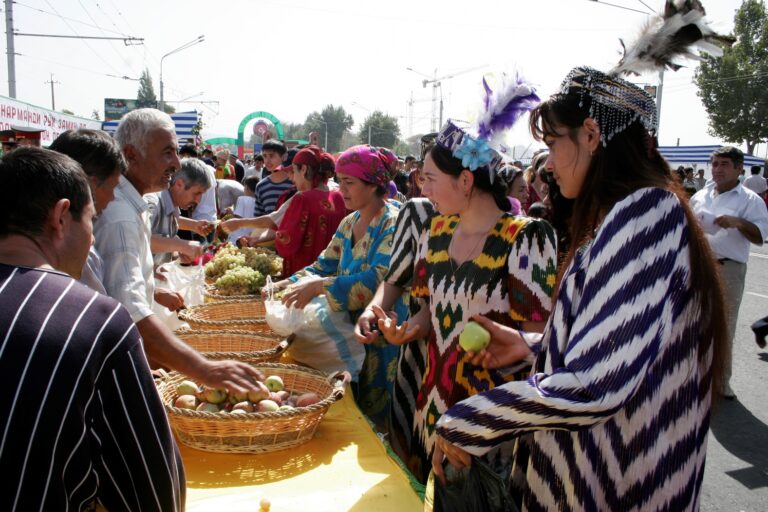
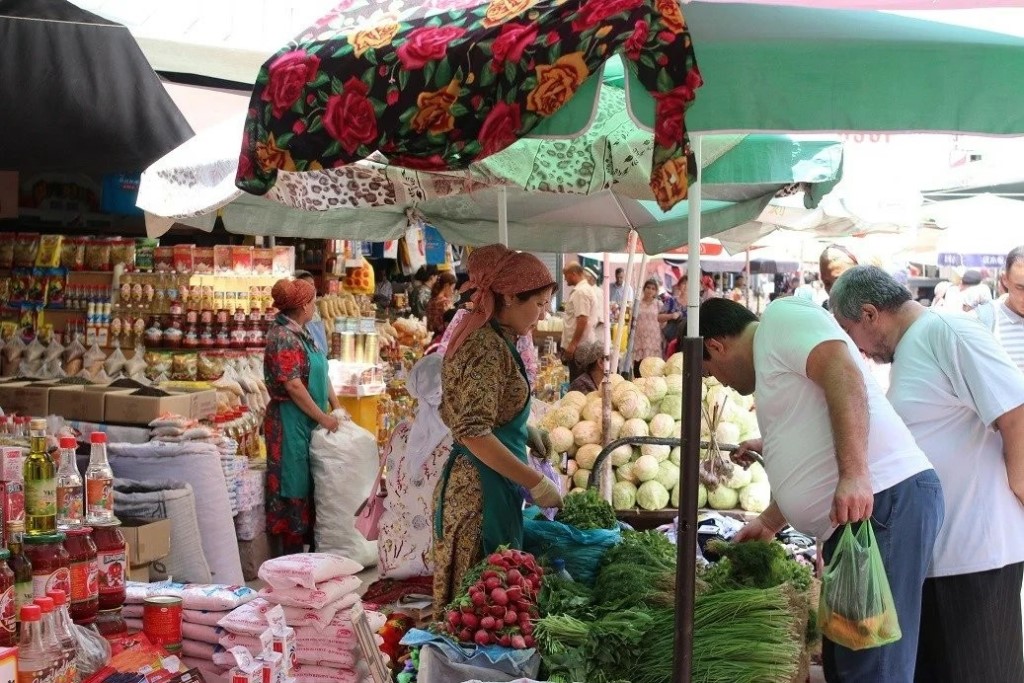
EDB experts attribute high economic growth rates in Tajikistan to “the strong domestic demand”. They noted that over the first five months of this year, retail trade turnover in Tajikistan has increased by 14.85% and investment volume has increased by 29.1%.
The Macroeconomic Review notes that positive contribution to the total economic dynamics is made by all major productive sectors: the agrarian sector increased production by 12.6 percent; the industrial sector – by 22.8 percent; the transportation section increase cargo turnover by 7.8 percent and passenger turnover by 50 percent.
EDB analysts predict that Tajikistan’s GDP will increase by 7.9 percent this year. Compared to the 1st quarter, when the country’s GDP increased by 8.2 percent, slowdown can be expected due to a decrease in the volume of remittances coming into the country in the context of the weakening of the Russian ruble.
Meanwhile, according to official data, Tajikistan’s real growth was 8.0 percent last year. The government of the country expects growth by the end of the current year at the same level.
The gross domestic product for 2023 was about 116 billion somonis (equivalent to 10.5 billion US dollars). The share of agriculture in GDP last year was 24.6 percent, industry – 17 percent, trade – 14.3 percent, transport – 9.3 percent, taxes – 9.2 percent, construction – 7.9 percent, other service sectors – 17.7 percent.
EDB analysts note that inflation in the region has passed its peak, slowing to 4.2% year-on-year in May 2023 from 12.4% year-on-year in December 2022. In Belarus, Russia, and Tajikistan, inflation is below target, while Armenia experienced deflation in June. Kazakhstan has witnessed a slowdown in price growth for the fourth consecutive month.
EDB analysts say this trend can be attributed to the diminishing effects of the previous year’s shocks and, in certain countries, currency appreciation and administrative price controls.
The Macroeconomic Review highlights that the easing price pressures in the region are creating an opportunity for central and national banks to lower their key rates.
EDB researchers also note that rising interest rates in developed countries are hampering business activity, and this impact is becoming increasingly evident. The previously mentioned recession risks for the US and EU economies are high and are expected to push developed world authorities to ease their monetary policies. The Macroeconomic Review adds that reduced global demand will constrain economic growth in EDB operating countries, especially those that rely on commodity exports. The negative impact will be partly offset by growth in mutual operations. In addition, rapid adaptation to external restrictions, as well as monetary and fiscal support, will stimulate growth by expanding domestic demand.
The Eurasian Development Bank is an international financial institution investing in Eurasia. For more than eighteen years, the Bank has worked to strengthen and expand economic ties and foster comprehensive development in its member countries – Armenia, Belarus, Kazakhstan, Kyrgyzstan, Russia, and Tajikistan. The EDB's charter capital totals US$7 billion. Its portfolio mainly consists of projects with an integration effect in transport infrastructure, digital systems, green energy, agriculture, manufacturing, and mechanical engineering. The Bank’s operations are guided by the UN Sustainable Development Goals and ESG principles. The Eurasian Development Bank has observer status in the UN General Assembly.