1. In your view, what is the situation of persons with disabilities in Tajikistan?
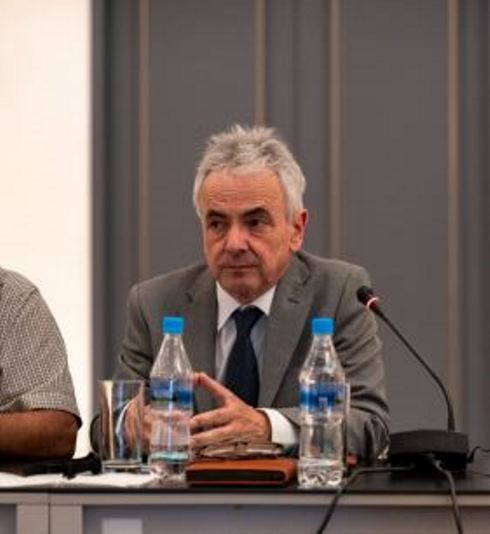
During my visit in Tajikistan, I met many persons with disabilities. Some of them were representatives of organizations of persons with disabilities, others participated in events organized for them. I was impressed by the expertise and dedication of many representatives. In general, it seems that despite all the efforts, many persons with disabilities are still excluded from many central aspects of social life. I cannot give an overall assessment of the situation of persons with disabilities in Tajikistan. This can be done when Tajikistan ratifies the Convention and submits its first report to the Committee. The goal of my visit to the country earlier this month was to explain the importance of the ratification of the Convention and to encourage the Government to ratify without delay.
2. How important is ratification of CRPD for Tajikistan? What does it envisage?
The CRPD guarantees rights to persons with disabilities and creates obligations for the State. It aims at ensuring that persons with disabilities can participate in all aspects of social and political life, and lead their private lives as everybody else. By ratifying the CRPD, the State and society are provided with a common framework that clarifies the measures to be taken and the goals to be reached. In addition, the CRPD requires the State to closely consult with organizations of persons with disabilities. This requirement, too, leads to better coordination and more adequate changes.
3. Why have some countries not ratified the CRPD yet? Tell us which obligations the Convention entails and which preferences it provides?
Out of 193 member states of the United Nations, 187 have ratified the Convention. There are only 6 countries that have not yet ratified the Convention. I do not know their reasons. The CRPD contains detailed rights and obligations, covering all areas of life. It requires an inclusive society, prohibiting discrimination and segregation. This entails, for example, an education system that is fully adapted to persons with disabilities, a labor market in which persons with disabilities can participate on an equal basis, and infrastructure like buildings and public transport that is accessible.
4. Does CRPD take into account the context of each country and is it possible to ratify it with any reservations?
Some rights, such as the guarantee to be treated humanely, do not need to be adapted to each country. Other rights, however, in particular social rights, require the State to take positive measures to guarantee them. The Convention states that the resources available to a State must be taken into consideration. This means that the Convention requires more far-reaching measures from States with ample resources than from those whose resources are more limited. When our Committee monitors the implementation of the Convention in a country, it carefully differentiates based on the economic resources the State party can muster.
There is no need to submit reservations. Implementing the Convention is a continuous process of achieving the goals. There is not a single country that fulfilled all the requirements at the time of ratification.
5. If one analyses the experience of the countries which have ratified the Convention already, which considerable changes have taken place in those countries from the moment of ratification?
One of the most important changes I have observed is that organizations of persons with disabilities become more active, more focused and can participate more closely in legislative and executive processes. In general, awareness of the need to take effective measures increases. However, it depends entirely on the State party where it takes action and what kind. There is great diversity among the States in this respect, as each State and its society need to set their own priorities and develop their own measures.
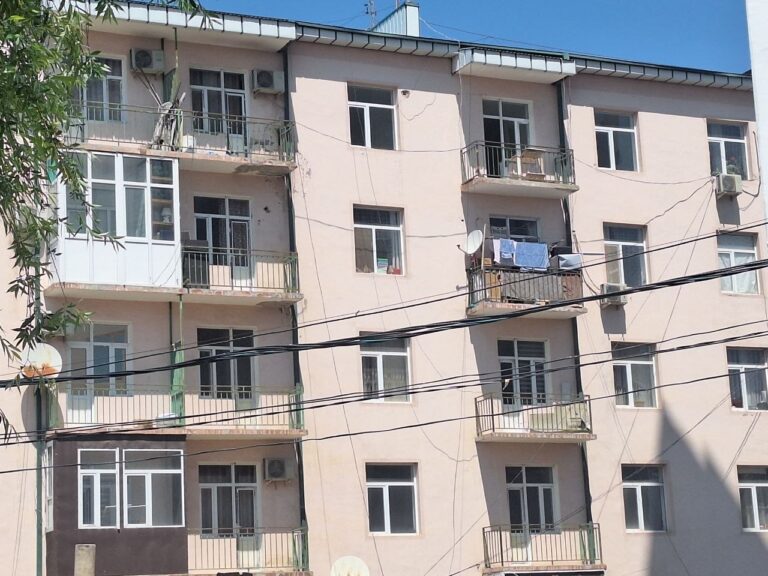
All across the world, I hear the argument that tight finances do not allow to take substantial steps toward implementation of the rights of persons with disabilities. The experience, however, is different. We have come to realize that there are many measures a State party needs to take that do not involve large expenditures. Walking around Dushanbe, I see a great many new buildings, including high-rises, being erected. If the proper accessibility standards are considered from the beginning of the planning process, rendering new buildings accessible will come at very little extra cost. This is a chance for Tajikistan; it allows the country to utilize its rapid economic development to substantially further the rights of persons with disabilities.
International experience also shows that the Convention is not solely about services for persons with disabilities. To be sure, it does contain many rights to services. But it is not confined to these rights. It also guarantees civil and political rights, such as the right to participate in political and public life, or the right to be free from inhuman and degrading treatment. Particularly political participation of persons with disabilities is of central importance for the peaceful development of any political system, as they represent a very large minority of about 20% of the population.
6. Which impact can ratification of CRPD have on the society as a whole?
Ratification of the CRPD is the beginning of a long process. Implementing the Convention not only requires to change the laws and to implement them properly. It also requires, on a much more fundamental level, that society’s attitudes towards persons with disabilities change. That an impairment of a person is not seen as a medical aberration that renders the person less valuable, but that impairments are but one aspect of the great diversity of human beings. And that we value and cherish this diversity, as we do it in many other societal sectors. Such change takes time, and it does not occur on its own volition. Every single State party in whose review I have participated is confronted with many challenges, irrespective of its economic or political power.
7. What does Tajikistan need to ratify the Convention? When do you think our country will be able to do that?
Tajikistan does not need to achieve the goals set under its action plan; it can ratify the Convention without delay. There is no need to wait, and there are no advantages of postponing ratification. Ratification would add crucial support to the efforts currently under way. Particularly the State party review process, in which our Committee issues recommendations to the State, provides guidance for further measures by the State. As this year marks the 75th anniversary of the adoption of the Universal Declaration of Human Rights, the UN will host a high-level event with participation of the Heads of States and Governments on 11-12 December in Geneva, Switzerland. This will be an opportunity for UN Member States to submit their pledges on transformative changes and progress in the cause of human rights. In this context, I would urge the Government of Tajikistan to submit a pledge on ratification of the CRPD as this is one of the two core human rights Conventions not ratified by the country yet.