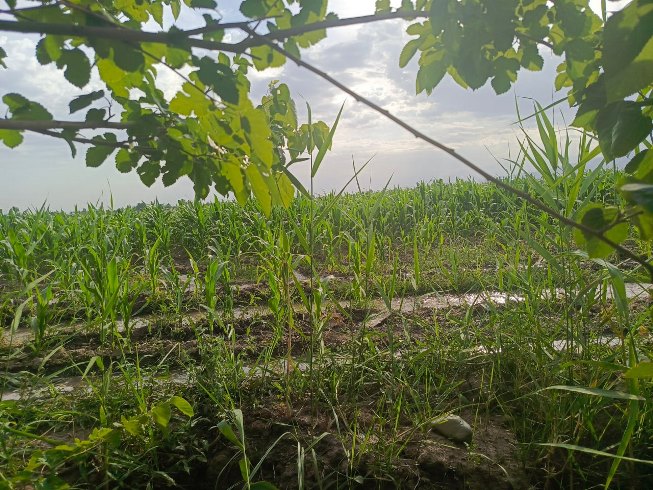
Tajikistan spends on average US$15–US$20 million annually on importing corn. The country struggles to meet its demand due to limited agricultural land, lack of high-quality seeds, outdated technology, and insufficient support for producers.
Between September 2023 and August 2024, Tajikistan imported $13.2 million worth of corn from Kazakhstan, making it the top buyer of Kazakh corn. Other importers included Uzbekistan (US$7.7 million), China (US$6.4 million), Iran (US$5.1 million), and Russia (US$4.3 million). In the 2022/23 season, Kazakhstan's corn exports totaled US$23.3 million, with Uzbekistan and Tajikistan as the primary buyers.
Why does Tajikistan lack domestic corn production?
The country imports significant quantities of corn each year, primarily for animal feed and food production.
Several factors contribute to this reliance on imports: limited land for cultivation — only 20,481 hectares are allocated to corn cultivation, which is insufficient to meet demand: low yield — despite favorable climate conditions, yields range from 6 to 15 tons per hectare, far below the potential of local varieties and hybrids; and outdated practices and inputs — farmers predominantly use imported seeds and outdated farming techniques, limiting productivity.
The potential for corn production in Tajikistan
Corn plays a crucial role in Tajikistan's agriculture, contributing to food security and serving as a valuable resource for animal feed.
To enhance production, a systematic approach is needed, including:
- Adoption of High-Yield Varieties and Technologies — research in the Hisor Valley shows that foreign corn varieties from Portugal, Syria, the U.S., and Spain outperform local ones; for example, Syrian varieties KK 1036 and 1038 yield 290–305 grams per plant over three years.
- Development of local varieties — Tajik scientists have created high-yield varieties like "Askar" and "Zohir," which outperform standard varieties by 6.5–8 quintals per hectare. These varieties are early-maturing, resilient, and feature high grain mass.
- Irrigation and plant density optimization – techniques like drip irrigation and increasing planting density to 65,000 plants per hectare can significantly boost yields.
- Hybrid development — combining local and foreign genetic lines could increase yields by 15 quintals per hectare.
- Economic Incentives — providing farmers with access to credit and subsidies for high-quality seeds and fertilizers is essential.
Why corn is essential for Tajikistan
Corn is a vital crop for Tajikistan due to its productivity, resilience, and economic significance:
- Animal feed — corn is an affordable and nutritious feed source for livestock.
- Food Security– increased domestic production reduces reliance on imports, stabilizing the internal market.
Climate adaptability
Corn’s resilience to adverse weather conditions is critical in a changing climate.
In conclusion, with the right investments in technology, infrastructure, and farmer support, Tajikistan can reduce its dependence on imports, strengthen its agricultural sector, and enhance food security.