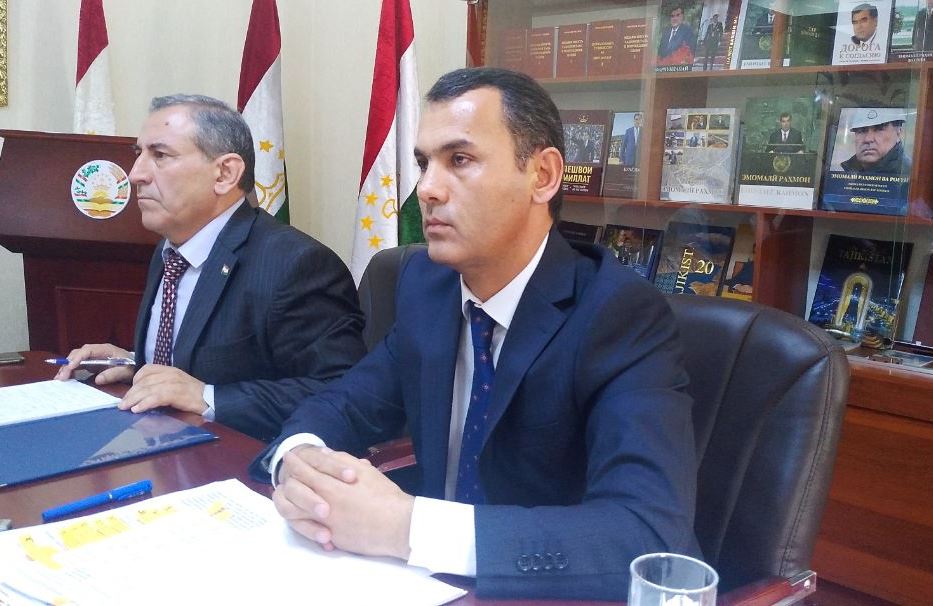
On January 21, the President of Tajikistan, Emomali Rahmon, signed a decree introducing staff changes, nominating the 50-year-old Rustam Mirzozoda as Chairman of the Supreme Court. His nomination replaces the 63-year-old Shermuhammad Shohiyon, who had held the position since 2015.
Rustam Mirzozoda, who had previously chaired the High Economic Court of Tajikistan, will now face the challenge of addressing a number of pressing issues in the country’s judicial system.
Career background
Rustam Mirzozoda was born on November 21, 1975. In 2001, he graduated from the Law Faculty of Tajik National University. His career in the judicial system began in the early 2000s, progressing from an assistant judge at the Constitutional Court to the chairman of the High Economic Court of Tajikistan.
He has held various positions in judicial institutions, including chairing district courts in Dushanbe and Khatlon province. In 2022, he became the head of the High Economic Court, a position he held until his recent nomination as Chairman of the Supreme Court.
Issues in the judicial system under Shohiyon
Rustam Mirzozoda's appointment comes against the backdrop of intense criticism of the country’s judicial system by President Emomali Rahmon.
On December 5, 2024, during a meeting with judges, the president expressed concern about the judiciary’s performance, criticizing judges for low work standards and widespread corruption. He highlighted that from 2020 to October 2024, his administration received over 4,000 complaints about judges. The president also noted frequent cases of bribery, abuse of power, and unjust rulings among judicial officials.
Since 2014, 45 judges and court leaders have faced criminal charges, underscoring the need for fundamental reforms in the judiciary. One major issue has been the bias toward guilty verdicts. From 2019 to 2023, courts in Tajikistan issued only 28 acquittals in criminal cases, of which 24 were full acquittals and 4 partial.
Public dissatisfaction with the judiciary has been expressed through complaints regularly sent to the president’s administration. Criticism focused on the inadequate professional training of judges and widespread corruption within the judiciary, which negatively affected the quality of justice.
Challenges facing the new Supreme Court chairman
Rustam Mirzozoda will need to tackle several key issues. First, he must work to restore public trust in the judiciary. Second, he faces the daunting task of combating corruption among judges.
Additionally, he will need to improve the quality of judicial proceedings, enhance judges' professionalism, and ensure fairness in court decisions. Achieving these goals will require not only reforms but also effective monitoring of their implementation across all levels of the judiciary.
Moreover, there is hope that under his leadership, the Supreme Court—and the judiciary as a whole—will become more transparent to the media. Currently, the judiciary is one of the most opaque government institutions in the country.
For example, it is expected that the law on “Access to Information on Court Activities,” adopted in 2021, will finally be enforced. This law requires courts to publish information about their activities, including statistics, rulings, and more.
Under the law, such data must be made available promptly: court rulings immediately, news within six working hours, and updates within three days.
The law was designed to enhance judicial transparency, ease journalists' work, and allow litigants to track their cases and obtain critical information on time.
To date, however, this law has not been implemented.