Tajikistan outlines priorities in combating the triple environmental crisis

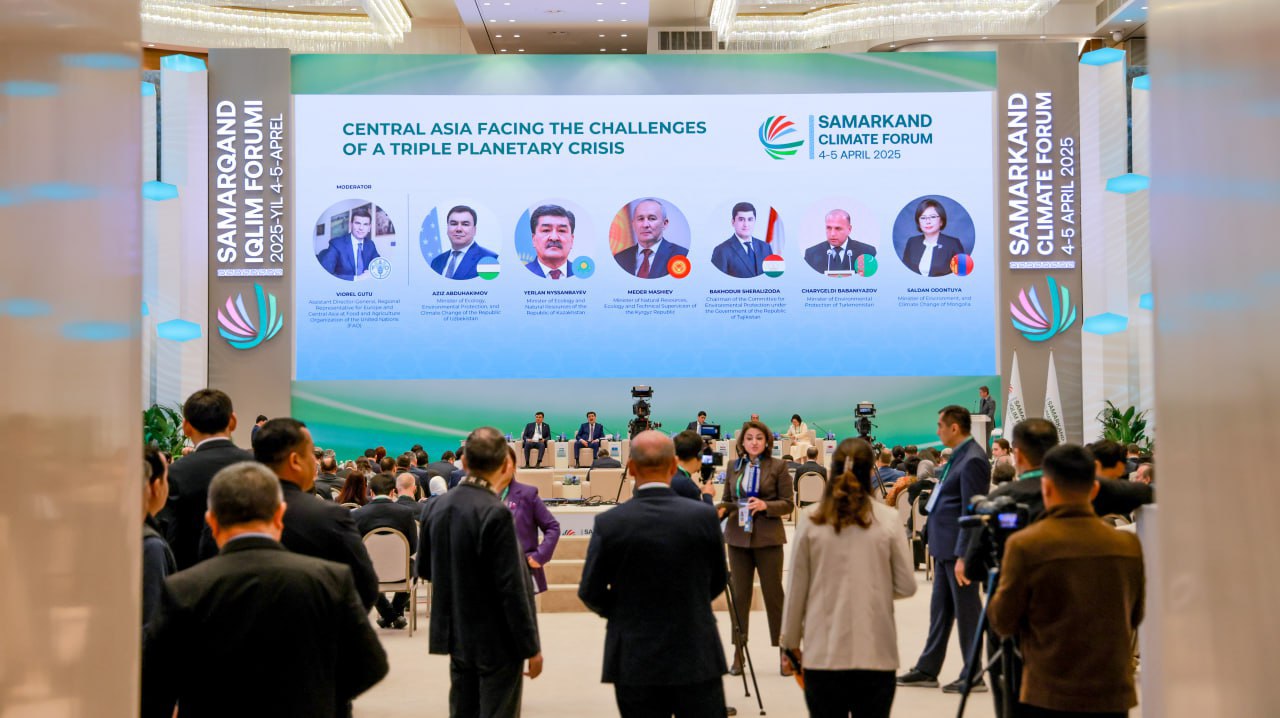
A high-level plenary session was held in Samarkand as part of the climate forum, where environment ministers from Central Asia’s countries and Mongolia discussed joint actions to combat the triple planetary crisis: climate change, biodiversity loss, and environmental pollution. Chairman of the Committee for Environmental Protection under the Government of Tajikistan (CfEP), Bahodour Sheralizoda, emphasized […]

Asia-Plus

A high-level plenary session was held in Samarkand as part of the climate forum, where environment ministers from Central Asia’s countries and Mongolia discussed joint actions to combat the triple planetary crisis: climate change, biodiversity loss, and environmental pollution.

Chairman of the Committee for Environmental Protection under the Government of Tajikistan (CfEP), Bahodour Sheralizoda, emphasized in his speech that only coordinated actions among the countries of the region will allow for an effective response to the consequences of climate change, land degradation, and the loss of ecosystems.

He identified climate change adaptation as the top priority and highlighted the region’s vulnerability to global environmental threats: the rapid melting of glaciers, increased frequency of natural disasters, soil degradation, and the disappearance of unique species.

According to the Committee for Environmental Protection, Sheralizoda also called for the rational use of natural resources, the restoration of degraded lands, and the expansion of transboundary protected natural areas.

He placed special emphasis on the upcoming International High-Level Conference on Glacier Preservation, which will take place from May 29-31, 2025, in Dushanbe.  The event is being organized at the initiative of President Emomali Rahmon within the framework of a UN General Assembly resolution and will be the first global platform fully dedicated to the protection of glaciers as sources of freshwater.

The session was attended by representatives from the environmental agencies of Kazakhstan, Kyrgyzstan, Uzbekistan, Turkmenistan, Mongolia, and international organizations, including the FAO.

Participants stressed the need to strengthen regional cooperation and develop joint strategies to address environmental challenges.

Key areas of focus included the implementation of sustainable water-saving technologies and public awarene0ss campaigns.

The Samarkand Climate Forum, held on April 4–5, served as an important international platform for discussing sustainable development and the protection of Central Asia’s natural heritage.

The next step will be the conference in Dushanbe, which is expected to result in specific international recommendations on glacier conservation and the protection of water resources in mountain regions.

Article translations:

Related Article

Оби зулол

Most Read

Join us on social media!

Recent Articles

Mudflows and dust storms expected in Tajikistan

Citizens are urged to protect themselves from dust.

Russia doubles temporary stay duration for truck drivers from CIS and Georgia

Tajik drivers will have their term increased from 90 to 180 days a year.

How a guide dog project could help people with visual impairments in Tajikistan

In Tajikistan, there is an enthusiast who can build such a school, but he urgently needs help, primarily financial.

Wildberries opened access to the platform for all sellers from Tajikistan

Now local brands, manufacturers, and individual entrepreneurs can enter the largest online platform and expand their sales market.

CMWP Uzbekistan: The boutique hotel market in Tajikistan shows the fastest growth in the region

Such hotels in the republic offer their guests a high level of comfort and convenience.

Emomali Rahmon signs decree on increasing salaries and paying bonuses to IT sector workers

The document provides for the creation of a new incentive system for specialists in the field of information technology.

Not advertising, but influence: what was discussed at IMPACT Creative Night and why businesses need meaning today

Today, audiences trust direct advertising less and less, which means brands have to compete not for attention, but for trust and a place in the agenda.

Russia extends the experiment on collecting biometrics from foreigners

The decision was justified by the necessity of gradually modernizing all border crossing points.

“Convenient, affordable, and cheap”: Dushanbe residents speak out on raids against shared taxis

They say that late at night buses and trolleybuses disappear from the streets, so cheap route taxis remain the only way for many to get home.