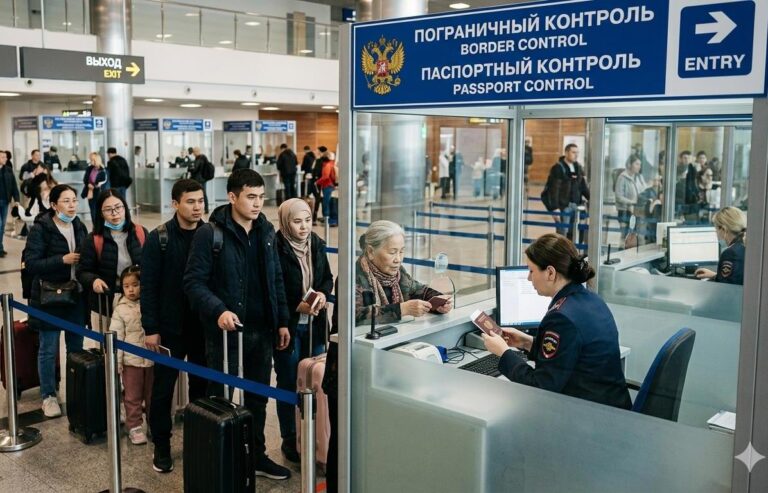
Foreigners who have obtained Russian citizenship will be eligible for child benefits only after five years of permanent residence in the country. This follows from a resolution adopted by the Russian government resolution.
The new rules will come into force on April 1, 2027. According to the document, naturalized citizens will have the right to apply for a unified child benefit only 5 years after obtaining a Russian passport, provided they have been permanently residing in Russia.
“The right to a monthly allowance is granted to pregnant women in need of social support and persons with children under the age of 17, provided they are citizens of the Russian Federation and have been permanently residing in the Russian Federation as citizens for at least five years,” the document states.
The restrictions will not affect Russian citizens by birth, residents of annexed regions, participants of the compatriot resettlement program, as well as participants in combat operations in Ukraine and their family members.
The resolution specifies that “the monthly child allowance is assigned and paid at 50% of the child’s subsistence minimum”, established in the region of the Russian Federation at the date of application.
Ministry of labor initiative
RBC notes that the initiative to strengthen the requirements for the appointment of a unified allowance for children from low-income families was put forward by the Ministry of Labor of the Russian Federation. The Ministry described the amendments as “a continuation of a consistent policy to eliminate situations where the motivation for obtaining citizenship is the opportunity to receive child benefits.”
Currently, any Russian citizen who permanently resides in the country can claim child benefits, regardless of when they obtained citizenship. The introduction of the new requirement for a five-year residence period specifically as a citizen will exclude the possibility of receiving benefits for those who were granted citizenship under the general procedure.
Earlier, some State Duma members proposed tightening the conditions for obtaining various state benefits and privileges for new Russian citizens. In particular, the head of the “Just Russia – For Truth” faction, Sergey Mironov, about a year ago proposed an initiative to provide social benefits, privileges, and housing certificates to migrants with Russian citizenship who have lived in the country for at least 20 years.
He proposed considering the residence requirement when providing such types of assistance as social benefits, pension supplements, subsidies for purchasing housing or building homes for young and large families, as well as subsidies for participating in preferential mortgage lending programs.
Commenting on the initiative, Sergey Mironov noted that in some regions of the country recently there have been scandals related to the issuance of housing certificates to families of naturalized migrants.
“People are rightfully outraged as to why the authorities are helping citizens who recently obtained passports, while many local residents have been waiting in this line for years without success,” he said.