
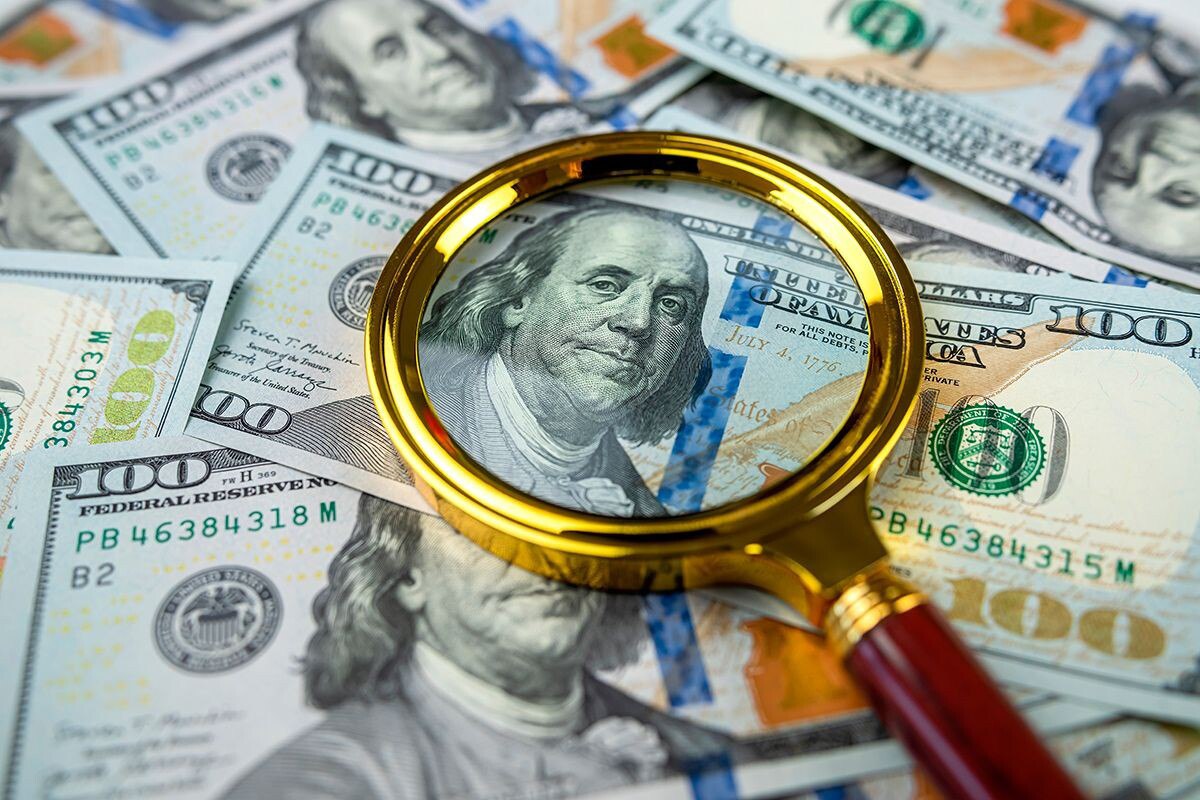
The dollar (USD) has lost 2.0 percent of its value against the Tajik national currency, the somoni (TJS), over the past week.
The USD/TJS official exchange rate, set daily by the National Bank of Tajikistan (NBT), drop from 1:10.90 on April 14 to 1:10.68 on April 22.
After a sharp strengthening against the somoni at the end of November last year, the U.S. currency has held roughly steady for almost five months with minor fluctuations (on average, around 10.93 somoni).
The decline of the dollar against the somoni began in mid-April, following the recent sharp decrease in the dollar’s exchange rate against the Russian ruble: from 1:86 on April 9 to 1:81 on April 22.
It should be noted that the Tajik currency is effectively pegged to the Russian ruble due to the close trade and economic relations between the two countries. Russia is Tajikistan's major trading partner, with more than 90% of the Tajik-Russian trade turnover, according to the National Bank of Tajikistan, conducted using the Russian ruble.
Additionally, Russia remains the primary source of remittances from Tajik labor migrants. Over 90% of these remittances are made in rubles, and fluctuations in the ruble's exchange rate can affect the volume of remittances in somonis, which in turn impacts the exchange rate of the Tajik currency.
Experts suggest that the strengthening of the ruble may signal an improvement in Russia's economic situation, which, in turn, affects Tajikistan's economy and strengthens the somoni.
Meanwhile, Bloomberg reported on April 15 that the Russian ruble has surged to become the best performing global currency as the United States trade war hits the dollar.
The ruble has reportedly strengthened 38% versus the dollar on the over-the-counter market since the beginning of this year. Bloomberg noted that while the dollar has reeled from mounting pressure caused by US President Donald Trump’s escalating tariff wars, Russia’s currency has also been buoyed by factors unique to the country, including record-high local interest rates.
What drives the Russian ruble’s strength?
Russian experts link the recent rise in the ruble's value against the dollar to several factors.
Mikhail Zeltsar, a stock market expert at "BKS World of Investments," told Forbes that the ruble’s strengthening is influenced by high exports, which create a strong supply of currency in the market, and low imports, which do not create enough demand for foreign currency on the exchange.
He also noted that the ruble is supported by the sale of currency under the budget rule and the high interest rate of the Central Bank at 21%, which makes ruble-denominated instruments attractive and discourages capital outflows into foreign currencies.
Oleg Abelev, head of the analytical department at Rikom-Trust, believes that Western sanctions also contribute to the ruble’s growth, as they make it difficult to withdraw currency from the Russian market.
Alexander Bakhtin, an investment strategist at Guard Capital, stated that the ruble’s strength is based on two weaknesses: the weak internal demand for foreign currency and the weakness of the US dollar in the global market.
Anton Prokudin, chief macroeconomist at Ingosstrakh-Investments, identifies another factor in the ruble's growth: political factors.
How long will this last?
There is a range of opinions in Russian media and among experts regarding the duration of the ruble's strengthening against the dollar.
Analysts at SberCIB forecast that in the short term, the ruble could strengthen to 85 rubles per dollar in the coming weeks, but they expect the exchange rate to return to 105 rubles by the end of the year.
