
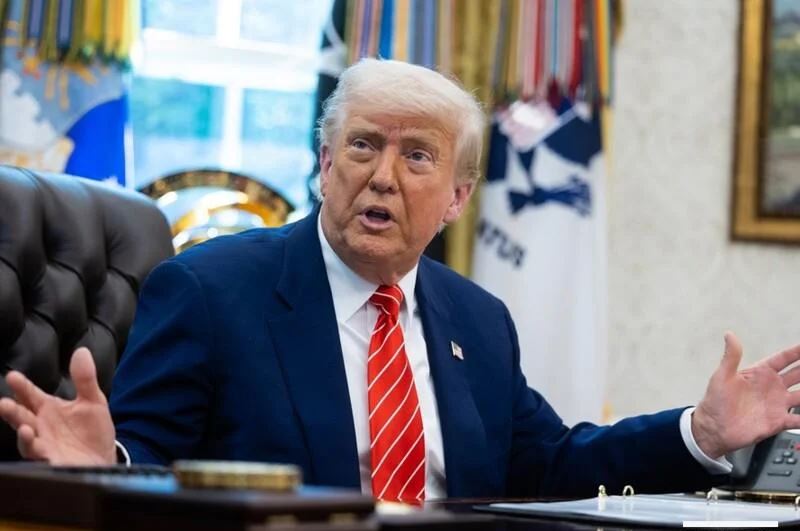
In a significant move, U.S. President Donald Trump has signed an executive order that bans citizens from 12 countries across Asia, Africa, and Latin America from entering the United States. The new measures also impose partial restrictions on citizens from seven additional countries, including Turkmenistan, BBC’s Russian Service reported on June 5, citing the president's administration.
The complete entry ban affects nationals from Afghanistan, Myanmar, Chad, the Republic of Congo, Equatorial Guinea, Eritrea, Haiti, Iran, Libya, Somalia, Sudan, and Yemen. Meanwhile, citizens from Burundi, Cuba, Laos, Sierra Leone, Togo, Venezuela, and Turkmenistan will face partial restrictions. These individuals will be denied tourist and student visas but can still apply for work or family reunification visas.
The order will take effect on June 9.
Action taken after anti-Semitic attack
In a video statement marking the signing of the order, President Trump explained that the impetus for these new restrictions stemmed from an anti-Semitic attack on Jewish activists in Boulder, Colorado. A 45-year-old Egyptian national, who had been living in the U.S. illegally with his family, threw an incendiary device into a crowd while shouting "Freedom for Palestine!" The attack injured 15 people, including a Holocaust survivor.
"In the 21st century, we've seen terrorist attacks carried out by foreigners with expired visas, coming from dangerous regions around the world," Trump remarked.
The president stressed that foreign nationals arriving from countries where thorough visa vetting is not possible, or those who overstay their visas, pose a security risk.
“We cannot allow unrestricted immigration from countries where we cannot reliably screen those who wish to enter the U.S.,” Trump said.
He further mentioned that, on his first day in office, he had instructed the Secretary of State to assess the regions that present the highest risks to U.S. security and to recommend measures for limiting entry from those areas.
The president also promised regular reviews of the "blacklist" of restricted countries. If conditions in a country improve, restrictions could be eased, but if the situation worsens, additional countries may be added to the list.
This is not the first time Trump has imposed travel bans. In 2017, one of his first actions as president was to restrict entry for nationals from several countries, including Libya, Syria, Yemen, and Somalia. The ban was later expanded to include North Korea, Venezuela, and Chad. While the policy faced multiple legal challenges, the U.S. Supreme Court ultimately upheld its constitutionality.
