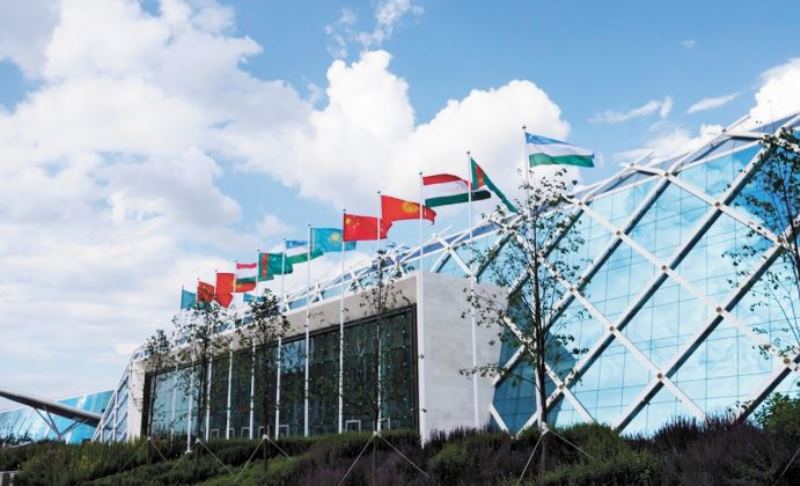
Al Jazeera reports that Chinese President Xi Jinping reached Kazakhstan on Monday to attend the second China–Central Asia Summit, a high-stakes diplomatic gathering aimed at deepening Beijing’s economic and strategic ties with the region.
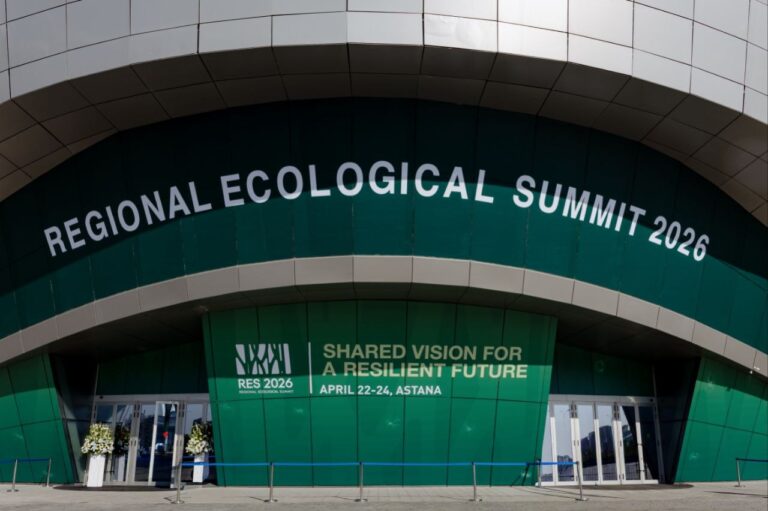
The summit, which will be in the Kazakh capital Astana today reportedly comes at a time when China is intensifying its outreach to Central Asian countries amid shifting global power alignments — and mounting tensions in neighboring Iran, which is roiled in an escalating conflict with Israel.
The summit will bring together the heads of state from all five Central Asian nations — Kazakhstan, Kyrgyzstan, Tajikistan, Turkmenistan and Uzbekistan — along with Xi.
The Astana summit also carries symbolic weight: it is the first time that the five Central Asian nations are holding a summit in the region with the leader of another country.
Zhao Long, a senior research fellow at the Shanghai Institutes for International Studies (SIIS), told Al Jazeera that Central Asian countries see their partnership with China as a deep, multifaceted cooperation grounded in shared strategic and pragmatic interests.
Since China first formalized and chaired the China-Central Asia Summit in May 2023, Lin Jian, a Chinese Foreign Ministry spokesperson, reportedly told a news briefing that “China’s relations with Central Asian countries have entered a new era … injecting fresh impetus into regional development and delivering tangibly for the peoples of all six countries.”
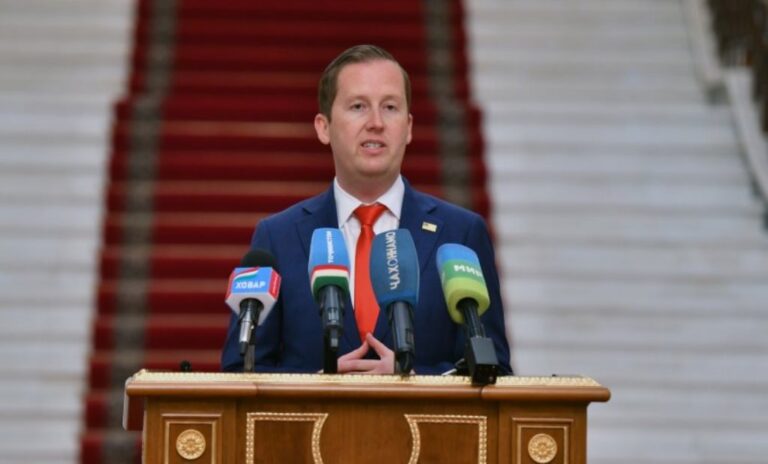
Meanwhile, Abdullo Navjuvanov, former chief of the Interior Ministry’s Office in Sughd province, told the Global Times (GT) in an interview that the China-Central Asia Summit is vital for formation of a new Eurasian interaction model,
“The summit is essential for both sides and for each country, as the interests of all our nations need to be protected and promoted,” said he. “China is one of the largest players in global geopolitics, with an incredibly developing economy, industrial sector, and artificial intelligence technology. In bilateral formats, China offers its neighbors favorable conditions for cooperation and helps develop infrastructure, especially now that there is an opportunity to reach more global agreements for the region.
According to him, the strategic importance of Central Asia for the stability and security in western China, especially in the Xinjiang region, is difficult to overestimate. “I think no one doubts China's ability to ensure security, especially with the advent of new technologies. However, cross-border terrorism, extremism and drug trafficking remain problems that cannot be eradicated alone. All countries in the region need maximum efficiency and openness in practice, without bureaucracy or tug-of-war. In this difficult struggle, it is necessary to act as decisively as possible,” Navjuvanov said.
“The China-Central Asia summit is a foreign policy signal, especially against the backdrop of the G7, NATO and QUAD, indicating that China can build strategic partnerships without pressure, with an emphasis on development and mutual benefit. The Astana summit shows that Central Asia has become a full-fledged partner for China. It is not a "backwater" of Eurasian politics, but a key node in the new multipolar architecture that China is trying to build.”
Asked about the significance of the China-Kyrgyzstan-Uzbekistan (CKU) railway, he said that the railway is not just an infrastructure project, it is a geostrategic shift with implications on several levels: regional, economic and political.
“As for Tajikistan, despite the fact that the route does not pass directly through its territory, the republic can derive significant indirect benefits,” Navjuvanov noted, adding that this includes participation in auxiliary logistics and customs chains, and the ability to connect to the new network through internal branches, and increased diplomatic weight in regional initiatives.