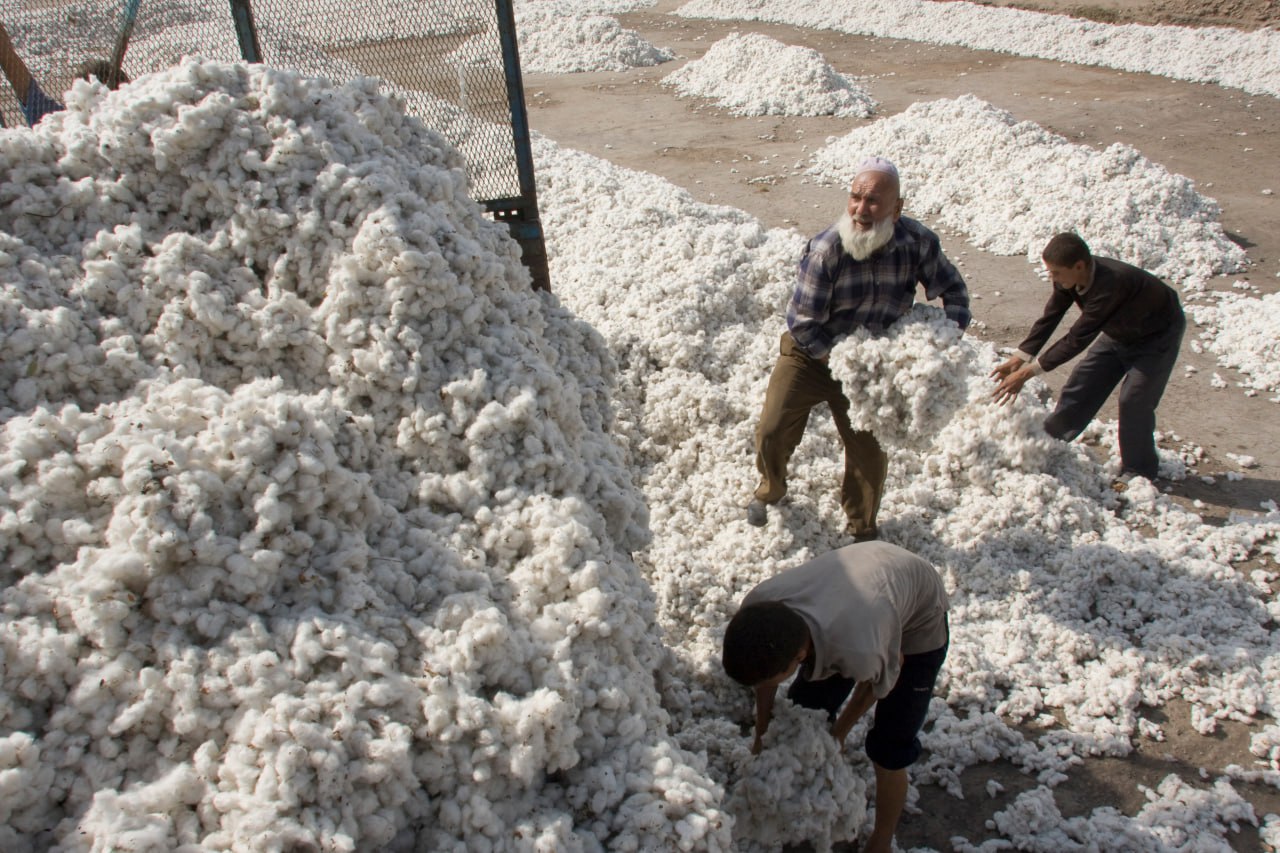
In July, global cotton prices fell to a five-year low, putting pressure on cotton-exporting countries like Tajikistan, where the crop remains a vital source of export revenue.
Tajikistan is set to boost its cotton production and exports in 2025, with raw cotton output projected to reach 390,000 tons—up from 253,300 tons harvested in 2024, which represented only 58.2% of the targeted 434,000 tons. Export revenues from cotton fiber are expected to grow by 25%. However, global market conditions pose significant risks to the country’s ambitions.
Despite Tajikistan’s push to expand output, the global cotton market is under pressure. Demand is weakening, prices are unstable, and oversupply is growing. Without a transition toward deep processing and sustainable agriculture, experts warn that the country risks remaining a raw material supplier in a low-margin, vulnerable supply chain.
According to Trading Economics, cotton futures recently fell below 60 cents per pound, matching the lows of May 2020. Although prices made a modest recovery to 66.93 cents per pound as of July 6—a marginal 0.01% increase for the day—the broader market structure continues to show sustained downward pressure.
As Tajikistan intensifies its cotton strategy, long-term resilience will depend on its ability to move beyond raw exports and add value through textile manufacturing and modernization of its agricultural sector.
In the United States, the world’s largest cotton producer, output for the 2024–2025 season is projected at 18.9 million bales—up 5.9% from last year. At the same time, U.S. cotton stocks have surged to 10.1 million bales as of June 1, the highest level since 2018.
India’s monsoon season began nearly a week early this year, allowing farmers to expand cotton planting by 8%.
Brazil, benefiting from a 10% devaluation of the real against the dollar since January, exported a record 12.4 million bales of cotton between February and June, surpassing the U.S. for the first time.
Meanwhile, China—the largest global cotton importer—has significantly reduced purchases from the U.S., favoring cheaper suppliers such as Brazil and Uzbekistan during a brief trade truce from April 2 to July 9. In an oversupplied market with stagnant demand, China’s shift further intensified downward pressure on prices.
Global cotton inventory now exceeds 68% of annual usage—a concerning signal of oversupply and waning demand.
Shifting consumer preferences: cotton vs. synthetics
Following the COVID-19 pandemic and a global economic slowdown, the textile industry has increasingly turned to synthetic fibers like polyester, which are cheaper, more durable, and less vulnerable to market volatility than natural cotton. Despite environmental concerns, cost-efficiency is driving the switch, especially in developing markets where competition is fierce.
Impact on Tajikistan
For Tajikistan, falling cotton prices are a major economic concern. The country remains heavily reliant on raw cotton exports, with limited progress in moving up the value chain.
From January to May 2025, Tajikistan exported a total of $111.3 million in cotton and cotton-related products. Of this:
- 81% (US$90 million) came from raw cotton fiber;
- US$16.4 million from yarn;
- US$4.6 million from fabric;
- US$146,000 from cotton waste.
The figures underscore the country’s dependence on raw material exports. Although there have been efforts to increase exports of value-added goods like yarn and fabric, these remain marginal.
With global prices plummeting, Tajikistan finds itself in a vulnerable position: even as production and exports grow, the country continues to rely on low-margin, raw cotton exports—leaving its economy exposed to global market fluctuations.