
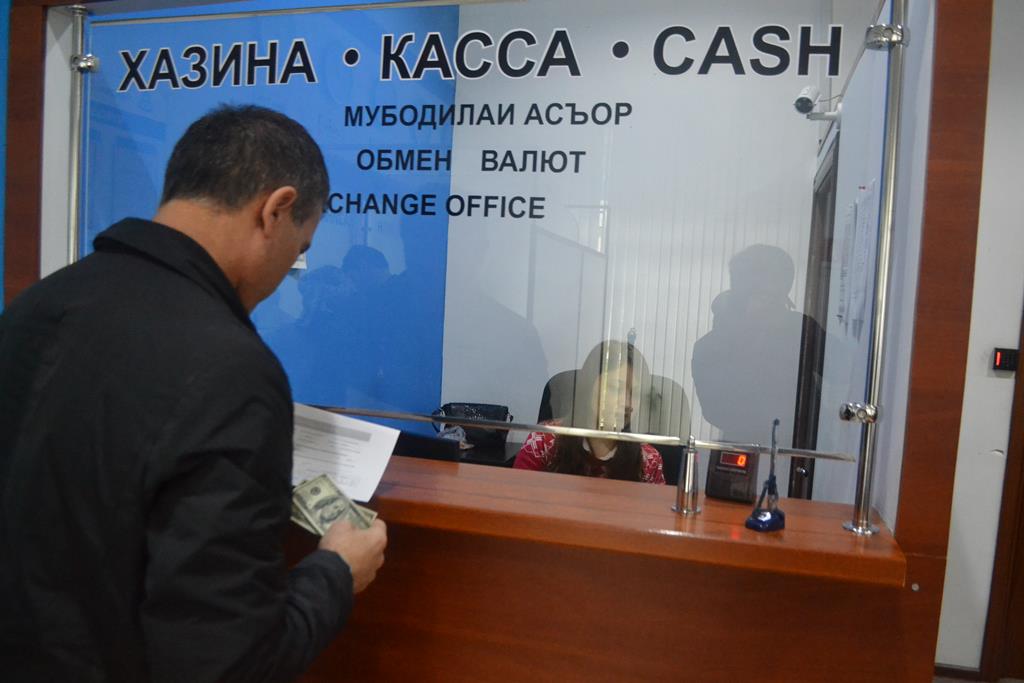
The official exchange rate of the U.S. dollar (USD) to the Tajik somoni (TJS), set daily by the National Bank of Tajikistan (NBT), has fallen by 1.2% this week, from 1:9.69 on July 14 to 1:9.57 on July 18.
The noticeable depreciation of the US dollar against the Tajik somoni, with brief pauses, has been ongoing since mid-April, when the USD/TJS exchange rate was 1:10.9. Since then, the U.S. dollar has decreased by 12.2%.
Overall, since the beginning of 2025, the dollar has depreciated by 12.4% against the local currency, from 1:10.93 to 1:9.57.
Notably, the last time the exchange rate at this level was in mid-August 2019.
The NBT previously attributed the decrease in the dollar exchange rate to "a combination of external and internal factors."
"External factors include the volume of foreign currency inflows into the republic, global geopolitical and economic events, and the monetary policy adjustments made by the central banks of leading world economies," an official source within the country’s financial regulator told Asia-Plus.
According to NBT specialists, "the dynamics of the Russian ruble against the U.S. dollar, influenced by fluctuations in energy prices, trade disputes, and instability in regional and global financial markets," is particularly significant.
"Among the internal factors, trends in the demand for foreign currency in the domestic market and the efficiency of the banking system in meeting the foreign currency needs of legal entities and individuals should be highlighted," the NBT emphasized.
The National Bank also noted that both external and internal factors are subject to seasonal fluctuations, which, in turn, affect their impact on the somoni exchange rate at different times.
According to the "Main Directions of Monetary and Credit Policy of the Republic of Tajikistan for 2025 and the Medium-Term Period," the NBT’s exchange rate policy is based on a managed floating exchange rate regime, without setting fixed limits for fluctuations.
The official exchange rate of the somoni to foreign currencies is formed based on market supply and demand in the domestic currency market. Interventions by the regulator in this regime are exceptional and occur only when there is an objective need.
