In Central Asia, startups are growing faster than ever. More and more often, founders choose to build a business not abroad, but here in their native region. One of these projects was Screenix AI, a company in Tashkent created by four people from Tajikistan.
The startup recently raised $50,000 at the pre-seed stage with an estimated $500,000 from the C-Space Angels Club.
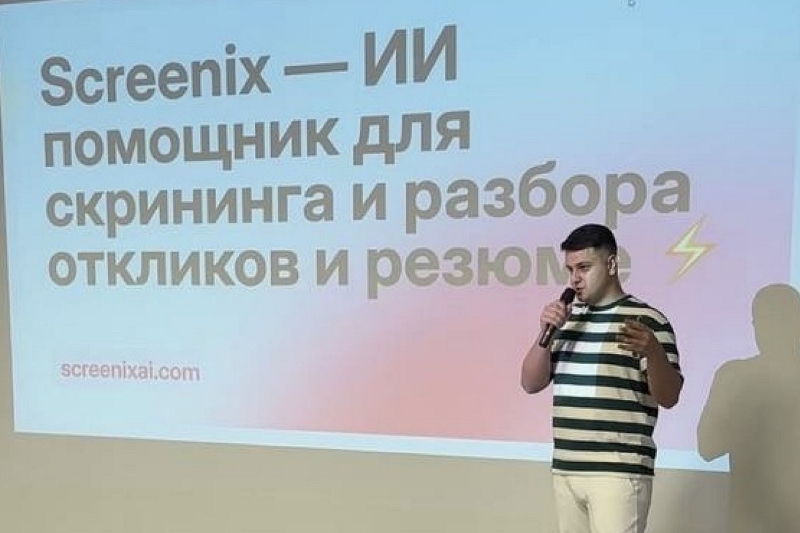
The startup creates an intelligent agent that automates the recruitment process: from the initial selection of candidates to the analysis of their compliance with the vacancy. "We want hiring to be honest and fast – without human bias, but with AI precision. In the end, everyone will win," – says co-founder Jahongir Muminov.
Jahongir is originally from Tursunzade, but spent his school years in Dushanbe, graduating from Khotam PV.
After 11th grade, he went to Moscow, enrolled in university, and began a career in product management. Several years of working in large IT companies have given him good experience and a clear career path, but the desire to build his own business turned out to be stronger.
"In the summer of 2024, I decided to return. It was not just a move, but a conscious step: I wanted to create a product here, where the market is growing, where venture funds, startups are emerging and an ecosystem is forming. I chose Tashkent as the location – the largest city in the region, the center of attraction for people and ideas," he says.
The team assembled via Telegram
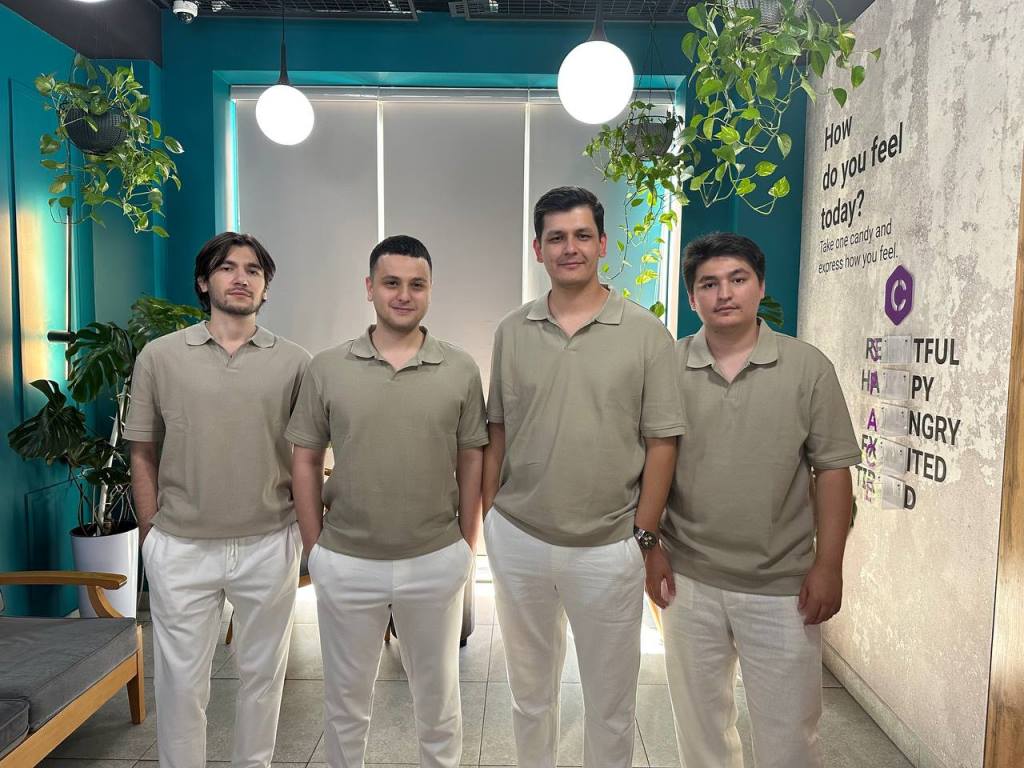
The story of Screenix AI began in August 2024, when Muminov wrote on a telegram group of Tajik IT specialists that he wanted to assemble a team and launch a startup together. Many people responded to his post, but in the end, four founders remained in the project.
Today, as Jahangir notes, his Screenix AI co-founders are not random people either.
Muhammad Habibulloev, the startup's CPO, created product designs for well-known services in Dushanbe. His experience at Humo Bank in Dushanbe and Mortgage-Bank in Tashkent helped him make the Screenix AI interface as user-friendly as possible.
Muhammad Makhmudov, the team's CTO, is an engineer who is used to solving infrastructure-level tasks. Where others see a problem, he builds a system. Originally from Khujand, before the startup, he developed frontend in Sberbank and Wildberries in Moscow.
Amirjon Kodirov, the CIO of the project, knows perfectly well how AI systems work from the inside. He is also from Khujand, and before that he worked on recommendation systems and logic at Yandex, T-bank and Ozone in Moscow.
"We are from Tajikistan, but we joined up in Tashkent. This is the magic of startups: people from different backgrounds converge at one point for the sake of the future," – Jahongir notes.
The third attempt was successful
Before the appearance of Screenix AI, the team tried different ideas. The first project was unsuccessful, the second one didn't take off either, but on the third attempt a product was born that the market appreciated immediately. On the very first day after the launch, the startup had its first sales.
And all this time, the team worked completely online, without meeting in person. The founders got together for the first time in Tashkent in August, 2025.
"It was a special moment. We have come a long way remotely, but we continued to build a company that is growing and developing," – says Muminov.
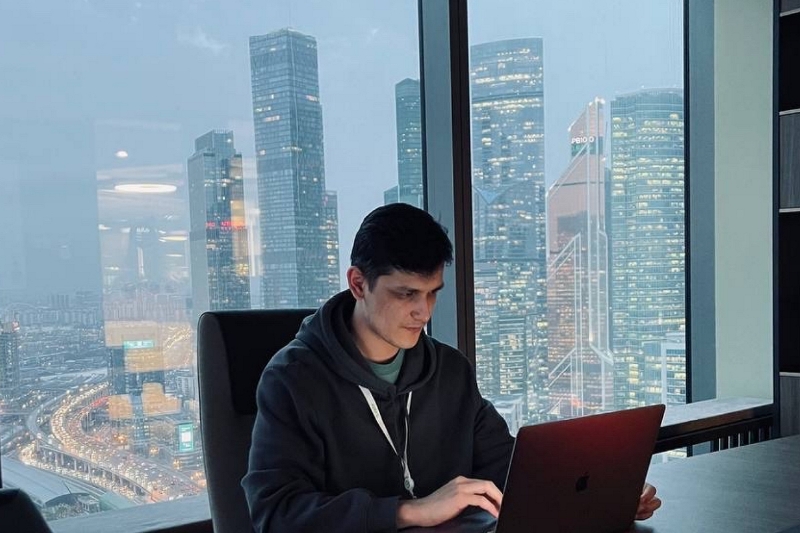
Why Tashkent?
When the Jahongir and his team arrived in the capital of Uzbekistan, they immediately had the feeling that if they were building something big in the region, they would definitely be here.
At the same time, it's hard to break through here. The competition for business attention is huge, decisions are made slowly – the Eastern culture is "let's think about it, then we'll decide." "And this is where the founder's perseverance is tested: you can wait and at the same time push forward without losing momentum," – says Jahongir.
"Tashkent is about dynamics, people, funds, accelerators," – says Jahongir. Startup hubs, angel clubs, and venture funds are actively developing here. It is easier to test the product and attract the first investments here."
How was the idea born?
The idea of Screenix AI was born from personal experience. Each of the founders has at least once come across the fact that his resume was not even considered.
"Everyone has cursed HR at least once, – Muminov smiles. – But recruiters are drowning in manual work. Hundreds of identical resumes, calls, subjectivity: liked or disliked. And it's impossible to be completely objective for eight hours straight."
The team decided to remove the human factor where it only gets in the way.
"Not to replace a person, but to remove a routine from him. So that the recruiter is concerned with the main thing – choosing the best, and not flipping through the resume. But there are plans to actually make a fully autonomous AI recruiter that does everything by itself. And what scares and amazes at the same time is that we are very close to it."
What does Screenix AI do?
Screenix AI is an artificial intelligence that takes on the routine tasks of recruiting. He processes the responses himself, conducts the initial selection of candidates, can conduct AI interviews and works without subjectivity and bias.
"It saves up to 90% of a recruiter's time. The difference is the same as between cycling and flying on an airplane," – explains Jahongir. The system works 24/7, does not get tired and evaluates all candidates equally, without subjectivity.
First customers and investments
The first customers joined almost immediately, "because they were in need," admits Muminov. The system processes hundreds of responses every day. This is not a dream of the future, but a working product.
The investments came through the C-Space Angels Club in Tashkent. "We were sitting at a meeting, I was showing the product, the metrics, the first customers. The conversation immediately got down to business.
The investors are entrepreneurs: Shukrullo Lutfullaev, Isaev Akrom, Bekzod Juraev and others. They saw that the product was already moving, so they invested $50,000 with an estimate of $500,000," – says Jahongir.
The company's assessment was based on three things: the HRTech market in the region is growing, the team has a working product with customers, as well as experience in IT and product development.
"We do not perceive $500,000 as a reward – this is the starting point. Today it is like that, in a year it should be more. This is not a limit, but a coordinate on the path," – says Muminov.
What will the money be used for, and what are the goals ahead?
The funds will be used to develop the product, expand the capabilities of AI interviews, new integrations and increase the autonomy of the system.
In addition, the team plans to strengthen sales, focus on the market of Uzbekistan and neighboring countries, as well as conduct the first campaigns to attract companies. In parallel, the team is expanding through development and marketing.
"Our goal is clear and measurable – to reach an MRR of $20,000 in the next six months and prepare for the Seed round with an estimate of $3 million. We also want to get into Y Combinator and become the first project from the region to graduate from there in the Valley," – Jahongir shares his plans.
Is the startup planning to enter the Tajik market?
There are plans to enter the markets of Tajikistan, Kazakhstan and Kyrgyzstan, but now the main focus is the MENA region, where the market is larger, the demand for automation is higher, and competition is weaker. "We are testing the model in the region, but we are building a product immediately for a global scale."
Tips for young founders
According to Jahongir, founders spend too much effort to take money from an investor. It's worth thinking about how to take money from a client, it's easier, he explains. "Assemble a team: ideas are worthless without people, and with the right people you can overcome any difficulties. Invest in yourself and your knowledge.
Think about it: if you were the person you want to become, would you be friends with the current version of yourself? This issue changes a lot."