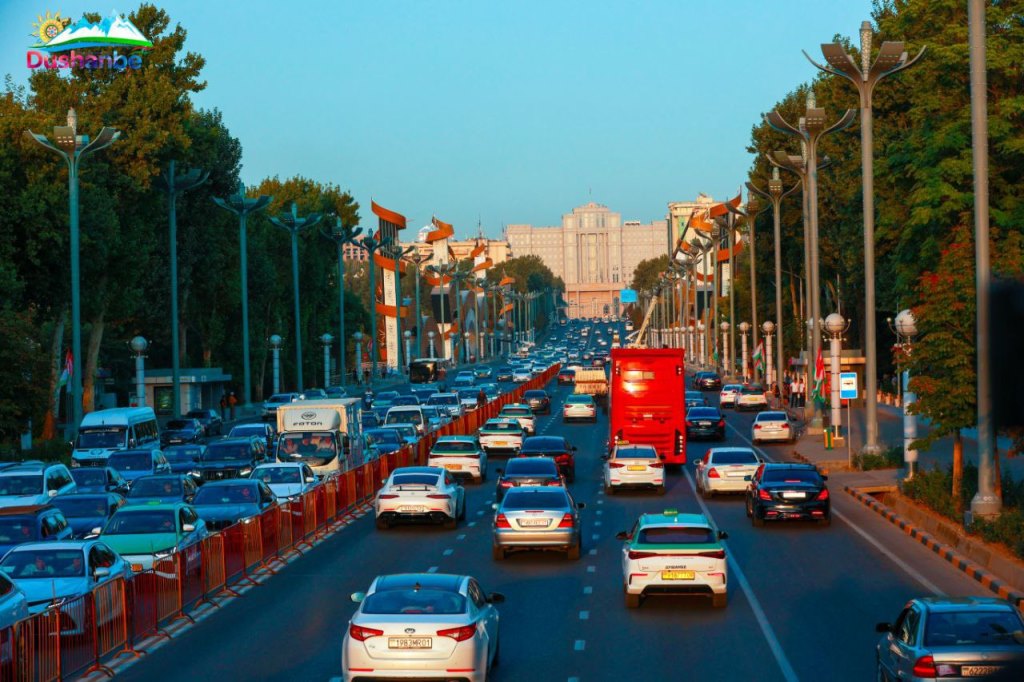
Despite repeated media coverage of Dushanbe’s growing traffic congestion, little has changed. But the issue goes far beyond traffic jams—it reflects a deeper urban planning crisis rooted in car-centric policies.
Independent environmental journalist Timur Idrisov explores how prioritizing vehicles over people is compromising Tajikistan’s capital, both socially and environmentally.
For many, including decision-makers, the solution to traffic congestion seems straightforward: build more roads, widen existing ones, remove pedestrian crossings, and eliminate “unnecessary” bus stops. The assumption is that once everything is paved and streamlined for cars, traffic will flow. But reality tells a different story.
Today’s gridlock is not a mere inconvenience—it is the direct outcome of misguided urban policies. Transportation planning influences how people move around daily, ultimately shaping whether a city is livable or hostile, inclusive or divided.
More roads, more problems: the Braess Paradox and induced demand
Economically, expanding road capacity often backfires due to the phenomenon of induced demand. New or widened roads may temporarily ease congestion, but soon encourage more people to drive, undermining the initial benefits.
Commuters who once relied on public transport or avoided peak hours start driving again, quickly overwhelming the expanded infrastructure. In some cases, congestion rebounds within months—often worse than before.
This is a textbook example of the Braess Paradox: adding capacity to an already congested network can actually increase overall travel time.
The social cost of asphalt
Beyond traffic, massive road projects damage the fabric of urban life. Wide highways and flyovers act as physical barriers, splitting once-unified neighborhoods into disconnected "islands." Communities that once thrived become fragmented.
Pedestrian routes grow longer and less convenient, often requiring underpasses or overpasses. This isolates residents—especially children, the elderly, and people with limited mobility—from schools, clinics, parks, and stores.
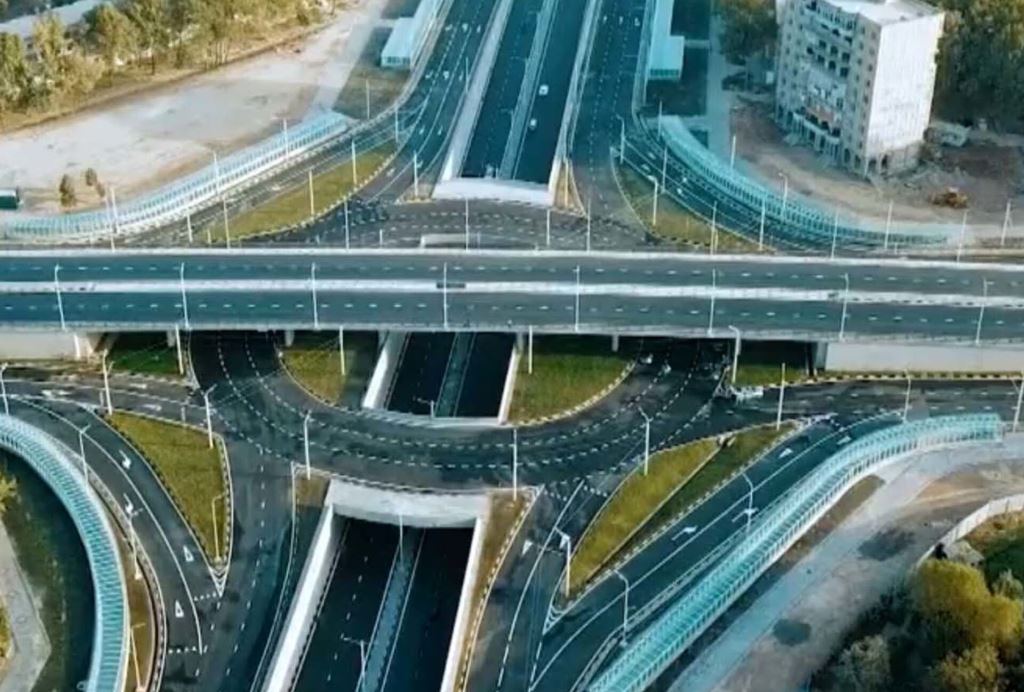
Urban land that could support housing, public parks, or community spaces is instead consumed by asphalt and concrete. The result: a decline in quality of life and the long-term appeal of urban districts.
Unsafe streets, unhealthy city
Expanding urban highways and high-speed roads also poses serious safety and environmental risks. Such infrastructure encourages speeding, while complex interchanges create multiple conflict points that increase the likelihood of accidents. When crashes occur on these fast-moving corridors, the consequences are often severe.
For children, moving independently around their own neighborhood becomes nearly impossible.
From an environmental perspective, expanding road capacity only worsens air and noise pollution. Increased traffic leads to higher emissions of exhaust gases and micro-particles from tire and asphalt wear. Broad paved surfaces also trap heat—creating the “urban heat island” effect—and worsen stormwater runoff, polluting nearby rivers and water bodies.
The vicious circle of car dependency
The policy of fighting congestion by building more car infrastructure is a self-perpetuating cycle. It fails to solve the original problem while creating new ones—social inequality, deteriorating public health, environmental degradation, and growing dependence on private vehicles.
Breaking this cycle requires a shift in priorities: from cars to people. The alternative lies in redistributing urban space toward efficient public transport, safe infrastructure for pedestrians and cyclists, and compact mixed-use neighborhoods where daily needs can be met without relying on a car.
Experts argue that sustainable mobility and inclusive urban planning are not merely environmental goals—they are essential for building a city that is equitable, healthy, and truly livable.