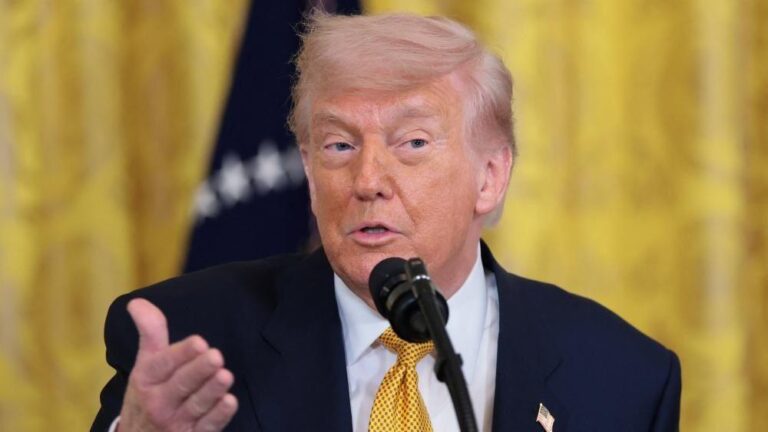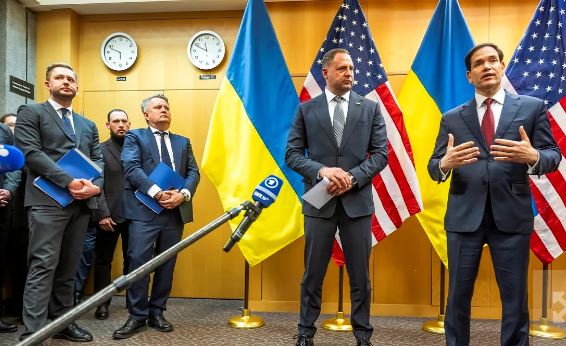
The U.S. peace plan for resolving the war in Ukraine, originally proposed by former President Donald Trump, has undergone significant revisions following negotiations in Geneva. Media outlets say that according to the Financial Times, the original 28-point draft has been cut down to 19.
Details on the removed provisions have not been disclosed. Oleksandr Bevz, an adviser to the Office of the President of Ukraine, stated that some points were entirely eliminated while others were reworked. Sensitive issues — such as territorial disputes and Ukraine’s potential NATO membership — have been excluded from the current draft and are expected to be addressed directly by the presidents of the U.S. and Ukraine.
According to Bloomberg, the revised plan no longer includes a proposal to use approximately $100 billion in frozen Russian assets for Ukraine’s reconstruction. Suggestions regarding the size and structure of Ukraine’s armed forces have also been adjusted.
Europe proposes alternative peace plan — more favorable to Ukraine?
As the U.S. continues refining its approach, European nations have presented their own version of a peace plan, comprising 24 points. According to The Telegraph, as cited by Meduza, analysts consider the European proposal more favorable to Ukraine than the American draft.
Notably, the European plan does not call for reducing Ukraine’s armed forces to 600,000 personnel — it allows for up to 800,000 in peacetime. The question of NATO membership remains on the agenda, with a final decision to be made by consensus among alliance members.
European nations also propose keeping Russian assets frozen until Moscow compensates Ukraine for war damages. The draft includes a proposed non-aggression pact between Ukraine, Russia, and NATO, legally binding security guarantees, the establishment of a reconstruction fund, and an international monitoring group to oversee the agreement’s implementation.
European concerns and ongoing uncertainty
Despite stated progress, European diplomats express concern that key decisions within the U.S. plan are being made without meaningful EU involvement. They argue that the European document better reflects the region’s long-term security interests.
Meanwhile, analysts warn that deferring the most contentious issues — such as territorial disputes and security guarantees — to presidential-level talks may prolong negotiations and spark further disagreements. Both plans remain framework proposals and require significant refinement before implementation.