
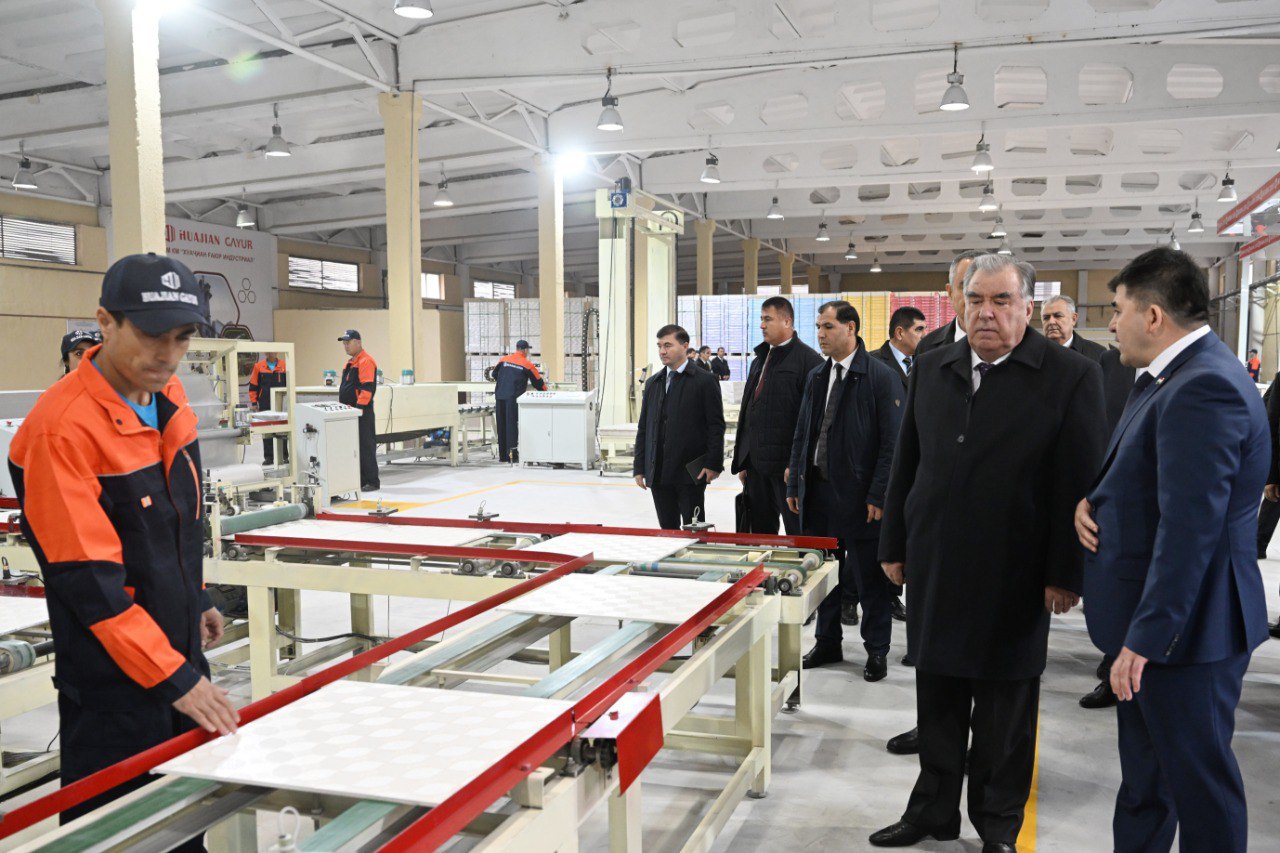
Approximately 400 new industrial enterprises began operations in Tajikistan in 2025. Overall, more than 2,600 industrial facilities have been built and commissioned across the country over the past seven years, creating more than 87,000 new jobs.
The state-run news agency Khovar, citing the Ministry of Industry and New Technologies, reports that industrial output growth reached 22% in 2025. Over this period, total industrial production reportedly increased 2.5-fold and reached 66 billion somoni by the end of the year.
To further accelerate industrial development, a draft of a new Accelerated Industrialization Program for 2026–2030 is expected to be developed by the end of the first quarter of this year and submitted to the government for consideration. Once approved, the program will serve as the foundation for implementing new industrial initiatives.
In addition, a program for the development and processing of non-ferrous, rare, and precious metals, as well as other strategically important raw materials, is set to be adopted during the same period. These measures aim to improve the efficiency of natural resource utilization and strengthen the country’s export potential.
As noted in President Emomali Rahmon’s address to a meeting of both chambers of the Majlisi Oli (Tajikistan’s Parliament) on December 16, 2025, the implementation of the accelerated industrialization strategy has significantly strengthened the mineral resource sector. Output in the mining and minerals sector increased 3.4 times—from 7.7 billion somoni in 2020 to 27 billion somoni in 2025—while the range of manufactured products expanded from three to 17 items.
Compared to 1991, gold production in Tajikistan has increased sevenfold, silver production sixfold, and lead powder production ninefold. The president emphasized the need to ensure annual industrial growth of at least 25% over the next five years.
In this regard, the government has been instructed to take additional measures, with the involvement of domestic and foreign capital, to establish new enterprises focused on deep processing of domestic raw materials, including minerals, non-ferrous and rare metals, as well as agricultural products and medicinal herbs.
