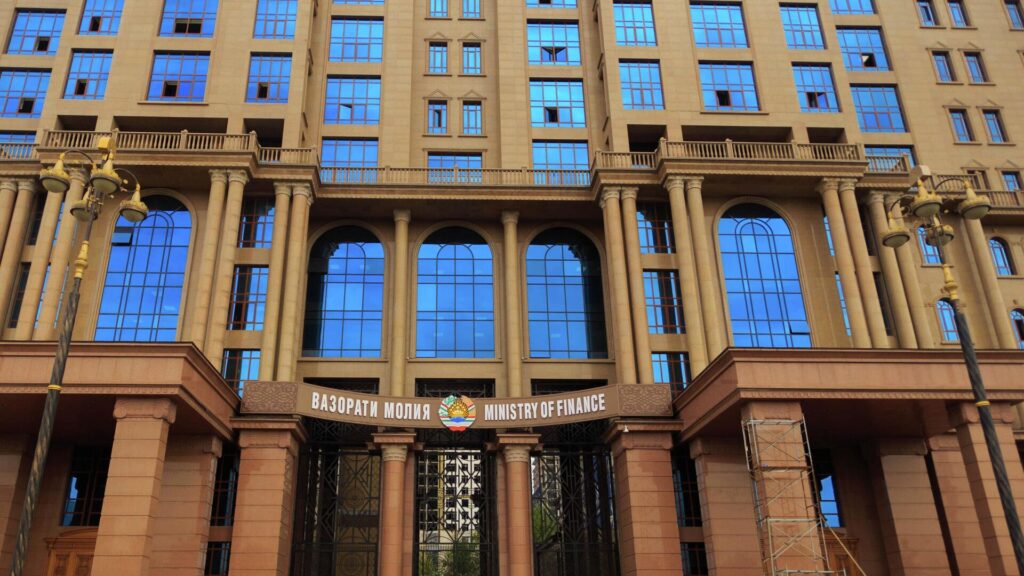
Tajikistan’s public debt decreases by $100 million in the past Year

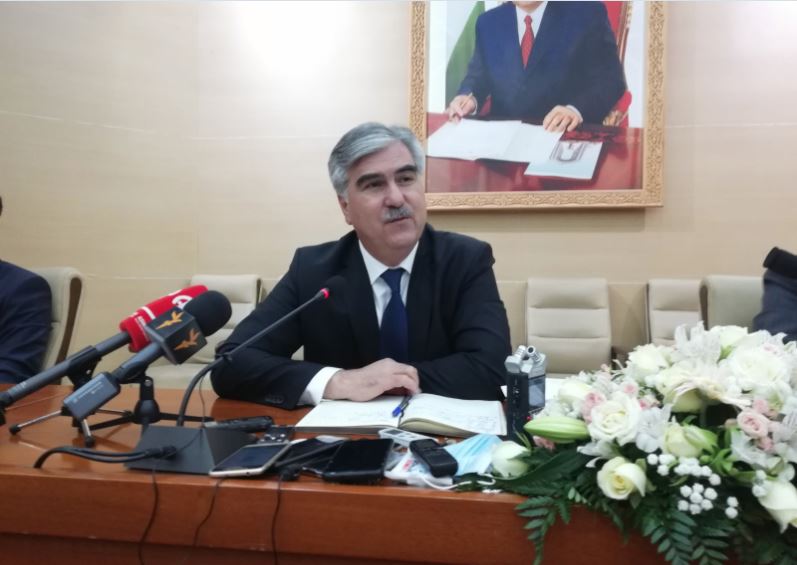
Tajikistan's public debt amounted to $3.5 billion as of January 1, 2026, representing 19.2% of the country's GDP, the country's Minister of Finance, Faiziddin Qahhorzoda, told reporters in Dushanbe on February 13. According to Qahhorzoda, $3 billion (87% of the total debt) constitutes external debt, while $500 million (13%) is internal debt. To recall, on […]

Asia-Plus

Tajikistan's public debt amounted to $3.5 billion as of January 1, 2026, representing 19.2% of the country's GDP, the country's Minister of Finance, Faiziddin Qahhorzoda, told reporters in Dushanbe on February 13.

According to Qahhorzoda, $3 billion (87% of the total debt) constitutes external debt, while $500 million (13%) is internal debt.

To recall, on January 1, 2025, Tajikistan’s total national debt was $3.6 billion, or 25.2% of GDP. Of that amount, $3.2 billion (89%) was external debt, and $400 million (11%) was internal debt.

The minister also noted that last year, the Ministry of Finance, in cooperation with other ministries and departments, signed 31 agreements for the implementation of 25 state investment projects worth a total of $619 million.
He emphasized that $504.6 million was allocated for servicing the external debt in 2025, of which $416.3 million was used to repay the principal debt and $88.3 million was spent on interest payments.

"The government has arranged its financial obligations in line with the approved plan," Qahhorzoda stated. He further mentioned that there were no deviations from the plan for servicing debts to international financial organizations and specific countries.

The country's main external creditor remains the Export-Import Bank of China, with the debt to this institution, according to the minister, gradually reduced to nearly $700 million.

Tajikistan also owes the World Bank (about $380 million), the Asian Development Bank (over $250 million), the Islamic Development Bank (more than $250 million), the International Monetary Fund ($195 million), and the European Bank for Reconstruction and Development ($165 million).

Public debt, or national debt, is the total financial obligation a government owes to creditors, including individuals, businesses, and foreign nations. It represents the cumulative sum of money borrowed to cover annual budget deficits. Key forms include treasury bonds and loans used to fund public services, infrastructure, and economic development. 

Article translations:

Related Article

Оби зулол

Most Read

Join us on social media!

Aura

Recent Articles

Mudflows and dust storms expected in Tajikistan

Citizens are urged to protect themselves from dust.

Russia doubles temporary stay duration for truck drivers from CIS and Georgia

Tajik drivers will have their term increased from 90 to 180 days a year.

How a guide dog project could help people with visual impairments in Tajikistan

In Tajikistan, there is an enthusiast who can build such a school, but he urgently needs help, primarily financial.

Wildberries opened access to the platform for all sellers from Tajikistan

Now local brands, manufacturers, and individual entrepreneurs can enter the largest online platform and expand their sales market.

CMWP Uzbekistan: The boutique hotel market in Tajikistan shows the fastest growth in the region

Such hotels in the republic offer their guests a high level of comfort and convenience.

Emomali Rahmon signs decree on increasing salaries and paying bonuses to IT sector workers

The document provides for the creation of a new incentive system for specialists in the field of information technology.

Not advertising, but influence: what was discussed at IMPACT Creative Night and why businesses need meaning today

Today, audiences trust direct advertising less and less, which means brands have to compete not for attention, but for trust and a place in the agenda.

Russia extends the experiment on collecting biometrics from foreigners

The decision was justified by the necessity of gradually modernizing all border crossing points.

“Convenient, affordable, and cheap”: Dushanbe residents speak out on raids against shared taxis

They say that late at night buses and trolleybuses disappear from the streets, so cheap route taxis remain the only way for many to get home.