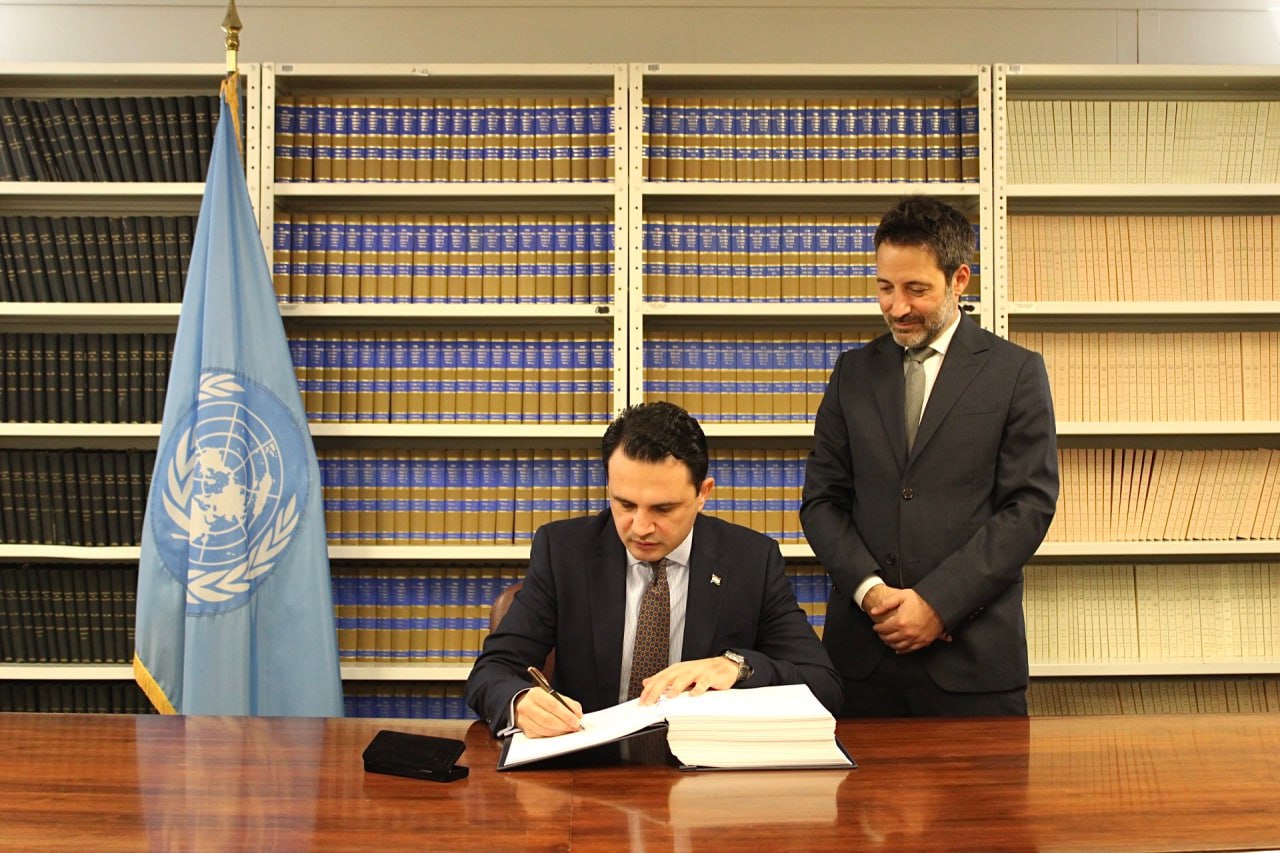
On March 17, Tajikistan officially joined the international effort to combat cybercrime by signing the United Nations Convention against Cybercrime. The signing ceremony took place at the UN Headquarters in New York, according to the Ministry of Foreign Affairs of the Republic of Tajikistan.
The document was signed on behalf of Tajikistan by the country’s Permanent Representative to the UN, Jonibek Hikmat.
The Convention reportedly aims to strengthen international cooperation in addressing crimes committed using information and communication technologies. It also establishes mechanisms for the exchange of electronic evidence in serious criminal investigations.
As internet-enabled devices continue to proliferate worldwide, the rise of transnational cybercrime has posed significant challenges for national law enforcement and security agencies. Countries vary widely in their approach to investigating, enforcing, and legislating against cybercrime, creating a complex global landscape for tackling digital threats.
In response to these challenges, the Council of Europe took a pioneering step in the early 2000s by establishing the Budapest Convention, the first international treaty aimed at addressing internet and computer crime. The convention, which came into force in July 2004, harmonized national laws, enhanced investigative techniques, and promoted cooperation between nations. By 2025, the treaty had been ratified by 81 countries, including several outside of Europe.
Despite the Budapest Convention's success, some countries, notably Russia, have raised concerns about its implications for national sovereignty. In 2017, Russia proposed an alternative framework through the United Nations (UN), arguing that the Budapest Convention posed a threat to its internet control. The proposal gained traction, and in 2019, Russia introduced the UN cybercrime convention to the General Assembly. The resolution, which passed with 88 votes in favor, 58 against, and 34 abstaining, was officially adopted in December 2024.
The full title is United Nations Convention against Cybercrime: Strengthening International Cooperation for Combating Certain Crimes Committed by Means of Information and Communications Technology Systems and for the Sharing of Evidence in Electronic Form of Serious Crimes.
As of March 2025, 75 countries have joined the agreement, with the convention remaining open for signature at the UN Headquarters until December 31, 2026.