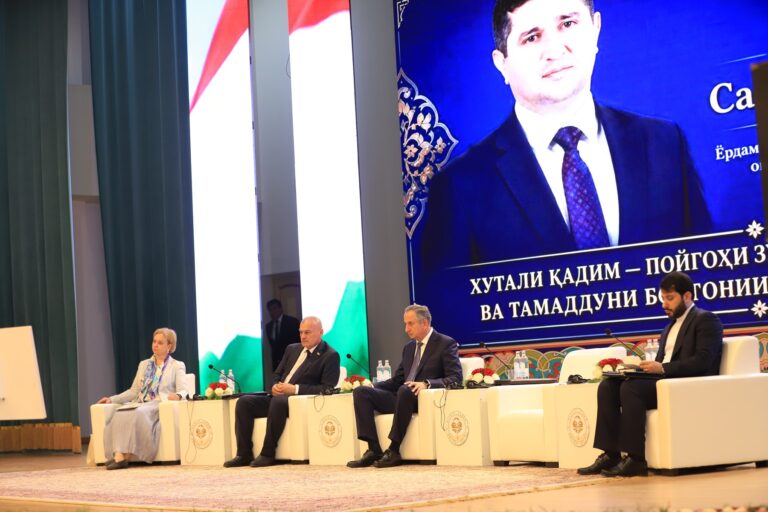
DUSHANBE, March 2, 2012, Asia-Plus – On Thursday March 1, U.S. Embassy Deputy Chief of Mission Sarah Penhune and USAID/Central Asian Republics Regional Mission Director Erin E. McKee met community members of the town of Sarband, Khatlon province during the opening ceremony for the Tajikistan Safe Drinking Water project funded by the U.S. Agency for International Development (USAID), the U.S. Embassy in Dushanbe said.
Community members assembled to celebrate this new system which will provide safe drinking water to 14,921 people. The ceremony included a performance by local schoolchildren on the importance of safe drinking water and good hygiene to stay healthy.
“Many villages lack safe drinking water, and the U.S. Government is very pleased to help solve this problem. Access to safe drinking water, and proper sanitation and hygiene are essential to preventing water borne diseases that can be deadly. After today’s celebration more hard work remains. The newly rehabilitated water supply system will require regular maintenance and close cooperation between community citizens and their local government,” Ms. Penhune told the audience.
Like the other twenty-five (25) other partner communities where the USAID Tajikistan Safe Drinking Water Project is helping to provide access to safe drinking water, residents of Sarband did not have reliable access to safe drinking water. As a result citizens, especially children, were frequently the ill with infectious water-borne diseases. Today, 14,921 people in Sarband have improved access to safe drinking water, and as a result of USAID Tajikistan Safe Drinking Water Project training, many people, particularly children, have changed their health and hygiene practices.
The USAID Tajikistan Safe Drinking Water Project works in cooperation with the Government of Tajikistan to increase access to sustainable supplies of safe drinking water in rural Tajikistan, and enhance capacity among health officials, community leaders, and the private sector to promote health and hygiene behavioral changes in beneficiaries. So far, the project has supported provision of safe drinking water in twenty-five communities in nine targeted districts. By the completion of all three years of the project, USAID expects to have supported provision of safe drinking water to a total of more than 100,000 people in rural communities across Tajikistan. In order to accomplish this goal, USAID is looking forward to working side-by-side with other hard-working partner communities in Tajikistan.
The USAID Tajikistan Safe Drinking Water Project is one of the many development projects supported in Tajikistan by the United States Agency for International Development. Since 1992, the U.S. Embassy in Dushanbe has provided about $984 million in programs that support Tajikistan’s democratic institutions, health care, education, and economic growth.