DUSHANBE, September 28, Asia-Plus — The first group of Tajik pilgrims, numbering some 200 people, will leave for Saudi Arabia on September 29.
An official source at the Committee on Religious Affairs (CRA) under the Government of Tajikistan says the CRA first deputy head Jumakhon Ghiyosov heads the commission for organization of Hajj this year and Abdughaffor Yusupov, the head of the CRA department for Hajj and international relations, will control the groups of Tajik pilgrims in Mecca and Medina.
The first deputy head of the Council of Ulamo (a group of scholars and imams that provides interpretations of religious practice) Abdulbasir Saidov, who is also known as Eshoni Abdulbasir, will be responsible for releasing a fatwa during the whole period of the Hajj, the source added.
23 flights will be operated to Jeddah from Dushanbe and ten flights will be operated to Jeddah from Khujand, the capital of the northern Sughd province. Tajik air carriers Tajik Air and Somon Air will carry Tajik pilgrims to Jeddah.
We will recall that the CRA designed a new Hajj uniform last year; men don two-piece suits, while women wear long-sleeved dresses complete with headscarves. The Tajik Hajj uniform is embroidered with the country”s symbols. This year, the Hajj uniform has also been distributed to the country’s pilgrims.
Saudi officials allocated Tajikistan 6,000 places for this year”s Hajj. In 2011, the price to go on the Hajj was 3,448 U.S. dollars, but it has risen this year to 3,546 U.S. dollars.
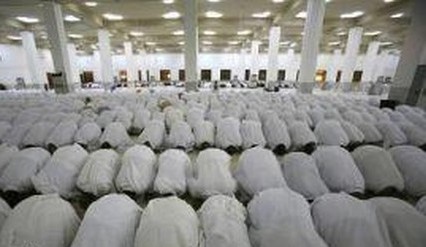
The Hajj is the annual pilgrimage to Mecca, Saudi Arabia. It is currently the largest annual pilgrimage in the world, and is the fifth pillar of Islam, a religious duty that must be carried out at least once in their lifetime by every able-bodied Muslim who can afford to do so. The Hajj is a demonstration of the solidarity of the Muslim people, and their submission to God. The pilgrimage occurs from the 8th to 12th day of Dhu al-Hijjah, the 12th and last month of the Islamic calendar. Because the Islamic calendar is a lunar calendar, eleven days shorter than the Gregorian calendar, the Gregorian date of the Hajj changes from year to year.