The Seventh Tajikistan International Film Festival, Didor 2016, is taking place in Dushanbe from October 16 through October 20.
A ceremony of an official opening of the festival was held at the Opera and Ballet Theater in Dushanbe on October 16.
In all, 40 filmmakers from Armenia, Azerbaijan, Afghanistan, Georgia, Germany, India, Iran, Kazakhstan, Kyrgyzstan, Mongolia, Russia, Switzerland and the United States are participating in the festival.
Tajikistan is represented by at the festival by two features – Overcoming by Umed Miszoshirnov and Dream of Monkey by Rumi Shoazimov – as well as a shot film The Situation by Dilovar Sutltonov.
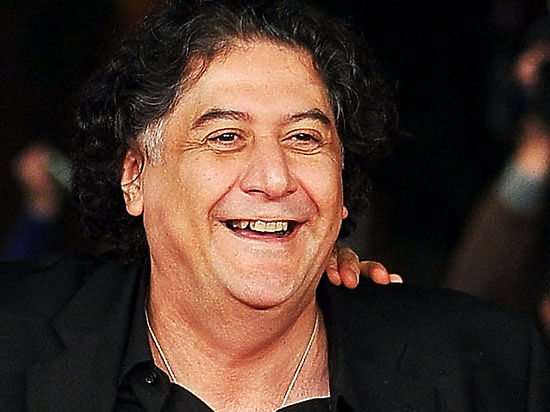
The Seventh Tajikistan International Film Festival, Didor 2016, is dedicated to the memory of well-known Tajik-Russian filmmaker Bakhtiyor Khudojnazarov, who died in a clinic in the German capital, Berlin, on April 21, 2015 aged 49.
Bakhtiyor Khudojnazarov (May 29, 1965 – April 21, 2015) was a film director, producer and screenwriter from Tajikistan.
He became well-known across the former Soviet Union for his movie Lunny Papa (A Moon Dad). In this hilariously surreal adventure through Uzbekistan, Tajikistan, and Kyrgyzstan, the story of a young, simple Tajik girl is narrated by her unborn child.
Bakhtiyor Khudojnazarov won a Silver Lion at the Venice Film Festival for his movie Kosh ba Kosh (1993).
In 2000 he was a member of the jury at the 22nd Moscow International Film Festival.
Another Khudojnazarov movie, Waiting for the Sea, about a Kazakh man's ordeal near the disappearing Aral Sea, opened the Rome Film Festival in 2012.
Khudojnazarov was born in the Tajik capital, Dushanbe. He graduated from the Moscow Institute of Cinematography VGIK in 1989.
One of Khudojnazarov's last movies was Major Sokolov's Courtesans presented in Russian theaters in 2014.
His movies will be shown during the festival.
In all, 80 feature and short films as well as animated cartoons are expected to be shown during the Didor Festival in Dushanbe this year.
The international jury members include Nizom Qosim (Tajikistan), Reza Kianian (Iran), and Latika Padgaonkar (India).
A parallel program includes a roundtable formally titled “How Is Good Movie Made?”
The First Tajikistan International Film Festival was held in October 2004 and the upcoming festival’s program furthers the concept of the first Didor festival, which was intended to be a cultural bridge between eastern and western cultures and remove any critical attitudes of the West to the East and vice versa.