– The direct Implementation of CASA 1000 Project is expected to commence this year.
According the Ministry of Energy and Water Resources of Tajikistan (MoEWR), “the implementation of the physical part of the CASA 1000 Project will begin in all countries participating in the Project during this year.”
At the first stage, it is planned to begin the construction of converter substations in Tajikistan and Pakistan.
“In Tajikistan, the converter substation with capacity of 1300 MW will be constructed in Sangtuda,” an official source a MoEWR said.
According to him, the World Bank, which is the main investor in the project, has decided that financial bids offered by companies interested in participating in construction of this facility will be opened in early March.
“If the bids are within the limits of the budget, an appropriate contract will be signed with the tender winner and the physical implementation of the project will begin,” the source said.
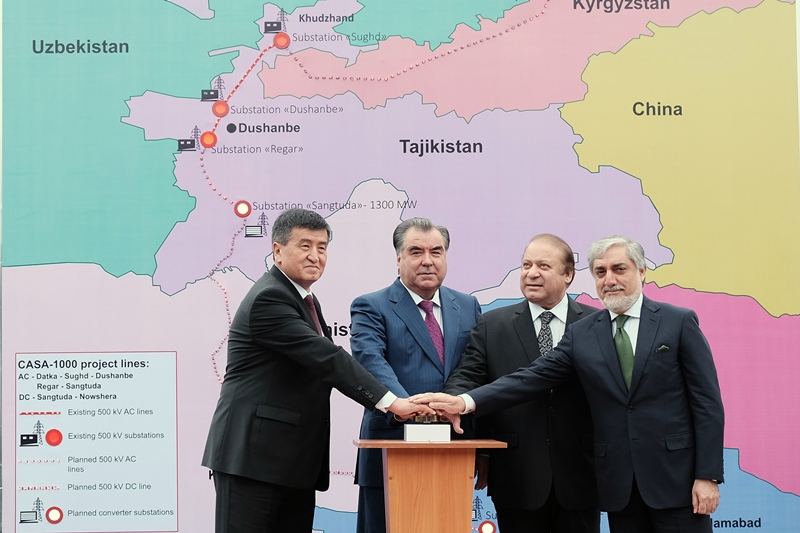
Recall, an official launch of the CASA 1000 Project, which aims at developing energy corridor and land connectivity between Tajikistan, Afghanistan and Pakistan, took place in Tursunzoda (Tajikistan) on May 11, 2016.
The Central Asia South Asia Electricity Transmission and Trade (CASA 1000) Project demonstrates landmark cooperation among Kyrgyzstan, Tajikistan, Pakistan, and Afghanistan. The modern and efficient CASA 1000 electricity transmission system will help transform the region and signify an important step toward realizing the planned Central Asia-South Asia Regional Electricity Market (CASAREM). The CASAREM initiative will help not only these four countries, but also improve the electricity systems and develop inter-regional cooperation between Central Asia and South Asia.
The CASA 1000 Project had initially been scheduled to be completed in 2020. The total cost of the project amounts to 1.7 billion U.S. dollars.
The Project is expected to develop the necessary physical infrastructure and create the institutional and legal framework to transmit surplus power available from existing generation facilities in Tajikistan and Kyrgyzstan to Afghanistan and Pakistan. The physical infrastructure for CASA 1000 includes: a 500 kV high voltage direct current (HVDC) transmission system between Tajikistan and Pakistan through Afghanistan; an AC transmission link from Kyrgyzstan and Tajikistan to connect to the HVDC line from Tajikistan to South Asia; and the necessary electricity sub-stations in Kabul, Peshawar and Sangtuda (in Tajikistan).