Following the devastating floods that struck southern Tajikistan in May, the European Commission has allocated €60,000 (approximately TJS 63,000) in humanitarian funding to bring emergency assistance to communities affected by the disaster.
According to the European Union (EU) Delegation to Tajikistan, the aid will directly meet the immediate needs of 500 flood-affected families (2,500 people) through the provision of essential items, including bedding, kitchen sets and mud-cleaning tools for a period of three months. In addition, the hygiene information needs of flood-affected people will be addressed, including hygiene awareness sessions conducted to avoid the spread of waterborne diseases.
This EU funding supports the Tajik Red Crescent Society in delivering much-needed relief assistance to families who were affected and had their homes damaged/destroyed and lost their home properties.
The funding is part of the EU’s overall contribution to the Disaster Relief Emergency Fund (DREF) of the International Federation of Red Cross and Red Crescent Societies (IFRC).
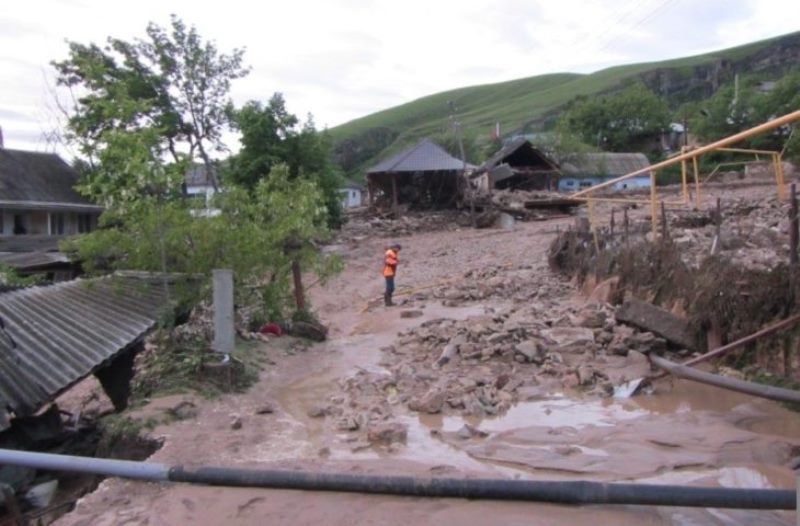
Between May 16 and 21, heavy and prolonged rains caused floods in the southern part of Tajikistan affecting 9 villages in 2 districts of Khatlon province. At least 6 people were killed, 1,145 households (5,725 people) were heavily affected, and infrastructure was damaged or destroyed.
The European Union together with its Member States is the world's leading donor of humanitarian aid. Relief assistance is an expression of European solidarity towards people in need around the world. It aims to save lives, prevent and alleviate human suffering, and safeguard the integrity and human dignity of populations affected by natural disasters and man-made crises. The European Commission through its European Civil Protection and Humanitarian Aid Operations (ECHO) helps over 120 million victims of conflicts and disasters every year. For more information, please visit ECHO's website.
The European Commission has signed a EUR 3 million humanitarian contribution agreement with the International Federation of Red Cross and Red Crescent Societies (IFRC) to support the Federation's Disaster Relief Emergency Fund (DREF). Funds from the DREF are mainly allocated to “small-scale” disasters – those that do not give rise to a formal international appeal.
The Disaster Relief Emergency Fund was established in 1985 and is supported by contributions from donors. Each time a National Red Cross or Red Crescent Society needs immediate financial support to respond to a disaster, it can request funds from the DREF. For small-scale disasters, the IFRC allocates grants from the Fund, which can then be replenished by the donors. The contribution agreement between the IFRC and ECHO enables the latter to replenish the DREF for agreed operations (that fit in with its humanitarian mandate) up to a total of EUR 3 million.
The European Union is the world’s largest aid donor. Tajikistan receives the main share of EU's bilateral assistance to Central Asia: €251 million for 2014-2020. During this period, the development cooperation between the EU and Tajikistan covers three key sectors: education – focusing on secondary general education and TVET, health – focusing on Primary Healthcare and Health Financing, and rural development – including support to agrarian reform, rural entrepreneurship, irrigation and water sector reform, as well as promoting natural resources management. The EU also supports reforms of the country's governance systems, trade policies and Public Finance Management.
Tajikistan also receives regional and thematic assistance in areas like border management, drug control, education, democracy and human rights, non-State actors, energy, transport, SME development, peace and stability, and water/environment/nuclear safety. The EU has been active in Tajikistan since 1992 and provides approximately EUR 35 million annually in development assistance in grants.