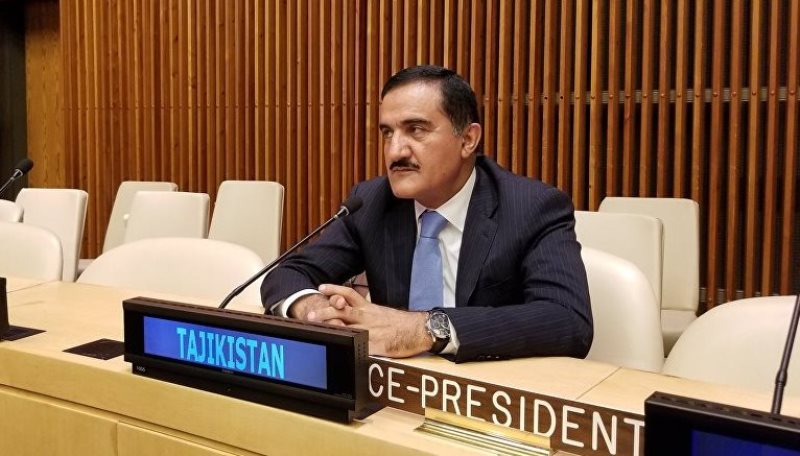
Permanent Representative of Tajikistan to the United Nations Mahmadamin Mahmadaminov spoke about the risks of uranium waste in the Republic of Tajikistan and called for assistance in the reclamation of uranium waste, according to the information department of the Ministry of Foreign Affairs of the Republic of Tajikistan.
Makhmadamin Makhmadaminov spoke at the event “People and the Planet: Central Asia Calls for International Solidarity”, which was organized by the Permanent Mission of the Kyrgyz Republic to the UN, according to the official website of the Ministry.
«He expressed the hope that such activities contribute to the intensification and expansion of efforts for the rehabilitation of former uranium production facilities in Central Asia.», – department reports.

About 55 million tons of radioactive waste were inherited from the Soviet Union to Tajikistan. The total activity of waste according to various estimates ranges from 6.5 to 7.7 thousand. Curie.
In 2014, the Republic adopted a National Concept for the rehabilitation of tailing dumps of uranium ore processing waste for 2014-2024 and was approved by the government of the country.
Its goal is to create and ensure the effective functioning in Tajikistan of an integrated radioactive waste management system.
The document noted that most of the tailings and dumps in the area of Istiklol (former Taboshar) and Guliston (Chkalovsk) are in poor condition. The Istiklol uranium deposit was one of the largest in the countries of the former Soviet Union. It was opened from 1926 and in the period from 1944 to 1965, uranium ore was actively mined here..
Due to the economic situation, the republic has only limited opportunities to invest funds for these purposes. It is intended to attract funds from international organizations, banks, and various funds to carry out specific programs related to the rehabilitation work and the improvement of the environmental situation in the region.
The production of uranium concentrate in the Soviet Union first began in 1944 at a pilot plant in the city of Gafurov of Tajikistan. And then on the territory of the Sughd region, 6 more uranium oxide plants were built.