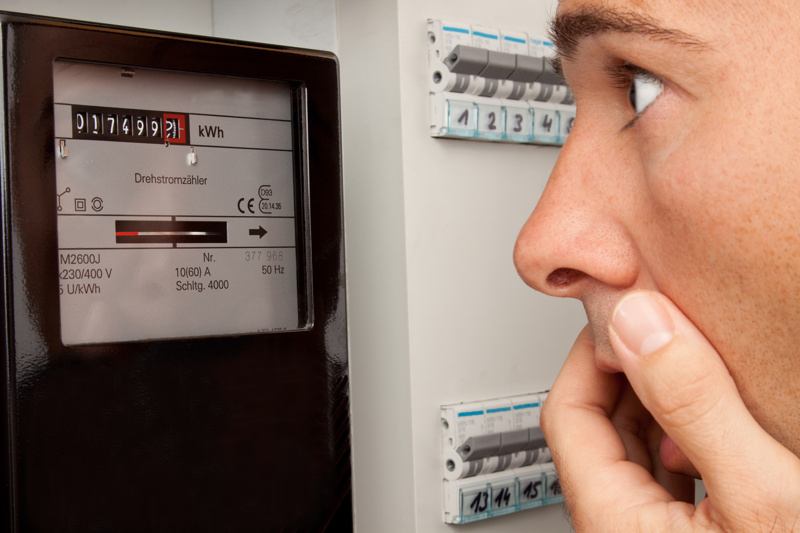
Now it will be necessary to pay almost 20 dirams for each kilowatt for the light.
Since November 1 of this year, the population will pay 19.37 dirams per kilowatt instead of the current 16.85 dirams.
The government of the country by its decree instructs “Barki Tojik” to approve new electricity tariffs..
In August of this year, the head of “Barki Tojik”, Mirzo Ismoilzoda, noted that the possibilities of raising electricity tariffs were explored by the working group set up by the Anti-Monopoly Service on the basis of the energy holding's income and expenditure reports for 2017.
He stressed that the last word on this issue is for the government.
Prior to this, the first deputy head of the Antimonopoly Service, Nazar Odinazoda, told reporters that a proposal to raise electricity and heat tariffs came from “Barki Tojik”.
He noted at the time that electricity prices are expected to be increased by 15%.
The last time the cost of electricity in Tajikistan increased October 1 last year. Tariffs for the population then were also increased by 15% – from 14.65 diram to the current 16.85 diram.
Tariffs are rising on the recommendations of international financial institutions.
International financial organizations after Tajikistan’s withdrawal from the Unified Electric Power Ring of Central Asia recommended that the government gradually increase electricity tariffs in order to ensure efficient operation of the energy sector.
Thus, the World Bank advised the government of Tajikistan to gradually raise electricity tariffs for residential consumers to 3.5 cents "in order to encourage rationalization of energy use": today the population pays almost 1.8 cents for each kilowatt. The current tariffs are considered by experts at this institute to be “below the level of costs”, noting that the average tariff for electricity in Tajikistan is 45% of the level of cost recovery.
At the same time, they note that “the government needs to develop mechanisms to mitigate the negative impact of the increase in electricity tariffs for the poor and vulnerable segments of the population”.
At the end of November last year, the European Bank for Reconstruction and Development, in its new report on Tajikistan, stressed that electricity tariffs in the country should “be gradually adjusted,” noting at the same time the need to address “relevant social issues”.
The Asian Development Bank offered the government a strategy to amend the structure of electricity tariffs, primarily by eliminating cross-subsidies.
That is, there are different tariffs for different categories in the country, and often tariffs for state-owned enterprises are much lower than tariffs for private enterprises, which, according to ADB representatives, “impede the development of the private sector and the investment climate”.
Multimillion debts
Energy experts believe that one of the main reasons for the difficult financial condition of “Barki Tojik” is the low price of electricity. The energy holding almost every year ends up with losses and currently has multimillion debts.
According to the Ministry of Energy, the debt of “Barki Tojik” at the beginning of the second half of the year, excluding loans attracted for the implementation of electric power projects, is 4 billion 145 million somoni (approximately $ 450 millionWithin six months of this year, this debt increased by 450 million somoni (about $ 50 million).
In particular, the energy holding has tax arrears (109.2 million somoni), debts to Sangtuda HPP-1 (1 billion somoni) and HPP Sangtuda-2 (1 billion 221.5 million somoni), and also to Orienbank OJSC (1.8 billion somoni) and through the purchase and supply of coal (14.8 million somoni).
Debts on loans for investment projects at the beginning of this year amounted to 11 billion somoni.
Thus, the total debt of the Tajik energy holding is more than 15.1 billion somoni (more than $ 1.6 billion).