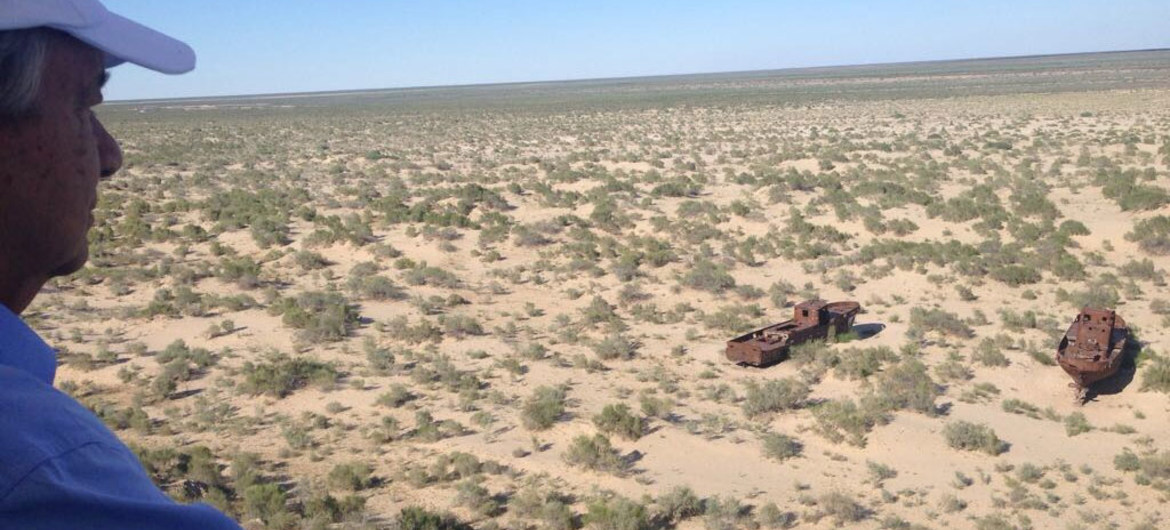
UN Secretary-General António Guterres has urged countries to fund a new initiative designed to reduce vulnerability, advance sustainable development and create decent living conditions for millions of people living around the Aral Sea, whose basin encompasses Uzbekistan, and six other countries in Central Asia, according to UN News Center.
The high-level event, held to launch the Multi-Partner Human Security Trust Fund for the Aral Sea Region (MPHSTF), was organized by the Governments of Japan, Nigeria, Norway and Uzbekistan, alongside the UN Human Security Unit, the UN Country Team in Uzbekistan, and the UN Multi-Partner Trust Fund Office.
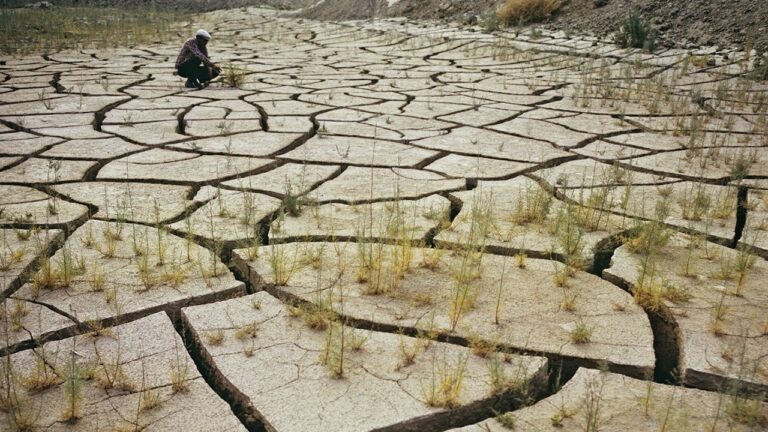
The Aral Sea was once the world fourth largest lake, and its progressive drying out over several decades – described by the UN chief as “one of the largest ecological catastrophes of our time” – has caused a cascade of environmental, socioeconomic, health and humanitarian challenges for the governments and communities in the region.
Over a 50-year period, the rivers flowing into the Sea were diverted for irrigation projects, reducing their flow fivefold, decreasing the volume of the Sea by more than 14 times, and increasing its salinity (or salt level) by 25 times.
This has resulted in once flourishing fishing waters being replaced by a sandy salt desert of more than 5.5 hectares, which carries 75 million tons of dust and poisonous minerals into the atmosphere every year.
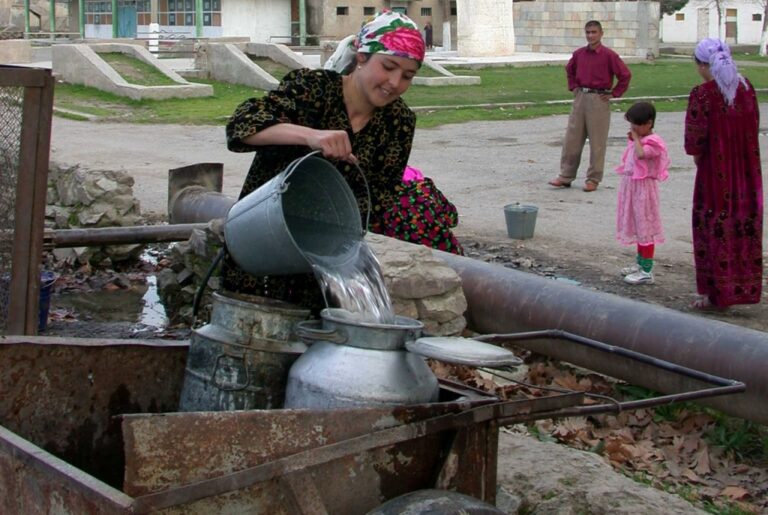
Those living in the region can no longer farm, fish or travel by boat, and poverty rates are significantly higher than country averages.
Addressing the attendees of the event, Mr. Guterres said that he had seen for himself the drying of the Aral Sea, during a visit to Uzbekistan in June 2017: “I heard moving accounts from people and experts about how the severe damage to the Sea also undermined the region’s social and economic systems. Livelihoods, traditional ways of life, and hopes for the future – all this has been lost.”
The new program, which Mr. Guterres described as “a new chapter for communities in the region,” is the second initiative designed to improve livelihoods, strengthen community development and mitigate health and environmental risks in the Aral Sea area: it builds on the successes and lessons learned from the 2012 UN Trust Fund for Human Security, which underscored the importance of partnerships and coordinated planning, implementation and monitoring.
The MPHSTF will focus on ensuring environmental, economic, food, social and health security for affected communities, with the aim to reduce poverty, enhance resilience, and achieve sustainable development.
The UN Chief expects that the knowledge gained through this effort will also have useful impacts in Central Asia and wherever climate change, environmental degradation and water scarcity are hindering sustainable development.
It is expected that, following the event, agreements will be reached with international financial institutions and donor countries on their commitments to support the MPHSTF for the Aral Sea region.