Council of Ulema expected to announce the date of celebration of Idi Qurbon on August 3

The Shuroi Ulamo (Council of Ulema — an Islamic council that issues fatwas (religious rulings) and religious guidance to Islamic religious organizations) is expected to announce the date of celebration of Idi Qurbon, or Eid al-Adha in Arabic, on August 3, an official source at the Islamic Center told Asia-Plus in an interview.   By preliminary […]

Asia-Plus

The Shuroi Ulamo (Council of Ulema — an Islamic council that issues fatwas (religious rulings) and religious guidance to Islamic religious organizations) is expected to announce the date of celebration of Idi Qurbon, or Eid al-Adha in Arabic, on August 3, an official source at the Islamic Center told Asia-Plus in an interview.  

By preliminary estimates, the date of celebration of Eid al-Adha this year falls on Sunday, August 11, the source said.  

Last year, Tajikistan celebrates Eid al-Adha on August 21.  

Eid al-Adha, “Festival of Sacrifice” or “Greater Eid,” is an important religious holiday celebrated by Muslims worldwide to commemorate the willingness of Ibrahim to sacrifice his son Ismail as an act of obedience to God, but instead was able to sacrifice a ram (by God's command).

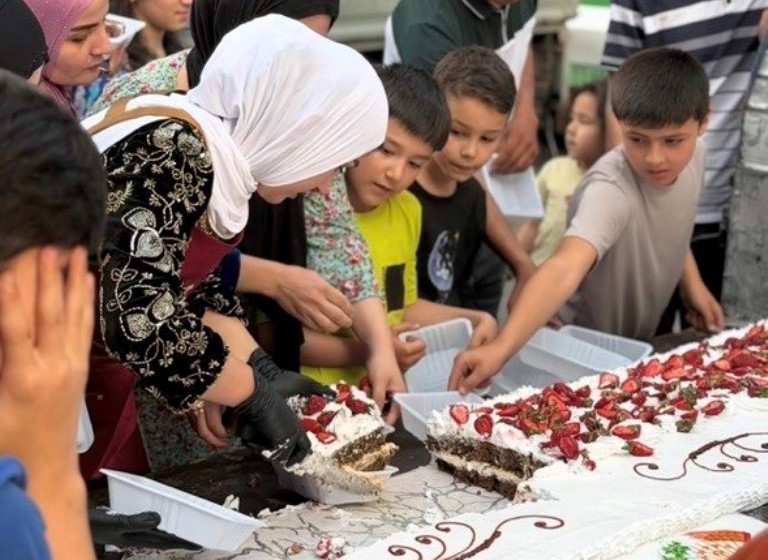
Eid is also about spending time with family and friends, sacrifice, and thanksgiving for being able to afford food and housing.  In traditional or agrarian settings, each family would sacrifice a domestic animal, such as a sheep, goat, cow, or camel, by slaughter (though some contemporary Muslims do not sacrifice an animal as part of their observance, it is still a very popular tradition, even in Muslim communities in Europe).  The meat would then be divided into three equal parts to be distributed to others.  The family eats one third, another third is given to other relatives, friends or neighbors, and the other third is given to the poor as a gift.

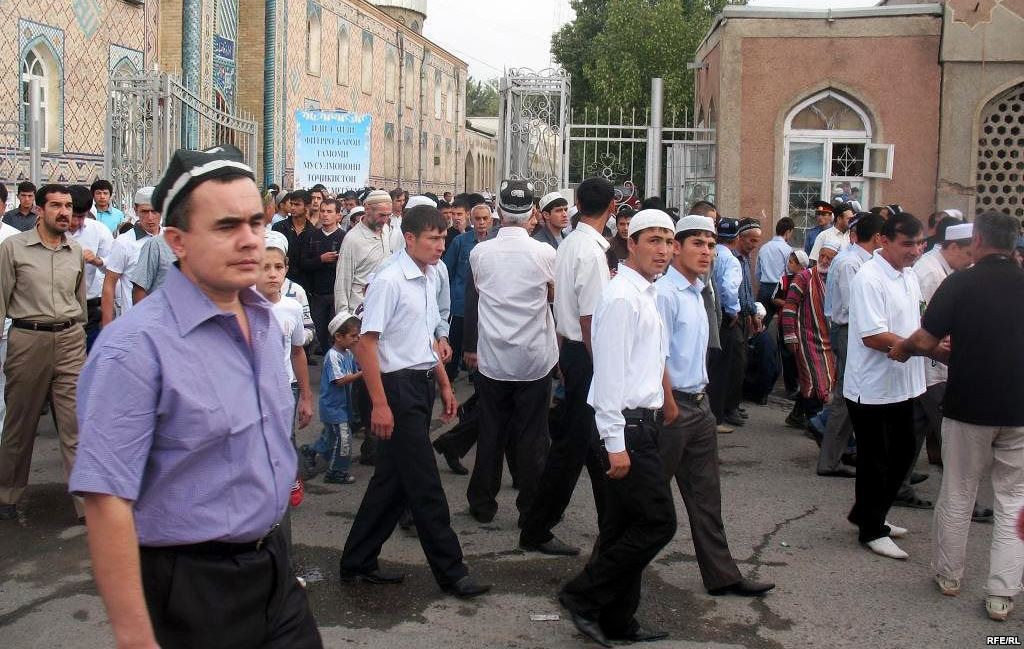
Eid al-Adha is the latter of two Eid festivals celebrated by Muslims.  Like Eid ul-Fitr, Eid al-Adha begins with a short prayer followed by a sermon (khutbah).

While Eid al-Adha is always on the same day of the Islamic calendar, the date on the Gregorian calendar varies from year to year since the Islamic calendar is a lunar calendar and the Gregorian calendar is a solar calendar.  The lunar calendar is approximately eleven days shorter than the solar calendar.  Each year, Eid al-Adha (like other Islamic holidays) falls on one of about 2–4 different Gregorian dates in different parts of the world, because the boundary of crescent visibility is different from the International Date Line. 

Join us on social media!

Article translations:

Related Article

Оби зулол
Оби зулол

Most Read

Акика Алиф

Recent Articles

In Tajikistan, a unique surgery was performed for the first time on a child with an extremely rare pathology

Tajik and Russian surgeons successfully performed the most complex reconstruction of the bladder and abdominal wall for a child with recurrent exstrophy.

The ministry of health states that hantavirus does not threaten Tajikistan

Cases of infection with this virus were detected on board the cruise liner Hondius near the Canary Islands.

Tajikistan lags behind other Central Asian countries in number of chain hotels – study

The Republic remains a niche market with a limited number of quality hotels.

Climate risks threaten food security in Central Asia – FAO

Land degradation reduces agricultural productivity. The loss of biodiversity weakens the ecosystems that farmers, livestock breeders, and rural communities depend on.

Potential or illusion? Why the world overlooks Tajikistan’s mineral wealth

The republic may indeed possess significant reserves of rare metals, but there is a catch...

The case of ousted Kyrgyz security boss classified and moves to court

The former head of the GKNB is charged with violent seizure of power and abuse of official position.

Trump states that Iran’s nuclear program is a higher priority than U.S. citizens’ economic issues

Fluctuations in energy prices led to record inflation in the United States in April, the highest in the past three years.

Foot-and-mouth disease, plague, and flu: Central Asia threatened by transboundary animal diseases

FAO urges Central Asian countries to strengthen coordination and epidemiological surveillance.

Tajikistan approves the second phase of the Electric Transport Development Program; $95 million will be allocated for its implementation.

At this stage, the authorities are focusing on charging infrastructure, services for electric vehicles, and the expansion of the electric bus fleet.

Tajikistan and Kazakhstan to sign roadmap for cooperation in the agrarian sector

The parties are interested in expanding investment cooperation and establishing joint ventures.