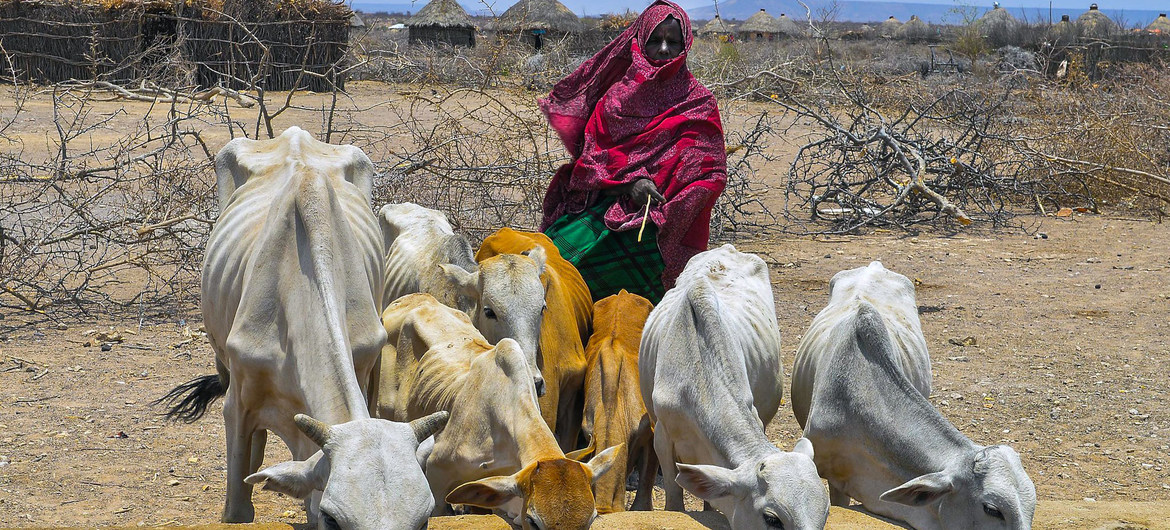
A new study on food insecurity by an alliance of UN, governmental, and non-governmental agencies analyzes what is fueling global food crises and examines how, among other emergencies, the COVID-19 pandemic is perpetuating downward cycle for millions.
In 2019, around 135 million people across 55 countries experienced acute food insecurity, which required urgent food, nutrition, and livelihoods assistance for survival, according to the joint news release issued by the Global Network Against Food Crises in Rome on April 21.
“But these numbers are just the tip of a larger iceberg”, according to the Global Network.
Within 47 of these countries, an additional 183 million people were found to be living in so-called “stressed conditions” – or on the verge of slipping into acute hunger if hit with a shock, such as the COVID-19 pandemic.
Moreover, the report revealed that in those 55 food-crisis countries, 75 million children are stunted and 17 million suffer from wasting or when muscle and fat tissue waste away. Nine million are in the 10 worst-food-crises countries.
“We cannot allow anything – not COVID-19, not anything, to prevent us” from delivering assistance, the Global Network stated.
Countries in food crises are particularly vulnerable to the coronavirus.
Already weakened by hunger, their compromised health renders them less able to fend off the virus and they are ill equipped for any shocks on their economies or food systems.
“We must keep critical food supply chains operating, so people have access to life sustaining food”, the study said, stressing the urgency of maintaining the delivery of humanitarian assistance “to keep people in crisis fed and alive”.
Because most countries in the Global Report lack the means to support their citizens with healthcare or economic safety nets in response to COVID-19, the study emphasized: “We must all step up and help. We are all in this together”.
The report showed that countries in Africa remain disproportionally affected by acute food insecurity.
In order of severity, the 10 worst food crises last year were Yemen, the Democratic Republic of the Congo, Afghanistan, Venezuela, Ethiopia, South Sudan, Syria, Sudan, northern Nigeria, and Haiti.
Together they constituted 88 million acutely food insecure people and accounted for 65 per cent of all people in acute food insecurity.
The report detailed that conflict and insecurity drove 77 million people into crisis while another 34 million were affected by extreme weather and an additional 24 million people were battered by economic shocks.