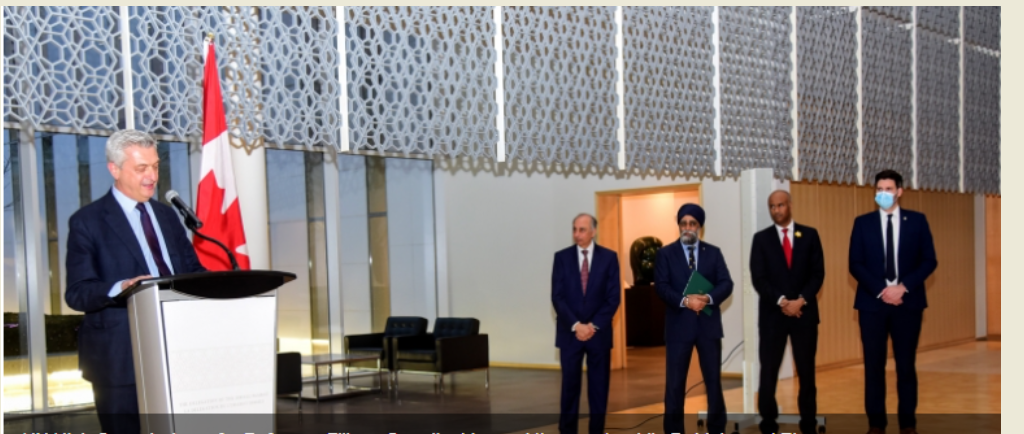
The United Nations High Commissioner for Refugees Filippo Grandi has called for action to tackle climate change, which is considered a major factor contributing to the world’s worsening refugee crisis.
Press release issued by the Aga Khan Development Network (AKDN) on May 9 says Mr. Grandi last month addressed government officials and diplomats at a reception hosted in his honor at the Delegation of the Ismaili Imamat in Ottawa.
The main purpose of the evening was to provide him an opportunity to share UNHCR’s views of the critical issues causing global migration that urgently need to be addressed, and to consider possible solutions for how these issues could collectively be resolved.
Guests reportedly included Canada’s Minister of International Development, Minister of Immigration, Refugees and Citizenship, and Minister of Housing, Diversity and Inclusion, along with more than 30 ambassadors and senior leaders from civil society.
Mr. Grandi took the opportunity to applaud the Canadian government for what he called “a star program” amongst resettlement programs around the world.
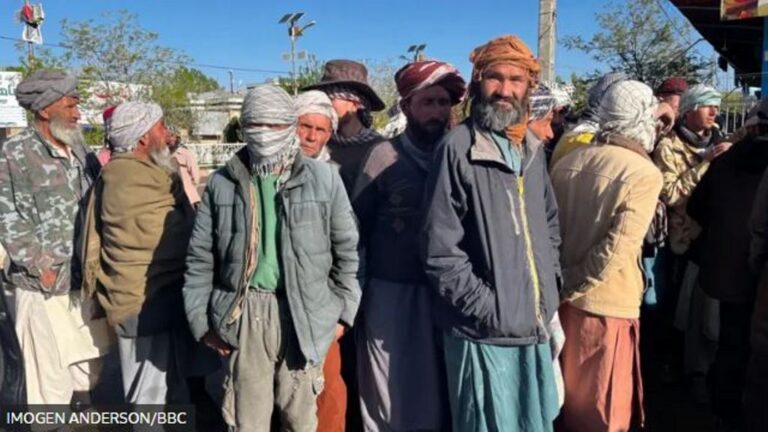
Vulnerable populations living in some of the world’s most fragile and conflict-affected countries are often disproportionately affected by the climate crisis. Mr. Grandi noted that 90 percent of refugees originate from countries most vulnerable to climate change, and that the countries with the highest numbers of refugees are also amongst the most vulnerable to climate change: Syria, Venezuela, Afghanistan, South Sudan and Myanmar.
Mr. Grandi remarked that as the UN’s protection agency, UNHCR has had to adapt to succeed in its mandated role, including ensuring the environmental sustainability of its own facilities and operations and assuring climate resilience for displaced persons and their hosts by facilitating access to protection and assistance. He reportedly emphasized that waiting for disaster to strike is not an option, and that there is an urgent need to invest in preparedness to prevent further climate-caused displacement.
In recent trips to Tajikistan and Afghanistan, Mr. Grandi visited programs undertaken by UNHCR in partnership with the Aga Khan Agency for Habitat, an agency of the AKDN.
UNHCR and the AKDN have a long history of collaboration, especially in South and Central Asia and the Middle East, to serve and support displaced and at-risk populations. The two organizations are currently working together to provide extensive humanitarian aid in Afghanistan.
Dr. Mahmoud Eboo, Representative of the Delegation of the Ismaili Imamat to Canada, spoke about the longstanding partnership between the institutions of the Ismaili Imamat and the UN system across a wide spectrum of issues, including refugee resettlement, food insecurity, cultural restoration, humanitarian assistance and access to health care. He noted that the Aga Khan’s grandfather, Sir Sultan Mahomed Shah Aga Khan, served as the 21st president of the Assembly of the League of Nations; his father, Prince Aly Khan, served as Pakistan’s Permanent Representative to the UN; and his uncle, Prince Sadruddin Aga Khan, served as the UN High Commissioner for Refugees.
Mr. Grandi also paid tribute to the extraordinary leadership of Prince Sadruddin in expanding the scope and scale of UNHCR into an agency capable of managing and responding to humanitarian crises globally.
In discussing the current realities of displacement and migration, Canada’s Minister for International Development Harjit Sajjan spoke about the need to change the mindset from one that focuses on a humanitarian crisis, to one where we collectively try to ensure that young people have the opportunity to fulfil their potential. Minister Sajjan also emphasized that governments, UN agencies and international organizations like the AKDN, all working together on development efforts, are crucial to conflict prevention efforts.