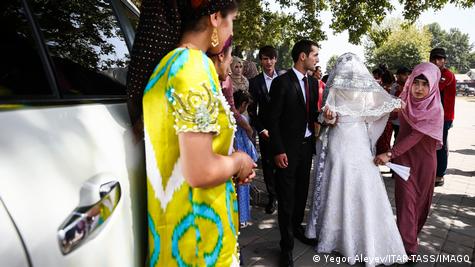
Polygamy is becoming more and more common in Tajikistan. What is the reason for this and what may be the consequences for women who have become a second or third wife – in the material DW.
The spread of polygamy in Tajikistan in recent years has been associated both with the growing influence of religion on society and with the mass departure abroad of citizens, mainly young men, in search of earnings. There is a very high level of poverty in the country and it is difficult to find a well-paid job.
According to the latest report of the Institute for Central Asian Studies, about 70 percent of Tajik families live with the help of money transfers: almost 1 million Tajik citizens, most of them young men, work abroad.
This is one of the reasons that many Tajik women left without husbands after divorces support the right of local men to polygamy, seeing this as the only way to financially support themselves and their children.
Marriages with multiple wives are especially common among men with high and middle incomes, including officials and businessmen.
Officially, the state does not recognize polygamy and threatens lawbreakers with fines or correctional labor, but the real state of affairs is often turned a blind eye.
According to Sharia, Muslims are allowed to have several wives, their union is sanctified by a mullah, without official registration of marriage.
Feminist and certified psychologist Firuza Mirzoeva, an employee of the Tajik organization "Public Health and Human Rights" shared with DW several reasons for the spread of polygamy in the country.
"Women are ready to take the status of a second, third or fourth wife in order, so to speak, to legalize their personal life, – she says, and adds – this also has a material aspect: many women in the regions who have not received higher education, and some have not even graduated from school, the only way to survive financially is to, let's say, belong to a man."
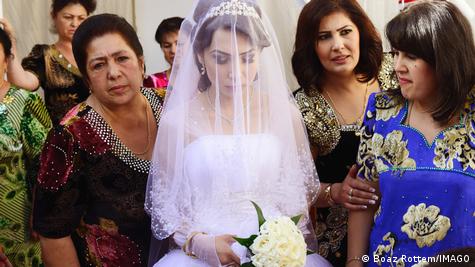
Mirzoeva cited the example of Khatlon and Sughd regions, where "girls are being prepared for marriage from childhood, and mostly their education is considered as something superfluous." In her opinion, polygamy provides women with "security", as it gives them a certain status in society and protects them from "social claims".
"Society has a negative attitude towards unmarried and divorced women, considering them "old maidens". "Even if a woman is successful and independent, society does not approve of her," the human rights activist emphasizes.
According to Mirzoeva, Tajik authorities are forced to turn a blind eye to polygamy because of the fear that serious attempts to change the situation could lead to economic poverty for many women.
If there are any serious attempts to change the situation, a huge number of women will remain below the poverty line, as a result of which some will be forced into prostitution.
Even if some of them will be able to earn enough money on this for an independent existence, they will not be accepted in society, the feminist believes.